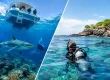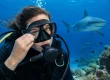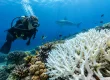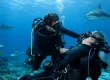
Beqa Lagoon is not a place where marine life stays politely in the background. A broad shadow crosses the blue, a school of trevally tightens above the reef, and a shark moves with calm purpose below. For divers planning a Fiji trip, the top marine life in Beqa offers both spectacle and substance: major predator encounters, coral-rich reef systems, and the smaller creatures that reward a slower second look.
The lagoon’s character changes from site to site and day to day. Visibility, current, season, depth, and diver experience all shape what you see. That is part of its appeal. Beqa is not a checklist destination. It is an active marine environment where a well-planned dive can bring you face-to-face with some of the South Pacific’s most compelling animals.
Top Marine Life in Beqa for Serious Divers
Sharks: the headline encounter
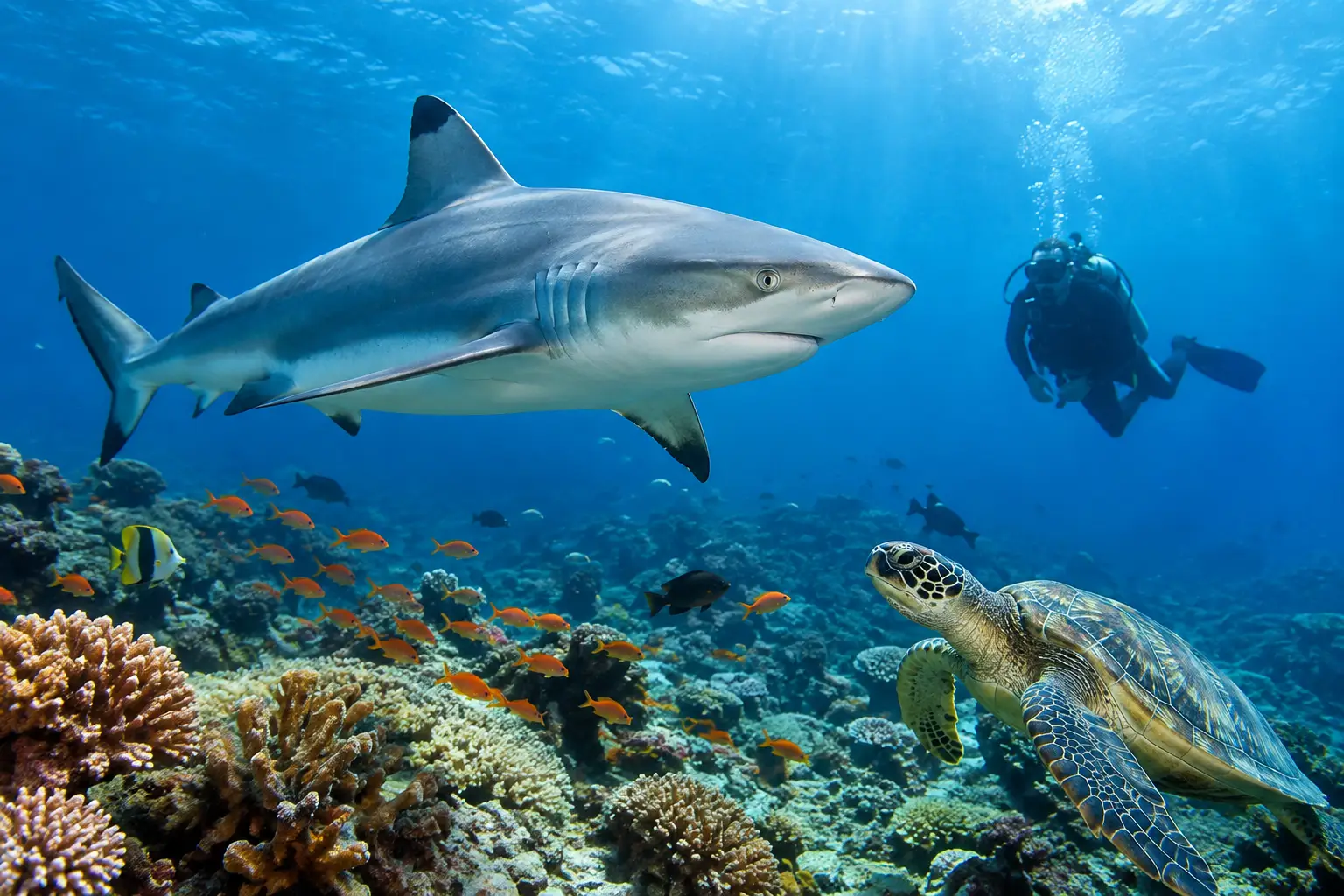
Sharks are the most famous residents of Beqa Lagoon, and for good reason. At The Colosseum, a private marine protected area, managed shark diving creates opportunities to observe several species from a structured viewing position. Bull sharks are often the animals that leave the strongest impression. Powerful, deliberate, and highly intelligent, they command attention without needing to rush or posture.
Divers may also encounter tiger sharks, lemon sharks, nurse sharks, whitetip reef sharks, blacktip reef sharks, and gray reef sharks, depending on conditions and the site. Each species behaves differently. Reef sharks may pass through the water column with effortless regularity, while nurse sharks tend to move more slowly along the bottom. A tiger shark sighting is never something to promise, but it is an unforgettable possibility in this part of Fiji.
The value of a shark dive is not simply proximity. Done correctly, it is an education in behavior, body language, space, and respect. Professional briefings, disciplined positioning, and guides who understand the site are essential. This is particularly important for photographers, who may be tempted to focus entirely on the frame rather than the animal’s movement and the group’s agreed safety procedures.
Giant trevally and reef fish in motion
Where sharks gather, activity follows. Giant trevally are a regular source of energy around Beqa’s deeper sites. These muscular predators move quickly through baitfish and can appear almost silver-black against the blue water. Their speed and coordination make them a favorite subject for wide-angle photographers.
Schools of snapper, surgeonfish, fusiliers, goatfish, and jacks add constant movement across the reef. On a strong-current dive, they may hold their position above a coral slope, all facing into the flow. On a calmer day, the same site can feel more intimate, revealing butterflyfish pairing over the reef and small damsels defending their coral heads.
This abundance matters ecologically. Healthy fish populations support the food web that makes a reef resilient. Big fish may draw the eye first, but the daily work of reef life is carried out by countless grazers, cleaners, and plankton feeders.
Rays and other graceful visitors
Eagle rays are among the most elegant animals a diver can encounter in Beqa Lagoon. Their spotted backs and wing-like movement make even a brief pass memorable. They are often seen gliding through open water or over sandy sections of reef, usually with enough distance to appreciate their natural behavior without crowding them.
Stingrays may rest on sandy bottoms, partially covered by sediment, while blue-spotted rays can appear around sheltered reef areas. The best approach is patient observation. Rays deserve room to move, and divers should never attempt to touch, corner, or stir an animal from the sand for a photograph.
Manta rays are more seasonal and less predictable than the lagoon’s core shark encounters. If a manta is high on your personal wish list, tell your dive team before the trip so they can recommend the most suitable timing and sites. Nature does not work on a guarantee, but local knowledge improves your odds.
Sea turtles, from passing guests to quiet companions
Green sea turtles and hawksbill turtles can both be seen around Fiji’s reefs. A turtle encounter often has a different rhythm from a shark dive. You may spot one resting beneath a ledge, rising calmly for air, or feeding near a reef edge. Their unhurried movement makes them an ideal reminder to slow down and notice the wider environment.
Hawksbills are closely associated with reef habitats and play an important role in reef ecology, including feeding on sponges that might otherwise compete with corals. Green turtles are more often linked with seagrass and algae-rich feeding grounds. Both face pressures from habitat loss, plastic pollution, and historical exploitation, which makes respectful observation especially meaningful.
Corals and the smaller animals worth staying for
Beqa’s marine life is not only measured in size or adrenaline. Coral gardens, walls, bommies, and reef ledges provide habitat for an extraordinary range of smaller species. Look closely and you may find anemonefish working through their host anemones, colorful nudibranchs on the substrate, scorpionfish using camouflage to disappear in plain sight, or a moray eel watching from a crack in the reef.
Soft corals can be particularly striking when current delivers food to the reef. Their color and movement transform a wall or ledge into a living scene rather than a static backdrop. Hard corals, including branching and table forms, create shelter for juvenile fish and invertebrates. The health of these structures directly influences the diversity divers come to see.
Macro-minded divers should let the guide know their interests. A site selected for large sharks and open-water action is not always the best choice for searching tiny crustaceans and cryptic reef fish. The strongest Beqa itinerary often balances both: one day for high-energy shark encounters, another for reef detail, turtles, and relaxed photography.
How to Get More From Beqa Marine Life Encounters
The best sightings begin before you enter the water. Choose dives that match your certification, recent experience, and comfort in current. If you have been out of the water for a while, a refresher or orientation dive can make a significant difference. More control in the water means more attention available for the animals around you.
Listen carefully to the site briefing, especially on shark dives. Your guides will explain entry procedures, where to settle, how to maintain a stable profile, what to do with cameras, and how to respond if conditions change. These standards are not formalities. They protect divers, support predictable animal behavior, and preserve the quality of the encounter for everyone.
Buoyancy is a conservation skill as much as a comfort skill. Hovering above the reef prevents accidental contact with coral and avoids kicking up sand that can smother delicate organisms or spoil visibility. Keep gauges, hoses, and camera accessories secured. If you need to adjust equipment, move to an open sandy area or follow your guide’s direction.
For photographers, wide-angle equipment suits sharks, rays, schooling fish, and dramatic reef scenes. Macro lenses are better for nudibranchs, shrimp, and reef textures. Trying to carry a large camera setup on every dive can be a trade-off, particularly for divers still developing buoyancy or those joining a dynamic shark site. The best image is never worth compromising your awareness or the group’s safety plan.
Conservation Is Part of the Experience
The animals that make Beqa special depend on more than good fortune. They depend on protected habitat, responsible local stewardship, informed guests, and dive operations willing to place ecological care alongside adventure. Shark tourism, when carefully managed, can create a powerful reason to protect living sharks and the ecosystems that sustain them.
Coral Coast Divers approaches Beqa Lagoon as both an extraordinary dive destination and a working marine ecosystem. Through conservation-led practices, marine education, and support for reef protection, divers can connect their vacation to something larger than a single encounter. Asking questions, following protocols, reducing single-use plastic, and choosing operators with clear environmental standards all help reinforce that commitment.
The most rewarding Beqa dive may be the one you expected: a bull shark passing through blue water, an eagle ray cruising overhead, or a turtle resting near the reef. But leave room for the unexpected. A tiny nudibranch, a cleaning station in full operation, or a reef fish defending its corner of coral can become the moment that stays with you longest.