A close pass from a bull shark at depth can be the moment a diver remembers for decades. But the most rewarding encounters are not measured only by proximity, photographs, or adrenaline. They are shaped by how the site is managed, how divers behave in the water, and whether visitor spending helps protect the reef. That is why eco dive travel trends are changing what serious divers ask before they book a trip to Fiji.
For travelers who want exceptional marine encounters without treating the ocean as a backdrop, the standard has moved beyond reusable water bottles and reef-safe sunscreen. The strongest dive experiences now connect adventure with credible operations, smaller groups, local knowledge, marine education, and visible conservation work. Fiji is well placed for this shift because its reefs, lagoons, shark habitats, and coastal communities make responsible choices matter at every stage of a dive holiday.
Eco Dive Travel Trends Are Raising the Standard
Eco-conscious travel is becoming more specific. Divers are looking past broad sustainability claims and asking practical questions: How are dive sites protected? Are guides trained to manage wildlife encounters? Does the operator limit crowding? What happens to damaged coral? Are local communities involved in the benefits of tourism?
These questions are not a burden on premium dive travel. They are part of what makes it premium. A well-run marine experience feels calmer, safer, and more personal because it is designed around the conditions of the site rather than a rushed schedule. That is especially true for shark diving, where procedures, positioning, briefing quality, and guide discipline directly affect both diver confidence and animal welfare.
The most meaningful trend is a move from passive observation to informed participation. Travelers still want the unforgettable moment – a tiger shark moving through blue water, a soft-coral reef lit by morning sun, or a sea turtle crossing a healthy reef slope. Increasingly, they also want to understand the habitat around them and leave knowing their trip contributed more than it consumed.
Smaller Groups Create Better Encounters
Small-group diving is often presented as a luxury feature, but it has a real environmental and safety value. Fewer divers in the water means less accidental contact with coral, more room for guides to monitor buoyancy, and a less crowded experience around sensitive marine life. It also makes a briefing more effective because every guest has a clearer understanding of the plan.
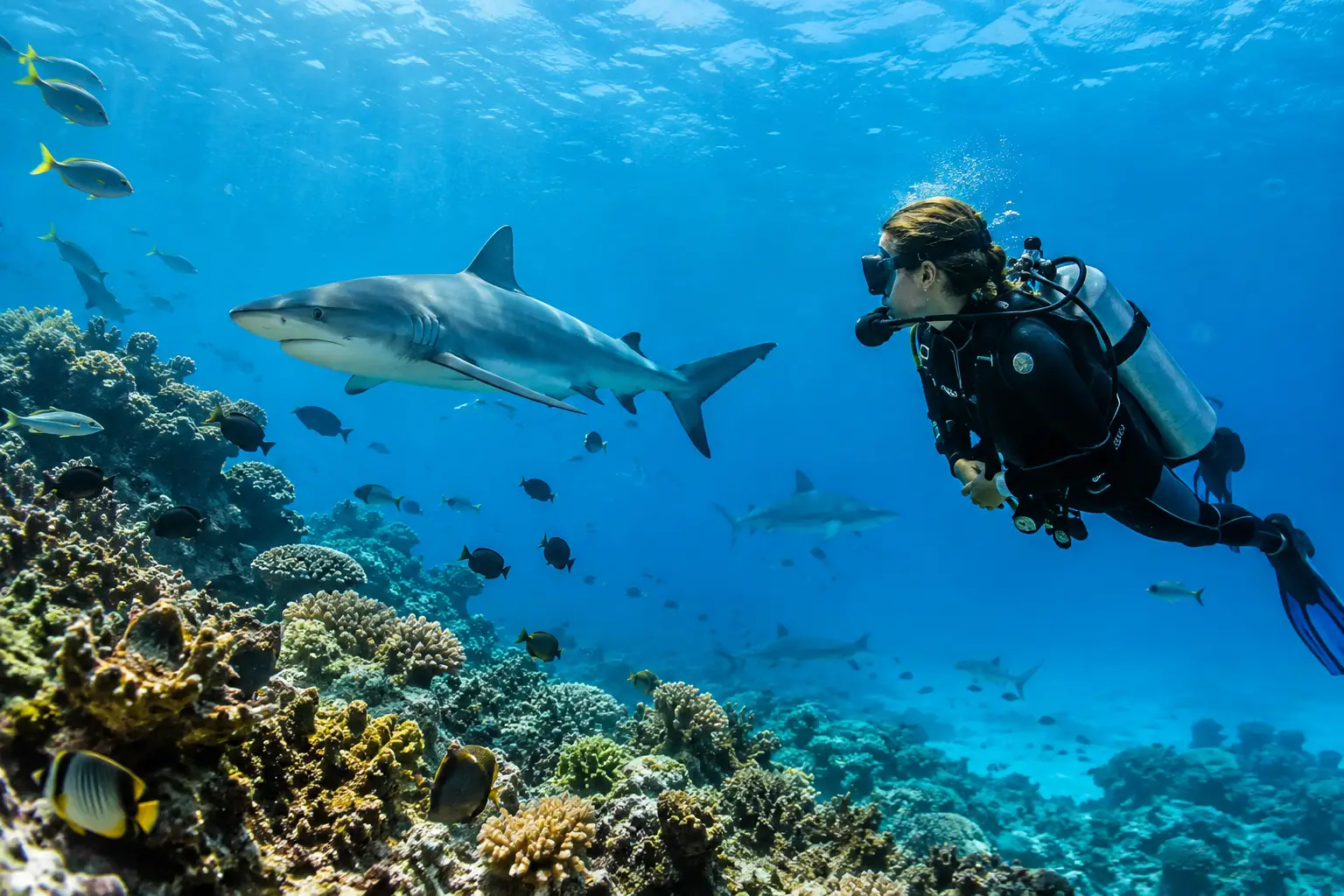
This matters most at high-energy sites. On a shark dive, divers need to be comfortable with the entry, settle into the correct viewing position, and follow the guide’s direction without distraction. A large, loosely managed group can turn a powerful wildlife encounter into a stressful one. A smaller, properly briefed group gives divers more time to observe natural behavior and gives the team more control when conditions change.
There is a trade-off. Private trips and limited-capacity departures can cost more than high-volume dive operations. For travelers spending time and money to reach Fiji, however, that difference often buys more than personal space. It supports a more deliberate experience, closer guide attention, and reduced pressure on the reef.
Conservation Is Becoming Part of the Itinerary
The old model of eco-tourism placed conservation in a donation box at the end of the day. The stronger model brings it into the experience itself. Divers now seek opportunities to learn about coral restoration, shark behavior, reef ecology, and the threats facing the ocean in the places they visit.
Coral planting is a good example. It can be a valuable way for guests to connect with reef recovery, particularly when it is tied to ongoing monitoring and site-specific restoration goals. It should not be treated as a quick photo opportunity or a substitute for protecting healthy reefs in the first place. The best programs explain why particular coral species are selected, how fragments are maintained, and what long-term success looks like.
Shark conservation is receiving similar attention. Sharks are essential predators in many marine ecosystems, yet they are often misunderstood by people who have never seen them underwater. A professionally managed shark dive can replace fear with respect. It gives visitors the chance to see these animals as intelligent, powerful, and ecologically significant rather than as movie villains.
At Coral Coast Divers, the shark dive at The Colosseum is built around structured safety practices and conservation stewardship within a protected marine setting. The result is not simply an intense bucket-list encounter. It is an opportunity to see why shark habitats deserve thoughtful management, consistent standards, and long-term protection.
Reef-Safe Choices Go Beyond Sunscreen
Reef-safe sunscreen remains a sensible consideration, especially for travelers who snorkel or spend long periods on the water. Still, responsible dive travel is not solved by one product choice. Divers can make a larger difference through the habits they bring underwater.
Good buoyancy is one of the most practical environmental skills a diver can have. A controlled diver avoids kicking coral, stirring sediment, or grabbing the reef for balance. This is why refresher sessions and continuing education are increasingly valuable parts of dive travel. They help visitors arrive better prepared for sites where conditions, depth, or current require precise control.
Equipment care matters as well. Secure alternate air sources, gauges, cameras, and fins before entering the water. A dangling hose can damage coral in seconds, while a poorly managed camera setup can lead a diver to drift too close to wildlife. Photographers should plan their shot, maintain neutral buoyancy, and accept that a respectful observation is better than an image captured at the reef’s expense.
Travelers Want Proof, Not Green Language
One of the clearest eco dive travel trends is greater skepticism of vague claims. “Eco-friendly” has little value unless an operator can explain what it does on the ground and on the water. Travelers should look for clear practices rather than perfect language.
A credible operation can describe its site protocols, diver limits, waste reduction approach, staff training, and conservation partnerships or projects. It can explain how it handles marine-life interactions and why certain rules exist. It also treats safety and sustainability as connected, not competing priorities.
For example, a thorough shark-dive briefing protects guests and supports respectful animal encounters. A rule against touching marine life protects the reef while reinforcing good diving discipline. A decision to postpone or alter a trip in poor conditions can be frustrating, but it reflects an operator willing to put safety and site protection ahead of a rigid itinerary.
Travelers should also be alert to the difference between low-impact and low-quality. Responsible diving does not mean settling for less adventure. It means choosing experiences where skilled guiding, reliable equipment, thoughtful logistics, and environmental standards work together. Fiji’s most remarkable dives deserve that level of care.
How to Plan Around Eco Dive Travel Trends
Build your trip around the kind of underwater experience you want, then assess how the operator delivers it. An experienced diver focused on sharks may prioritize site management, guide expertise, and safety procedures. A newer diver may get more value from combining a few guided dives with SSI training or a refresher course before progressing to more demanding conditions.
Leave room in the itinerary for weather, surface conditions, and recovery time. Chasing too many dives can reduce the quality of the experience and encourage rushed decisions. A better plan pairs signature dives with reef exploration, snorkeling, freediving, or time learning about the marine environment above the waterline.
Most of all, choose an operator whose standards are visible in the details: the quality of the briefing, the condition of the equipment, the confidence of the crew, the size of the group, and the respect shown to the reef. The best Fiji dive trip is not one that promises to get you closest to everything. It is one that leaves you closer to understanding why these waters are worth protecting.