A Fiji vacation is too valuable to spend guessing whether your scuba course will fit between airport transfers, reef dives, and time on the beach. When comparing SSI Open Water versus referral, the best choice comes down to where you want to learn the fundamentals, how much vacation time you have, and how comfortably you want to begin your first ocean dives.
Both routes can lead to the same SSI Open Water Diver certification. Neither is a lesser credential. The difference is how the course is divided: complete the entire program with one dive center, or finish the academic and confined-water portions before traveling, then complete your open-water training dives at your destination.
What an SSI Open Water Course Includes
The SSI Open Water Diver course is your foundation as an independent recreational diver. You learn how diving equipment works, how pressure affects your body, how to plan dives, manage buoyancy, communicate underwater, and respond calmly to common issues. It is not simply a checklist before the fun begins. These skills shape every reef, wreck, current, and shark dive you choose later.
A full course includes digital learning, instructor-led review, confined-water skill sessions, and four open-water training dives. The confined-water sessions let you practice essential skills in a controlled environment before using them in the ocean. You will clear water from your mask, recover and clear a regulator, establish neutral buoyancy, share air with a buddy, and learn how to make measured decisions underwater.
During the open-water dives, those skills move into a real marine environment. You will practice them under instructor supervision while also gaining experience with descents, ascents, navigation, and responsible reef awareness. When all performance requirements are complete, you earn certification as an SSI Open Water Diver.
For travelers who have sufficient time in Fiji, completing the full course in one place offers a consistent learning environment. Your instructor can see your progress from the first briefing through your final dive, adapt coaching to your pace, and help you become comfortable in the water you will actually be diving.
SSI Open Water Versus Referral: The Practical Difference
An SSI referral is not a separate level of certification. It is a training pathway. You begin your course at home, usually completing the digital academics, knowledge reviews, and confined-water sessions with a local SSI training center. Your instructor documents the portions you have completed, and a destination dive center finishes your required open-water training dives.
The appeal is obvious for a short international trip. Rather than devoting several vacation days to classrooms and pool sessions, you arrive ready for the ocean portion of the course. Your time in Fiji can focus on applying skills in warm water, building confidence on reefs, and enjoying the destination between training dives.
A full destination course, however, may be the better experience if you prefer one instructor and one team throughout. This is especially true for new divers who are nervous about the ocean or have limited recent swimming experience. A steady progression with the same professionals can reduce pressure and give you more room to absorb the material.
The right decision is less about speed and more about where you learn best. Referral suits travelers who can train at home before departure and want to preserve vacation time. A full SSI Open Water course suits those who want their certification journey to be part of the trip itself.
When a Referral Makes the Most Sense
A referral is often ideal when your Fiji itinerary is tight. Perhaps you are traveling with a non-diving partner, joining a group with fixed excursions, or planning to add snorkeling, cultural experiences, and relaxation around your diving. Completing the early stages at home gives your itinerary more breathing room.
It can also be a smart choice if you want extra practice before travel. Learning basic skills in familiar surroundings allows you to arrive without trying to process new equipment, new water conditions, jet lag, and a new destination all at once. The transition to ocean dives can feel more purposeful when the core skills are already familiar.
Before you commit to this route, confirm that your home instructor can complete every required referral component before you leave. Bring your referral documentation and make sure your SSI digital training record is current and accessible. Your destination team must be able to verify what you have completed before continuing the program.
Do not leave this planning to the night before your flight. Training records, medical forms, and scheduling details are simple when handled early, but they can create avoidable delays when handled at the last minute.
When Completing Open Water in Fiji Is Better
For many aspiring divers, learning where they plan to explore creates a more memorable and cohesive experience. Fiji’s clear, warm water and extraordinary reef life offer a motivating setting for your first breaths underwater. Instead of treating certification as something to get through before the trip, you make it a central part of the adventure.
There is a practical advantage as well. Your instructor can introduce local conditions from the start, including boat procedures, entry techniques, reef etiquette, and buoyancy habits that protect fragile coral. Good buoyancy is not only a comfort skill. It is a conservation skill. A diver who can hover calmly is less likely to damage the reef or disturb marine life.
At Coral Coast Divers, training is approached as preparation for a lifetime of capable, respectful diving – not a rushed route to a certification card. That matters when your future dive plans include vibrant reefs, deeper adventures, wrecks, or Fiji’s renowned shark encounters.
A full course may require more dedicated time in your schedule, particularly if you need extra practice. That is not a drawback. It is how solid divers are made. Build in room for weather, comfort, and questions rather than treating every session as a race against your departure date.
Plan for More Than the Minimum Schedule
Whether you choose a referral or a full course, leave margin in your travel plans. Ocean conditions, individual learning pace, and logistics can all affect the schedule. The goal is not merely to finish the required dives. It is to finish them feeling composed, capable, and excited to continue.
You should also complete the required medical questionnaire honestly and early. Certain health conditions, medications, or recent medical events may require physician approval before diving. This is a normal safety process, not an obstacle to hide or work around. A professional dive operation will prioritize your well-being over a rigid schedule.
If you are flying after your final dive, plan your course with the recommended pre-flight surface interval in mind. Your dive team can advise based on your completed dives and travel schedule. Booking your last training dive immediately before a long flight is a poor way to end an otherwise excellent trip.
Your Certification Is the Beginning, Not the Finish Line
Newly certified divers sometimes assume the card grants access to every dive site. In reality, responsible dive planning depends on more than certification level. Depth, current, surface conditions, equipment configuration, recent experience, and site-specific procedures all matter.
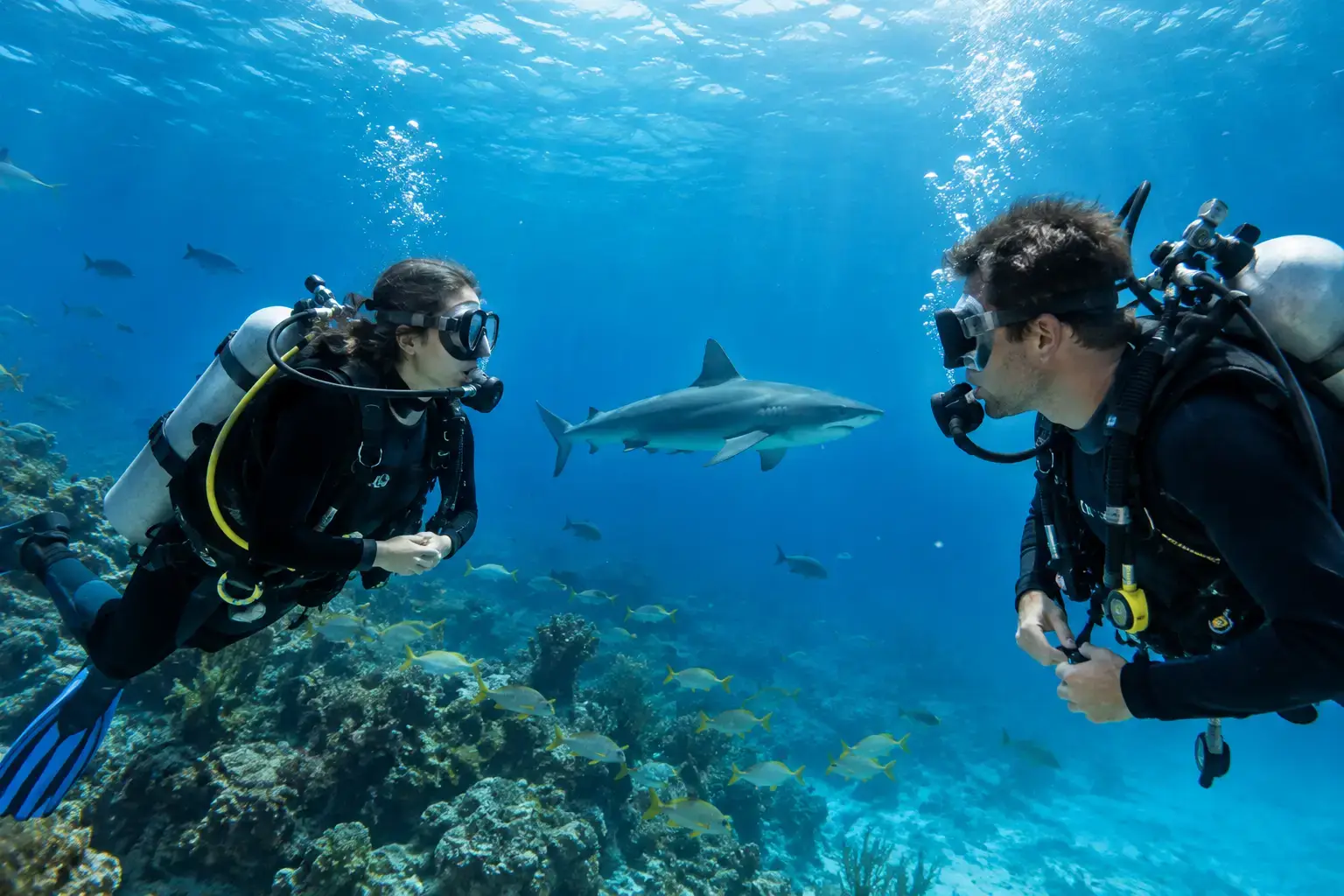
This is particularly relevant for shark diving. Fiji’s shark encounters can be profound, well-managed experiences, but they call for calm buoyancy, close attention to briefings, and respect for established safety protocols. An Open Water certification is an excellent first step, yet the right shark experience should always be selected according to your comfort, experience, and the day’s conditions.
After certification, consider adding experience gradually through guided reef dives. Practice buoyancy, finning technique, air awareness, and communication with a buddy. Ask questions. Watch how experienced guides position themselves around coral and marine life. Each thoughtful dive builds the judgment that makes bigger adventures more rewarding.
Choose the Route That Lets You Learn Well
Choose the referral route if you can complete your academics and confined-water skills before travel and want more of your Fiji days available for ocean diving and exploration. Choose the full SSI Open Water course if you value one consistent instructional team, want to learn at your destination, or prefer to make your first ocean dives part of the full travel experience.
Either path can take you from curious traveler to confident new diver. Give yourself enough time, arrive prepared, and treat every skill as an investment in the reefs, marine life, and unforgettable underwater moments still ahead.