
You have found the dive trip: clear Pacific water, a renowned reef or shark site, and a boat leaving early tomorrow. Then comes the practical question: Is SSI certification international? In most recreational diving destinations, yes. SSI certifications are designed for global use and are widely recognized by dive operators around the world. But a certification card is not an automatic pass for every dive. Your experience, the conditions, local rules, and an operator’s safety standards still shape what you can do.
For travelers, that distinction matters. The best dive experience is not simply about presenting a certification. It is about arriving with the right training, honest recent experience, and respect for the environment you have traveled to see.
Is SSI Certification International for Travel Diving?
SSI is an international scuba training organization with training centers, instructors, and certified divers across the globe. An SSI Open Water Diver certification qualifies a diver to dive independently with an appropriately qualified buddy, within the training limits of the certification and local requirements. That core credential is generally accepted at SSI-affiliated dive centers and is broadly familiar to reputable recreational operators worldwide.
Your SSI certification is available digitally through the SSI app, which makes international travel simpler than the era of plastic cards and photocopied logbooks. A dive center can typically verify your level, specialties, and student records from your digital profile. Carrying a physical card can still be useful as a backup, particularly in remote locations with limited connectivity, but your digital certification is the primary record.
International recognition does not mean every operator must offer the same dive to every certified diver. A boat captain and dive professional have a duty to assess conditions and protect the group. Strong current, deep profiles, overhead environments, cold water, altitude, or close wildlife encounters can call for additional qualifications or a more conservative plan.
What Your SSI Card Actually Tells a Dive Center
A certification shows that you completed training to a defined standard at a particular level. It does not tell a new dive team everything they need to know about your readiness on that day.
An Open Water Diver certification is an excellent foundation for warm-water reef diving, guided boat dives, and many vacation itineraries. Advanced Adventurer or Advanced Open Water-level experience can make a broader range of dives available, especially where deeper sites or more varied conditions are involved. Specialty certifications may be expected for activities such as deep diving, enriched air nitrox, drysuit diving, wreck penetration, or technical diving.
Dive professionals also look beyond the agency name on your card. They may ask when you last dived, how many logged dives you have completed, whether you have experience in current or blue water, and whether you are comfortable with the planned depth. These questions are not barriers to adventure. They are how a professional operation matches the dive to the diver.
A diver with an SSI Open Water certification and 150 recent ocean dives may be well prepared for a challenging guided reef dive. A diver with the same certification who has not been in the water for five years may benefit from a refresher, an easier first dive, or a private guide. The certification remains valid, but skills need to be current enough for the environment.
Recognition Is Not the Same as Access
The phrase “internationally recognized” can create a misleading expectation that all dives are interchangeable. They are not. A certification is portable; the ocean is not predictable.
Local laws can establish minimum age, guide, equipment, or depth requirements. Marine parks may limit group size, restrict gloves or touching, and require special briefings to protect coral and wildlife. Some operators set higher internal standards than the legal minimum because their sites demand it. That is especially common at advanced drift dives, exposed pinnacles, deep wrecks, and shark-diving locations.
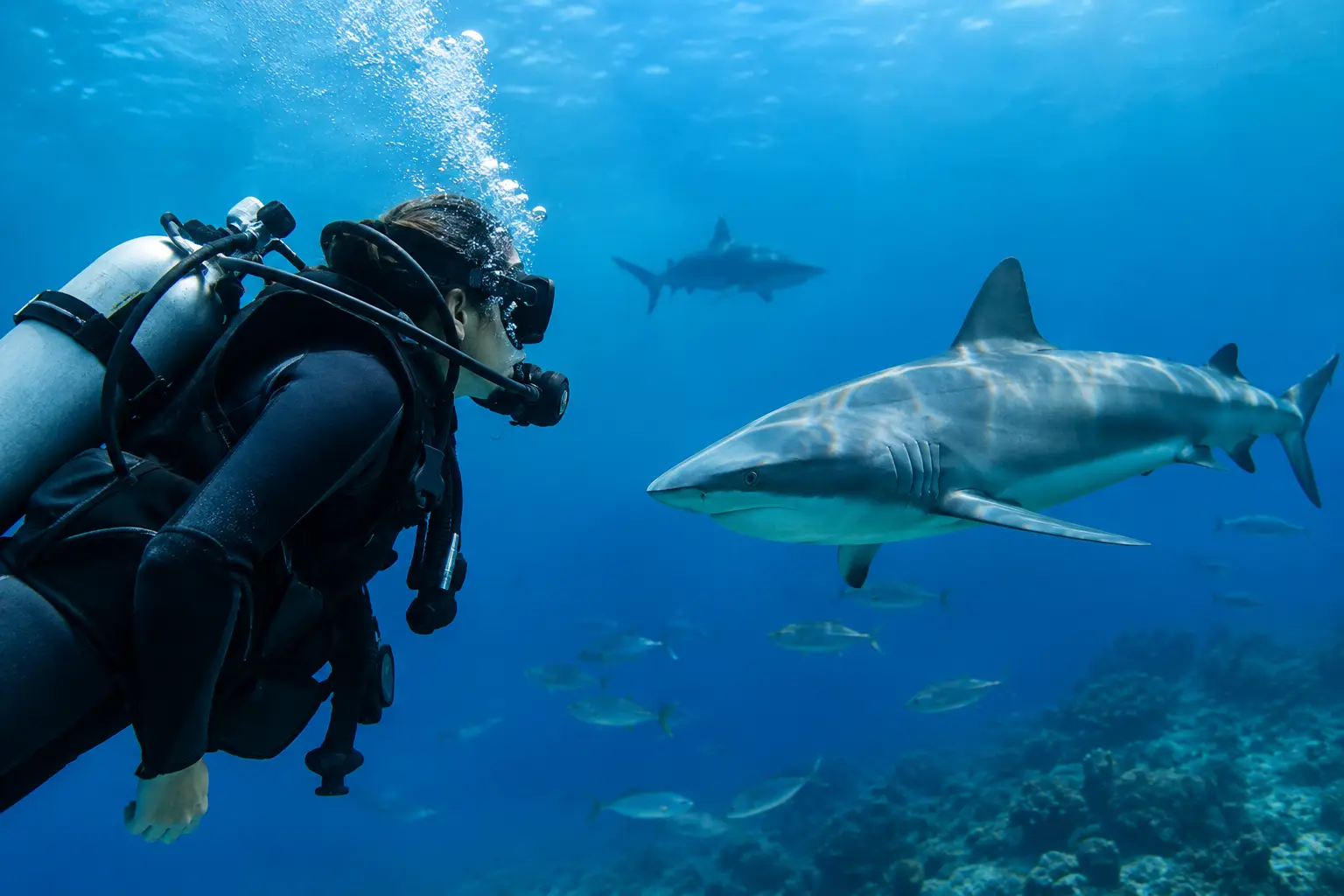
For a managed shark dive, a responsible operator may require divers to follow precise positioning, descent, buoyancy, and camera procedures. These rules protect both divers and animals. Close encounters with sharks should never depend on a casual attitude or a promise that someone is “comfortable in the water.” They depend on calm behavior, sound briefing discipline, and guides who understand the site.
If a dive center recommends a different site or a guided option, treat that as useful local knowledge, not a downgrade. A well-chosen first dive can build confidence and help the team understand your buoyancy, air consumption, and comfort level before moving to a more demanding profile.
How to Prepare for Diving Abroad With SSI
Start by opening your SSI app before you leave home. Confirm that your profile shows the correct certification level and any relevant specialties. If you have a paper logbook, bring it. If your dives are logged digitally, make sure you can access the records offline or have screenshots of recent activity.
Be direct when completing medical and experience questionnaires. Recent surgery, respiratory illness, ear problems, medication changes, or a long break from diving may need attention before you travel. A dive center cannot make medical decisions for you, and no certification replaces a physician’s clearance when one is needed.
It also pays to plan for the destination rather than relying on past vacation dives. Ask yourself whether you have used a surface marker buoy, managed a current, descended in open water, maintained neutral buoyancy around fragile coral, or dived beyond 60 feet. If the answer is no, there is no shame in choosing a training dive or hiring a guide. Those choices often turn an anxious day into the trip’s best memory.
Travel and dive insurance deserve the same care. Your general travel policy may not cover scuba activities, evacuation, hyperbaric treatment, or diving beyond a specified depth. Read the conditions rather than assuming the word “adventure” includes every underwater activity.
When a Refresher or Specialty Is the Better Choice
A refresher is often wise if you have not dived recently, feel uncertain about core skills, or are returning after a major life change. It gives you time to practice mask clearing, regulator recovery, buoyancy control, buddy communication, and emergency procedures in a controlled setting. Those are not beginner-only skills. They are the habits that let experienced divers stay composed when conditions shift.
A specialty course is worth considering when it genuinely supports your plans. Nitrox training can be valuable on multi-day dive schedules when profiles and gas choices allow for it. Deep diving training is useful for understanding planning, gas management, and the physiological considerations of deeper recreational dives. Perfect buoyancy training can be one of the most rewarding investments a traveling diver makes, particularly in coral-rich areas where control protects the reef.
Do not collect specialties merely to fill a digital profile. Choose training that strengthens the kind of diving you want to do. A diver preparing for Fiji’s reefs and signature shark encounters benefits most from buoyancy, situational awareness, comfort in open water, and the discipline to follow a site-specific briefing.
Bringing Your Certification to Fiji
Fiji rewards divers who arrive ready to listen. Conditions can range from gentle coral gardens to current-swept walls and exhilarating shark dives, sometimes within the same itinerary. Your SSI certification provides a recognized starting point, while the local team provides the site knowledge that turns that qualification into a safe, memorable experience.
At Coral Coast Divers, training and guided diving are approached as connected parts of the same experience. A diver’s certification level matters, but so do recent dives, comfort in the water, and the day’s conditions. This approach supports better decisions around the reef and reinforces the conservation standards that help keep marine encounters exceptional.
Bring your SSI credentials, keep your skills current, and be candid about your experience. The ocean will always offer more to learn, and that is exactly what makes each well-planned dive worth taking.