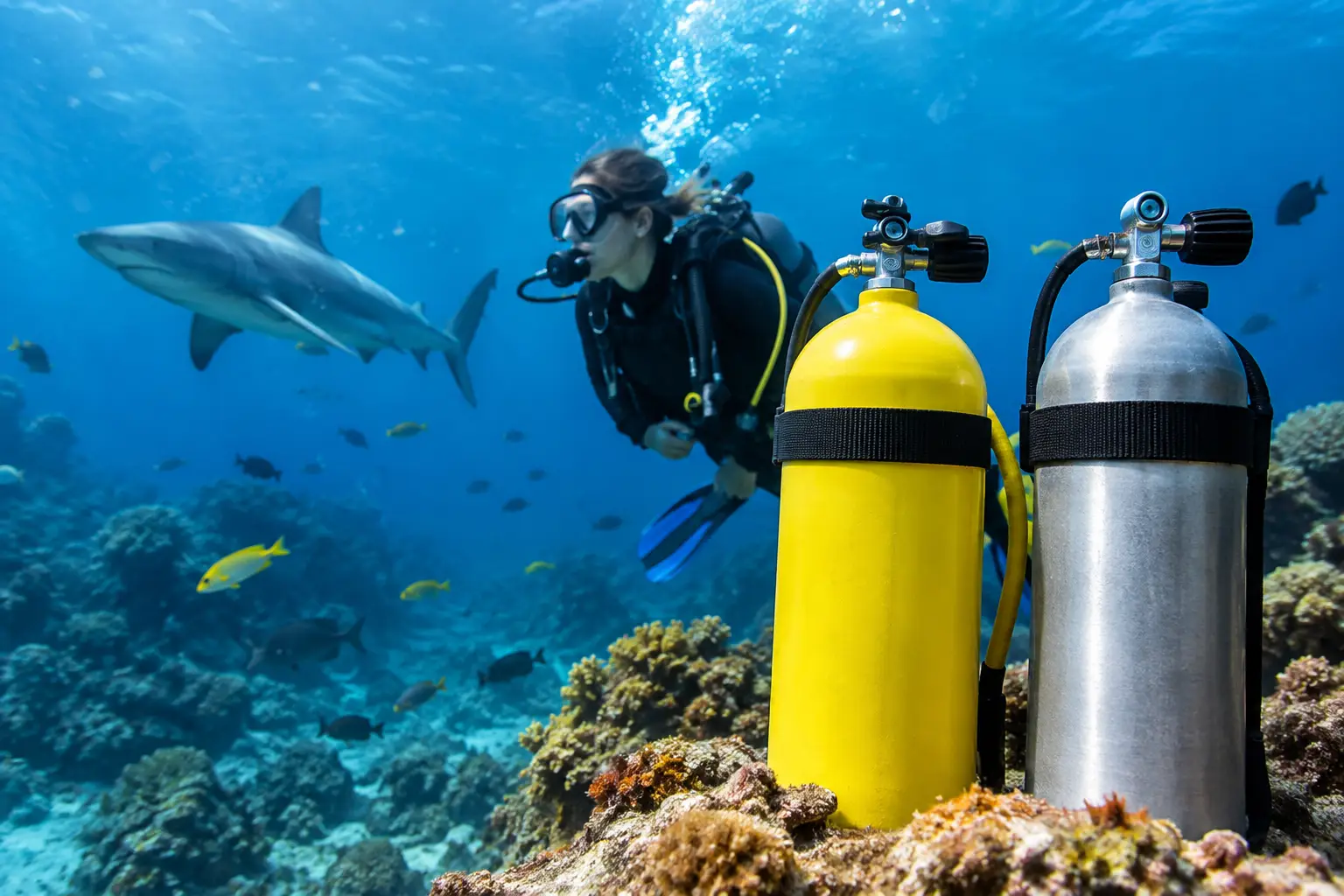
A second reef dive can be the one that changes the day: soft corals are fully open, the light has shifted, and a shark appears out of the blue. Nitrox versus air diving matters most when you want to make that dive with a sensible nitrogen load, not when you are chasing a bigger depth number. The right breathing gas is a planning decision shaped by your certification, profile, computer, and the way your body responds to a full day in the water.
For many certified divers, enriched air nitrox adds valuable flexibility to a Fiji itinerary built around multiple reef and shark dives. It is not automatically better than air, and it is never a substitute for disciplined dive planning. Understanding the trade-off is what lets you use it well.
Nitrox Versus Air Diving: The Core Difference
Compressed air is mostly nitrogen, with approximately 21 percent oxygen. Enriched air nitrox contains more oxygen than air, most commonly 32 percent or 36 percent. Because there is less nitrogen in every breath, your body takes on nitrogen more slowly at a given depth.
That lower nitrogen exposure is the practical appeal of nitrox. On dives within its depth limits, it can provide longer no-decompression limits compared with air, or leave you with a more conservative nitrogen loading when you keep the same bottom time. This is particularly useful on multi-dive days, when the goal is to enjoy the final dive with the same attention and control as the first.
The trade-off is oxygen exposure. Oxygen becomes a greater concern as depth increases, so nitrox has a shallower maximum operating depth, known as MOD. A standard 32 percent blend has an MOD of about 111 feet when planned to a 1.4 ATA maximum partial pressure of oxygen. Your dive team may apply more conservative limits depending on the dive plan and conditions.
Air offers far more depth flexibility. That does not mean it is the preferred choice for every deep dive, but it does mean nitrox is not the gas to select simply because a site is deeper. The planned maximum depth must always come first.
Why Nitrox Can Be Valuable on a Dive Vacation
A well-designed holiday can include a mix of reef walls, pinnacles, coral gardens, and shark encounters across several days. While every profile needs to be planned individually, nitrox can make a meaningful difference when dives are moderate in depth and repeated over the day.
Consider two divers making similar dives on a reef in the 60- to 90-foot range. The diver using nitrox may have more no-decompression time available than the diver breathing air. Alternatively, both divers can follow the same conservative bottom time, while the nitrox diver finishes with less nitrogen loading recorded by a properly set computer.
That second approach is often the smarter one. Extra no-decompression time is not an invitation to stretch every dive to the limit. It is a margin that can support a calm, unhurried profile when marine life holds your attention, currents shift, or a photo opportunity develops.
Some divers also report feeling less tired after nitrox dives. The evidence for a direct fatigue benefit is not conclusive, and fatigue can come from travel, dehydration, heat, exertion, poor sleep, or simply an active day on the ocean. Nitrox should be chosen for its measurable planning advantages, not a promise that it will make you feel energized.
When Air Is the Better Choice
Air remains an excellent, dependable breathing gas for recreational diving. It is often the best option when the dive demands deeper depth capability, when a nitrox blend does not suit the plan, or when a diver is not trained and certified to use enriched air.
It also makes sense for divers who want simple, familiar planning. There is no disadvantage in choosing air for a shallow or moderate dive when it comfortably fits within your no-decompression limits. Good diving is not about selecting the most specialized gas available. It is about matching the gas to the actual dive.
For deeper profiles, air may be necessary because nitrox reaches its oxygen limit too soon. At the same time, deeper recreational dives require greater awareness of nitrogen loading, gas consumption, narcosis, ascent planning, and the reduced margin available if conditions change. Choosing air does not make those considerations disappear.
Nitrox Safety Starts Before You Board
The most important nitrox procedure happens before entering the water: personally analyze your cylinder. Confirm the oxygen percentage with an oxygen analyzer, record the blend, label the cylinder, and establish the MOD. Then set your dive computer to the verified blend, not the blend you expected or used yesterday.
This is not paperwork for its own sake. A computer set to air while you breathe nitrox will calculate nitrogen exposure incorrectly. A computer set to a richer nitrox blend than the cylinder actually contains can be even more problematic, because it may overestimate your available no-decompression time. Your equipment and your plan need to reflect the gas in the tank.
Oxygen toxicity is the key hazard managed through MOD and exposure limits. At excessive partial pressures, oxygen can affect the central nervous system and, in rare worst-case circumstances, trigger a seizure underwater. Respecting depth limits, monitoring your depth, and following the plan make this a controllable risk rather than a mystery.
Before a nitrox dive, confirm four details with your buddy and guide: the analyzed oxygen percentage, MOD, planned maximum depth, and computer setting. That simple conversation is part of professional dive discipline, especially when divers in the same group are using different gases.
The Right Blend for Reef and Shark Diving
For many reef profiles, 32 percent nitrox is a popular, versatile choice. It offers a useful reduction in nitrogen exposure while retaining an MOD suited to a wide range of recreational dives. A 36 percent blend can offer additional no-decompression benefit on shallower sites, but its shallower MOD requires even more care.
Shark diving adds another reason to plan conservatively. The experience is thrilling, but the fundamentals remain unchanged: maintain excellent buoyancy, stay aware of depth and gas supply, follow your guide’s positioning instructions, and keep the focus on calm observation. No gas blend changes the need for sound judgment around powerful wild animals.
At The Colosseum in Beqa Lagoon, Coral Coast Divers plans every experience around established procedures, site conditions, and respectful shark behavior. Depending on the profile, air or nitrox may be appropriate. The best choice is the one that supports the briefing, depth range, and overall schedule, not the one that sounds more advanced.
Do You Need a Nitrox Certification?
Yes. To use enriched air nitrox, you need an enriched air certification from a recognized training agency. The course teaches the science in practical terms: oxygen percentages, partial pressures, MOD calculations, cylinder analysis, labeling, and computer configuration.
It is one of the most useful specialty certifications for active recreational divers because the knowledge is immediately applicable. Still, certification is only the beginning. The habit of analyzing every cylinder yourself and checking every setting should remain with you on every nitrox trip, wherever you dive.
If you are not certified, air keeps the decision simple and safe. If you are certified but have not used nitrox recently, tell the dive professional. A quick refresher on analysis and computer setup is a sensible part of preparing for the day.
How to Choose Before Your Next Dive Day
Start with the planned depth. If the site is near or beyond a blend’s MOD, choose a more appropriate gas, often air. Next, consider whether you are making several moderate-depth dives and whether nitrox offers a useful no-decompression or conservatism advantage.
Then look at the whole picture: your recent diving, surface intervals, hydration, exertion level, air consumption, weather, and comfort level. A diver who is cold, tired, or anxious should not use nitrox as a reason to extend a dive. End the dive with a reserve of gas, time, and attention.
The best gas plan supports the experience rather than becoming the experience. When your blend, limits, and equipment are correctly matched, you can devote more attention to the reef, your buddy, and the extraordinary life moving through the water around you.