
Marine Life Of Fiji
Fiji's reputation as a diving paradise is built upon a foundation of breathtaking biodiversity. Far more than just a place to see sharks, the archipelago is a vibrant mosaic of marine life, a living testament to the health and abundance of the Pacific Ocean. Its pristine reefs, crystal-clear lagoons, and deep-water channels host a staggering array of species, from the tiniest, most colorful nudibranchs to the largest pelagic giants.
Diving here is like entering a new world with every fin kick. The reefs are a bustling metropolis for every kind of fish imaginable, teeming with schools of fusiliers, brilliant parrotfish, and intricate coral trout. In the calm, shallow waters of the lagoons, sea turtles glide gracefully, while moray eels peek out from their coral hideouts. Beyond the reef walls, the open blue beckons with encounters with majestic manta rays, and if you’re lucky, even a passing humpback whale.
This rich tapestry of life is what makes Fiji's marine ecosystem so globally renowned. Each dive tells a different story, revealing a new character in this underwater drama. From the famous residents of the Beqa Lagoon to the countless species that call these waters home, Fiji offers a truly unparalleled exploration of the wonders of the sea. It’s an adventure that promises to delight, surprise, and leave you with an even greater appreciation for the magic beneath the waves.
Marine Mammals Of Fiji
Fiji's waters serve as both a permanent home and a vital migratory corridor for a significant number of marine mammals. At least 15 species are found in the region, ranging from acrobatic dolphins to the largest whales on the planet.
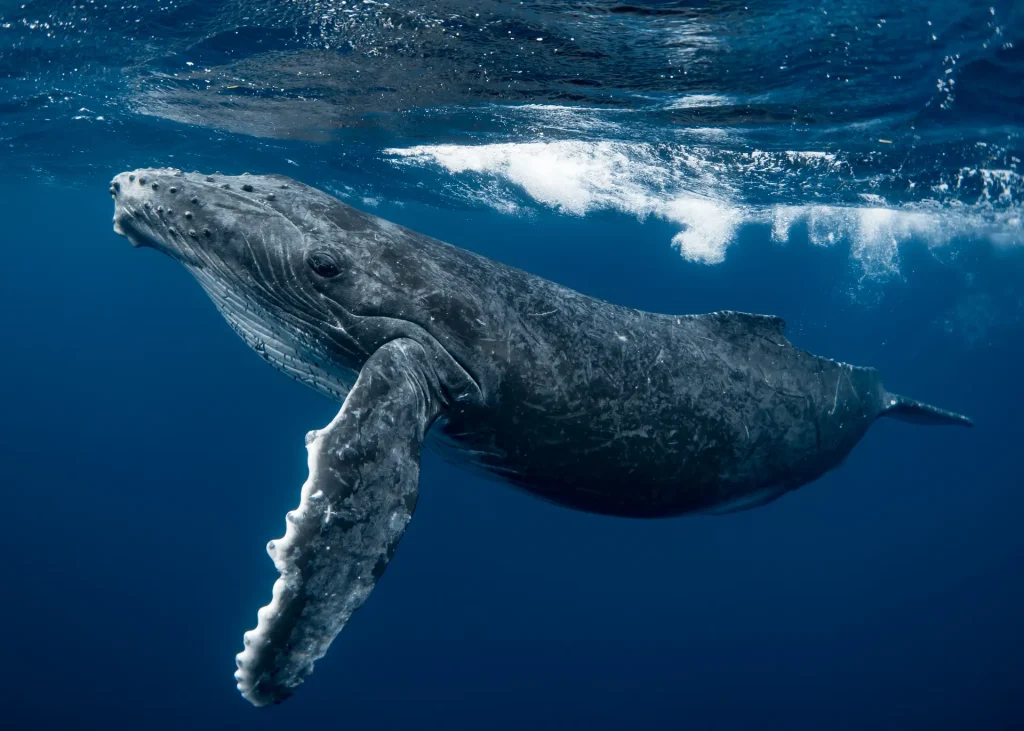
Humpback Whale
The Humpback Whale is a magnificent seasonal visitor to Fiji’s tropical waters. Known for their breathtaking acrobatic displays, these gentle giants journey from their Antarctic feeding grounds to the warmth of Fiji between July and October to breed and nurse their newborn calves. They are easily identified by their enormous size, dark bodies, and distinctively long white pectoral flippers. A small hump in front of their dorsal fin gives them their name, and the unique black-and-white patterns on the underside of their tail flukes are like fingerprints, allowing researchers to identify individual whales.
In Fiji, Humpback Whales are most often sighted in the deep, nutrient-rich channels of the Koro Sea and Bligh Water. These passages serve as a vital, protected corridor for mothers and their young during a vulnerable stage of their lives. Witnessing a mother Humpback guiding her calf through the calm Fijian seas is an unforgettable spectacle and a highlight of the winter months. As an endangered species still recovering from the era of commercial whaling, their annual presence underscores Fiji's global importance as a sanctuary for marine life.
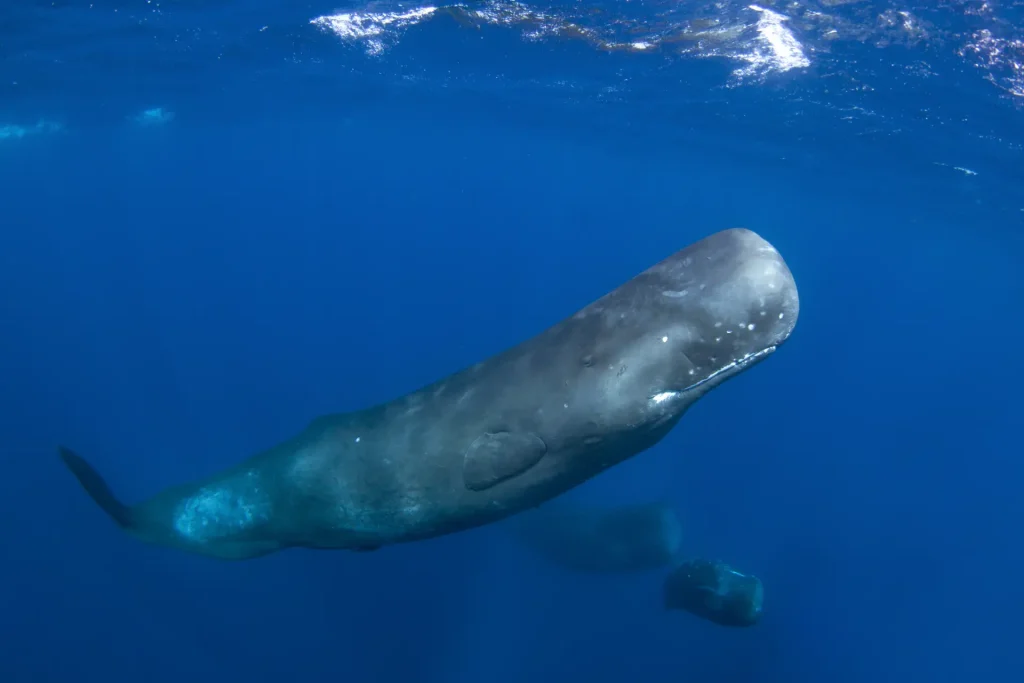
Sperm Whale
The Sperm Whale is the largest toothed predator on Earth, a deep-diving giant of profound cultural significance in Fiji. Instantly recognizable by its massive, block-shaped head—which can make up a third of its total body length—this whale is a master of the ocean depths. It navigates the deep offshore waters of Fiji, often migrating in social family groups. Capable of diving to incredible depths, Sperm Whales hunt for their primary prey, the elusive giant squid, in the dark abyss far from shore.
While sightings are rare, the Sperm Whale holds a sacred place in Fijian culture. Its polished tooth, known as a tabua, is the most valuable and revered cultural item in Fijian society. The tabua is not a commercial good but a supreme gift of honor, respect, or atonement, exchanged during significant ceremonies like weddings, funerals, and major tribal negotiations. This tradition imbues the distant, mysterious Sperm Whale with a powerful and enduring connection to the Fijian people.
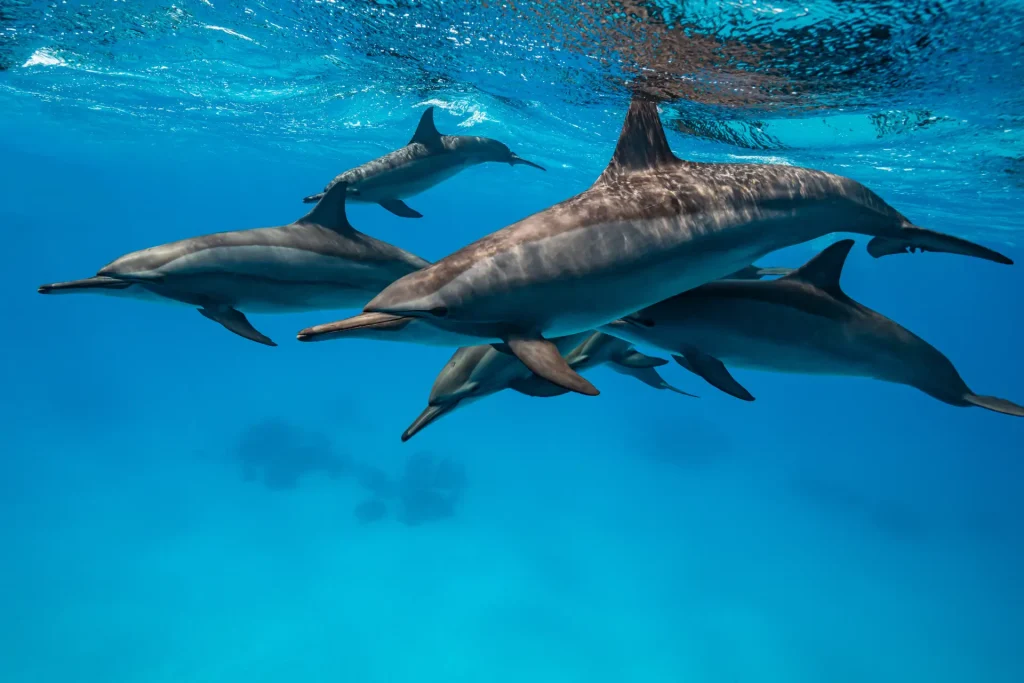
Spinner Dolphin
Fiji’s most common and charismatic dolphin, the Spinner Dolphin, is a year-round resident celebrated for its joyful and spectacular acrobatic displays. Named for their incredible habit of leaping from the water and spinning multiple times in mid-air, these dolphins are a delight to watch. They have a slim, graceful build with a long, slender beak and a distinct three-part color pattern: a dark grey back, lighter grey sides, and a pale white belly.
Spinner Dolphins are highly social, often traveling in large pods that can number up to 40 individuals. They are frequently found in specific locations around the islands, including the protected Moon Reef off the Suncoast, the expansive Natewa Bay on Vanua Levu, and throughout the Mamanuca and Yasawa Islands. Typically, they spend their days resting in calm, sheltered bays and move offshore at night to hunt. Their playful nature and reliable presence have made them a star attraction for ecotourism, supporting local communities and showcasing the vibrant life within Fiji’s protected waters.
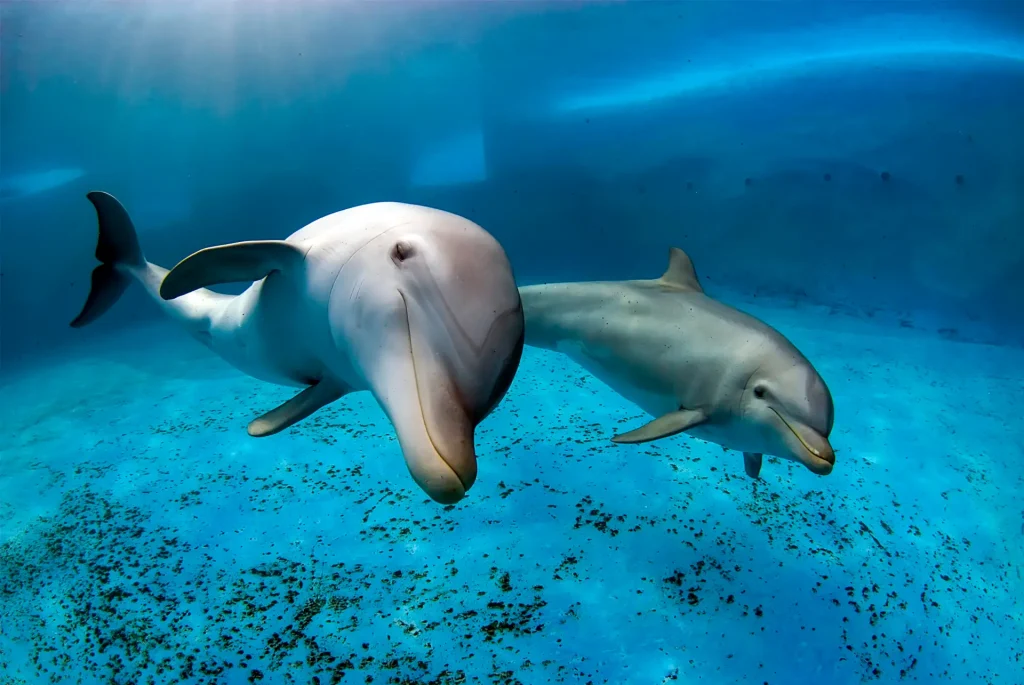
Bottlenose Dolphin
The Bottlenose Dolphin is one of the most intelligent and recognized marine mammals in the world, and it is a familiar, year-round resident of Fiji’s coastal waters. With a robust, powerful body, a short, thick beak, and a tall, curved dorsal fin, this species is the quintessential dolphin. Their curious and often playful nature makes encounters with them a memorable experience for boaters and snorkelers.
Found in a wide range of habitats from shallow bays to the open ocean, Bottlenose Dolphins live in social groups called pods. In Fiji, they are often seen on dolphin-watching tours, sometimes mingling and interacting with the more acrobatic Spinner Dolphins. As a protected species in Fiji, the presence of healthy Bottlenose Dolphin populations is a positive indicator of the overall health of the country's marine ecosystem. Their intelligence and adaptability allow them to thrive in Fiji’s diverse underwater environments.
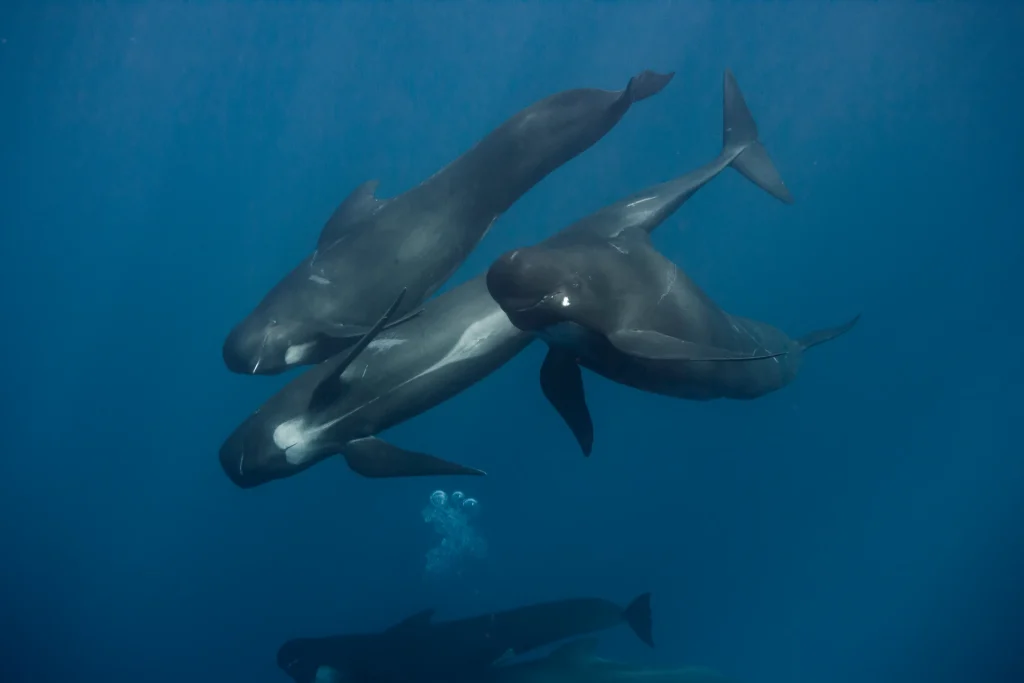
Pilot Whale
A large and highly social member of the oceanic dolphin family, the Pilot Whale is a year-round inhabitant of Fiji’s deeper waters. These intelligent animals are known for their tight-knit family pods, which can number around 50 individuals. They are easily distinguished by their dark grey or black coloration, a bulbous, melon-shaped head, and a low, wide-based dorsal fin set far forward on their body.
Pilot Whales are most frequently sighted in the deep, current-rich waters of the Somosomo Strait off Taveuni and around the island of Kadavu, where they have established feeding grounds. They are curious by nature, and under the right conditions, it is sometimes possible for snorkelers to share the water with these gentle giants. Their consistent presence in these specific areas makes them a fascinating subject for observation and highlights the ecological richness of Fiji’s offshore marine habitats.
Sharks Of Fiji
Fiji is globally renowned as one of the world's premier shark diving destinations, a place where ancient cultural reverence and modern conservation have created a sanctuary for these magnificent apex predators. The nation's nutrient-rich passages and vibrant coral reefs support an incredible diversity of shark species, offering unparalleled underwater encounters. From the common Whitetip and Blacktip Reef Sharks that patrol the shallow lagoons to the powerful Bull and Tiger Sharks that command the deeper waters, Fiji provides a thrilling spectacle for divers of all levels.
This abundance is deeply intertwined with Fijian culture, where the shark god Dakuwaqa is revered as a guardian of the reefs. This profound respect, combined with world-leading marine protection and responsible ecotourism, has allowed shark populations to thrive. An encounter with Fiji's sharks is more than just a dive; it's an experience that connects you to the raw power of the ocean and a culture that has long understood the vital importance of these majestic creatures.
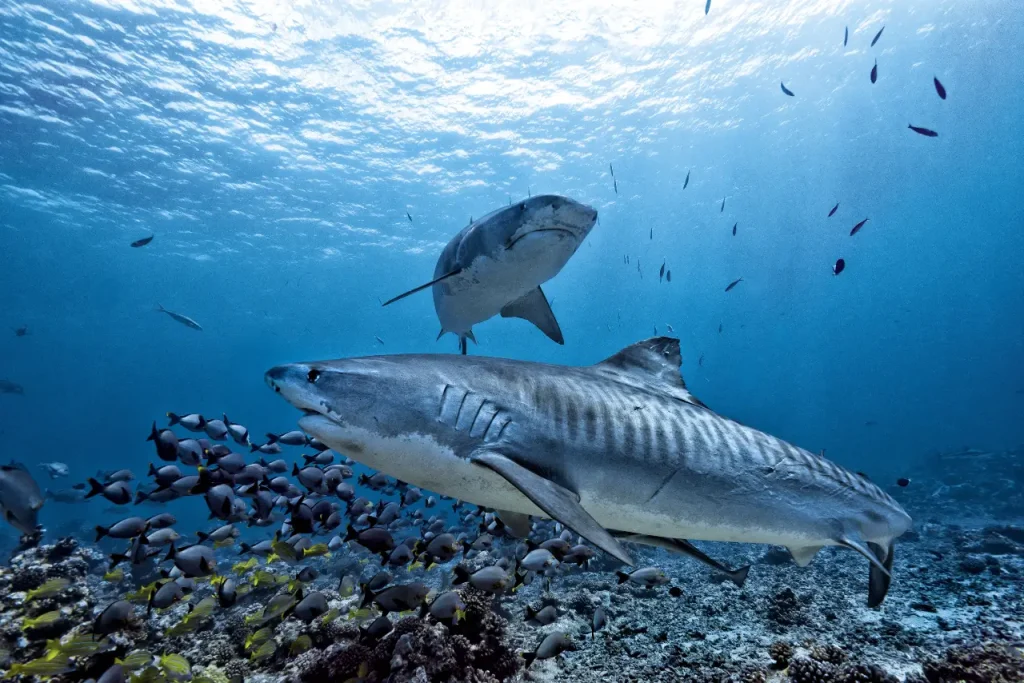
Tiger Shark
The Tiger Shark is one of Fiji’s most formidable and sought-after apex predators. Growing up to five meters in length, this powerful shark is easily identified by the distinctive dark stripes running down its flanks, which are more prominent in juveniles and fade as the shark matures. While typically solitary and nomadic, Fiji is unique in that the same individual Tiger Sharks are seen repeatedly at specific dive sites.
In Fiji, the premier location for encountering these magnificent creatures is "The Colosseum" in Beqa Lagoon. Here, during our carefully managed dives, divers can observe these cautious yet curious sharks. Some of the resident sharks have been visiting the site for nearly two decades and are so familiar they have been given names by the local dive masters. In Fijian mythology, the shark god Dakuwaqa is a revered guardian of the reefs, and this deep cultural respect contributes to the conservation of sharks throughout the islands.
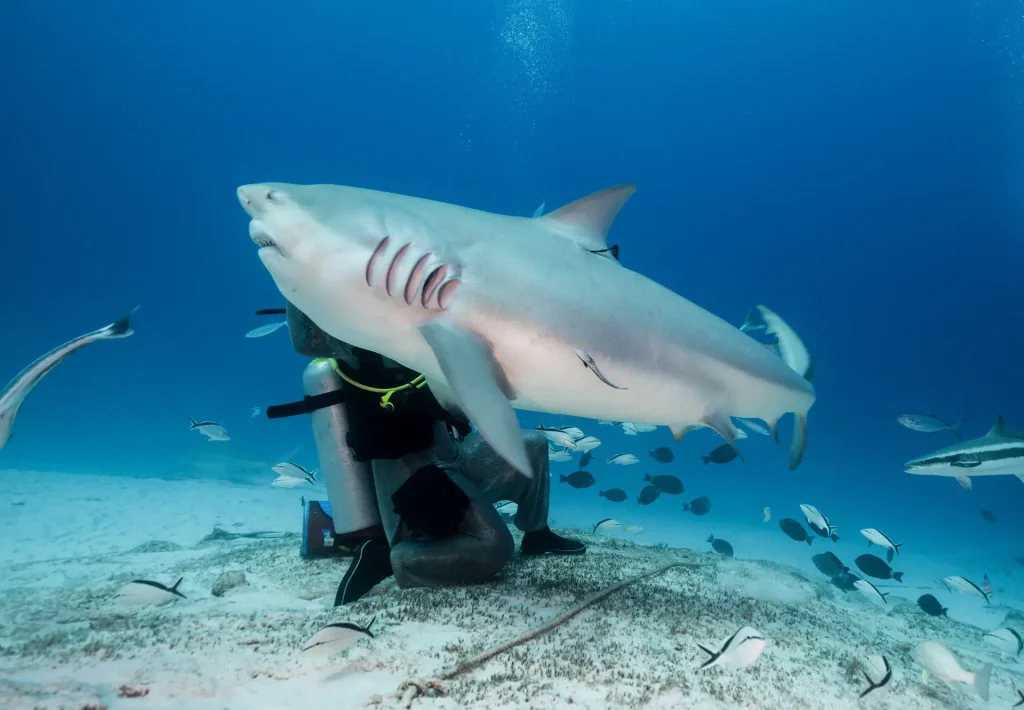
Bull Shark
Considered Fiji's signature shark species, the Bull Shark is a powerful and impressive predator that draws divers from around the globe. They are easily recognized by their stocky, bulky body, short blunt snout, and classic coloration with a dark grey back and a white underbelly. These sharks can reach over three meters in length and weigh more than 200 kilos.
Bull Sharks are reliably encountered in large numbers at The Colosseum in Beqa Lagoon and in the waters of the Yasawa Islands. During organized, baited dives, large and inquisitive female Bull Sharks are the most common visitors, making for unforgettable, up-close encounters. While they are present year-round on our Fiji Shark Dive, their numbers can be less between November and January, which is believed to be their mating season. The well-managed shark diving industry in Fiji has transformed this feared predator into a valuable natural asset, providing a powerful economic incentive for conservation that directly supports local communities.
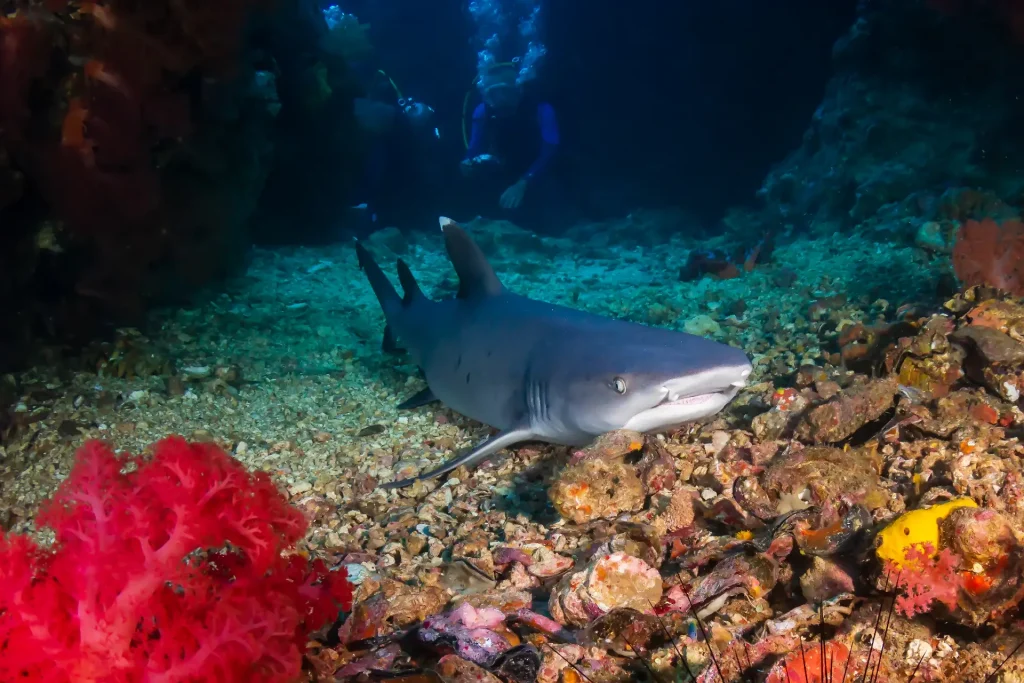
Whitetip Reef Shark
The Whitetip Reef Shark is one of the most common and easily identified sharks found on Fiji’s coral reefs. This slender shark rarely exceeds 1.6 meters and is distinguished by its broad, flattened head and the unmistakable, brilliant white tips on its first dorsal fin and the upper lobe of its tail fin.
This species is a ubiquitous presence across all of Fiji's reef systems. They are primarily nocturnal hunters and are often seen by divers during the day resting motionless on sandy bottoms, under ledges, or inside caves, sometimes in social groups. At night, they become highly active, using their slim bodies to hunt in packs, probing every nook and cranny of the reef for fish, octopus, and crustaceans. The Whitetip Reef Shark is the most frequently observed species in Fiji, highlighting its importance to the local ecosystem.
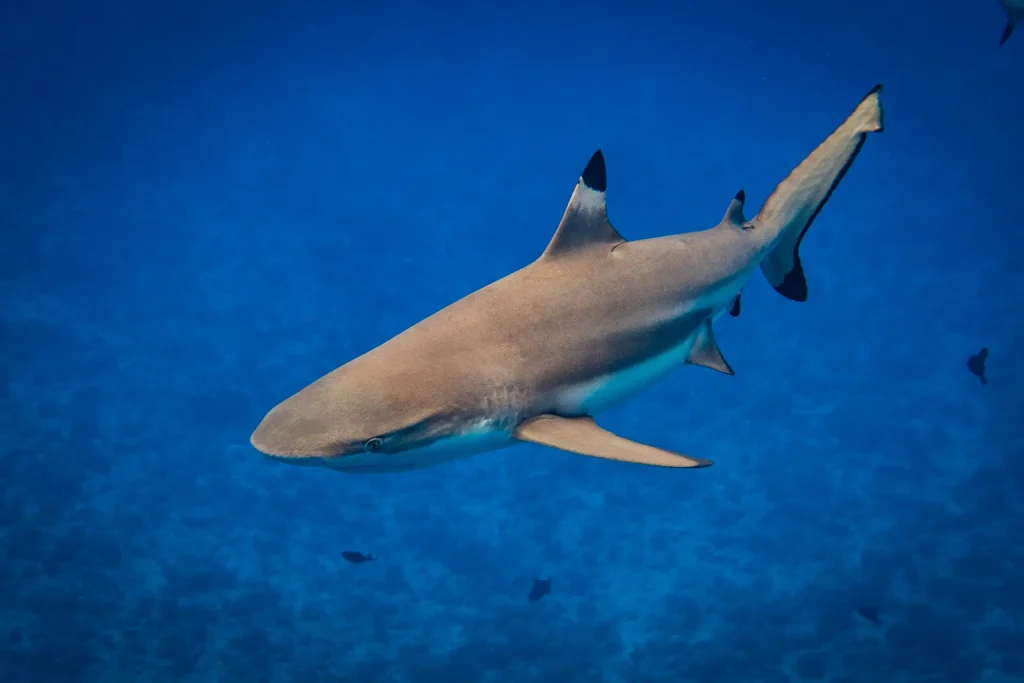
Blacktip Reef Shark
The Blacktip Reef Shark is a common but shy inhabitant of Fiji's shallow coastal waters. Similar in size to the Whitetip, this shark is easily identified by the prominent, solid black tips on all of its fins. They are often seen patrolling the crystal-clear waters of lagoons and reef edges, sometimes in water just a meter deep.
While they are found throughout the islands, including the Yasawas, Blacktip Reef Sharks are more timid than their Whitetip cousins and can be wary of snorkelers and divers. Their preference for shallow, inshore habitats makes them a frequent sight for those exploring the reef flats, but their cautious nature means they are best observed from a respectful distance. Their presence is a good indicator of a healthy and thriving shallow reef ecosystem.
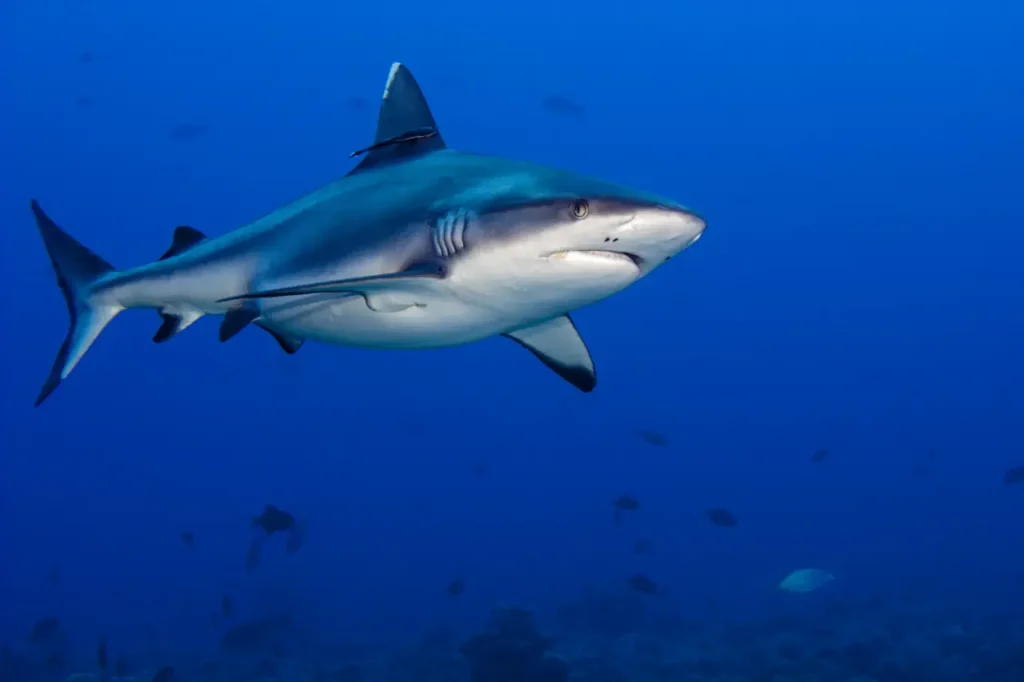
Grey Reef Shark
The Grey Reef Shark is an active, social shark commonly found on outer reef slopes and in passages with strong currents. This is a classic-looking reef shark with a streamlined body and a broadly rounded snout. Its key identifying feature is a distinct, wide black margin along the entire trailing edge of its tail fin.
In Fiji, they are frequently sighted on outer reef drop-offs and in current-swept channels like Naiqoro Passage in the Great Astrolabe Reef. They are known to be curious and will often approach divers. Grey Reef Sharks are social animals, often forming groups during the day before dispersing to hunt alone at night. When they feel cornered, they are known to perform a distinctive threat display, arching their back and lowering their pectoral fins as a warning.
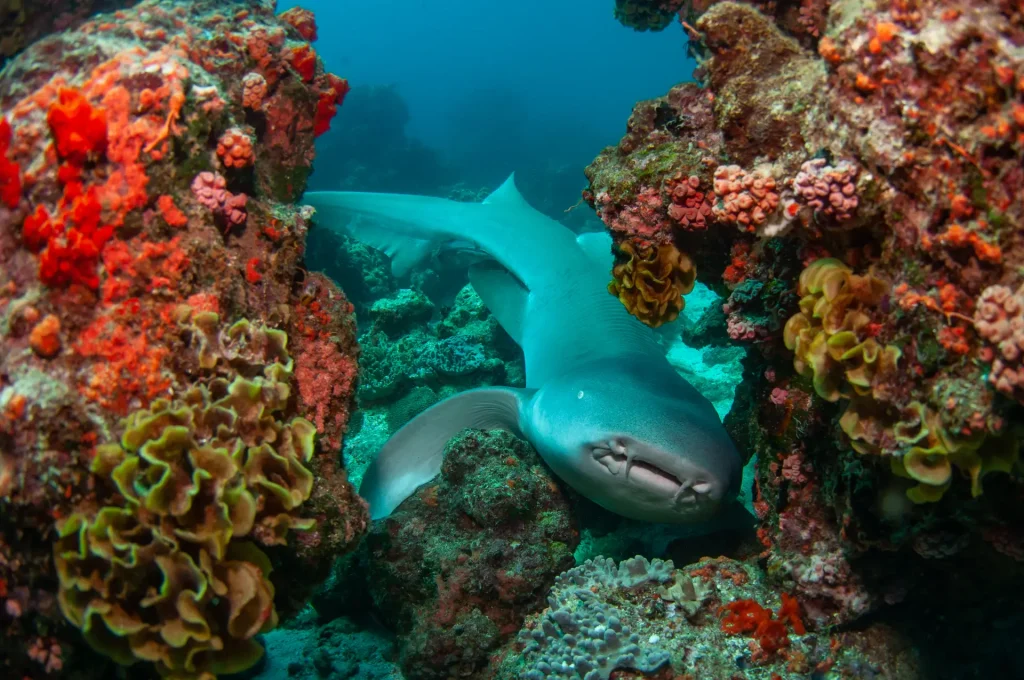
Tawny Nurse Shark
The Tawny Nurse Shark is a large, placid, bottom-dwelling shark that is a favorite among divers in Fiji. This nocturnal species has a robust, yellowish-brown body, a broad head with sensory barbels near its mouth, and the ability to pump water over its gills, allowing it to rest motionless on the seafloor.
During the day, Tawny Nurse Sharks are frequently seen resting in large, docile groups in caves, under ledges, and in sandy channels. They are an almost guaranteed sighting on the famous shark dives at The Colosseum and are also commonly found in the Somosomo Strait. At night, they become active hunters, searching the reef for crustaceans, octopus, and small fish. Their calm demeanor and tendency to congregate in "cuddling puddles" make them a unique and memorable part of the Fijian diving experience.
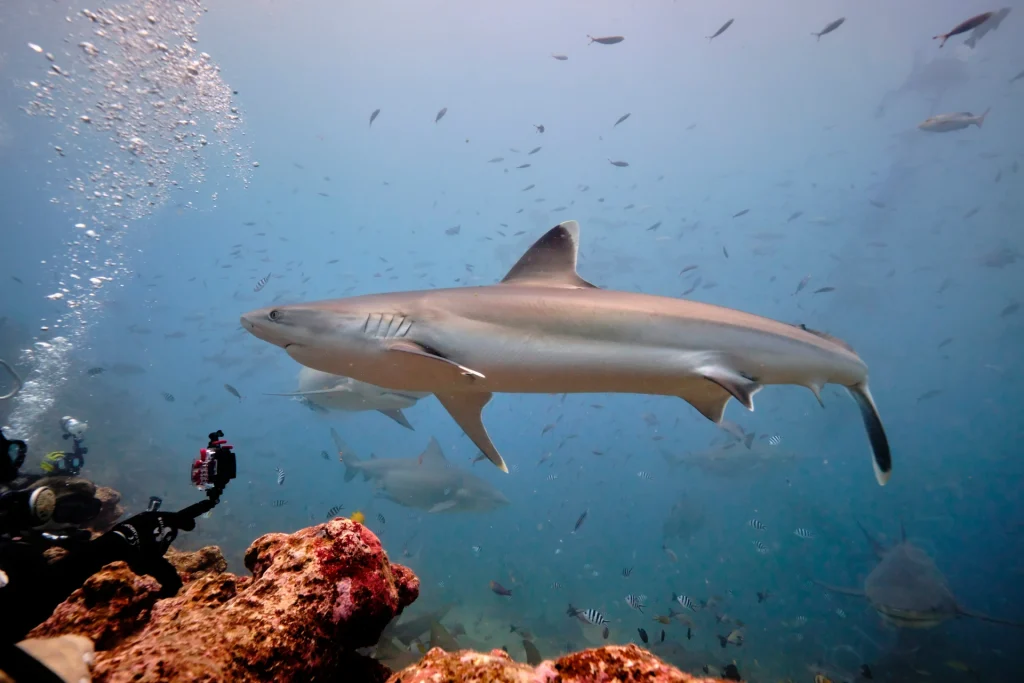
Silvertip Shark
The Silvertip is a sleek and powerful shark known for its bold and inquisitive nature. This streamlined predator is easily identified by the conspicuous white tips and trailing edges on all of its fins. Built for speed, it has a muscular body and a sharp snout, making it an agile hunter of the outer reefs.
Silvertips are less common than other reef sharks and are typically found on exposed outer reef drop-offs. In Fiji, they are most reliably encountered during baited dives at The Colosseum in Beqa Lagoon. Here, large female Silvertips, some known by name, are regular visitors. They are often the first to arrive at a feeding, confidently making several fast passes, but will retreat when larger Bull or Tiger Sharks appear.
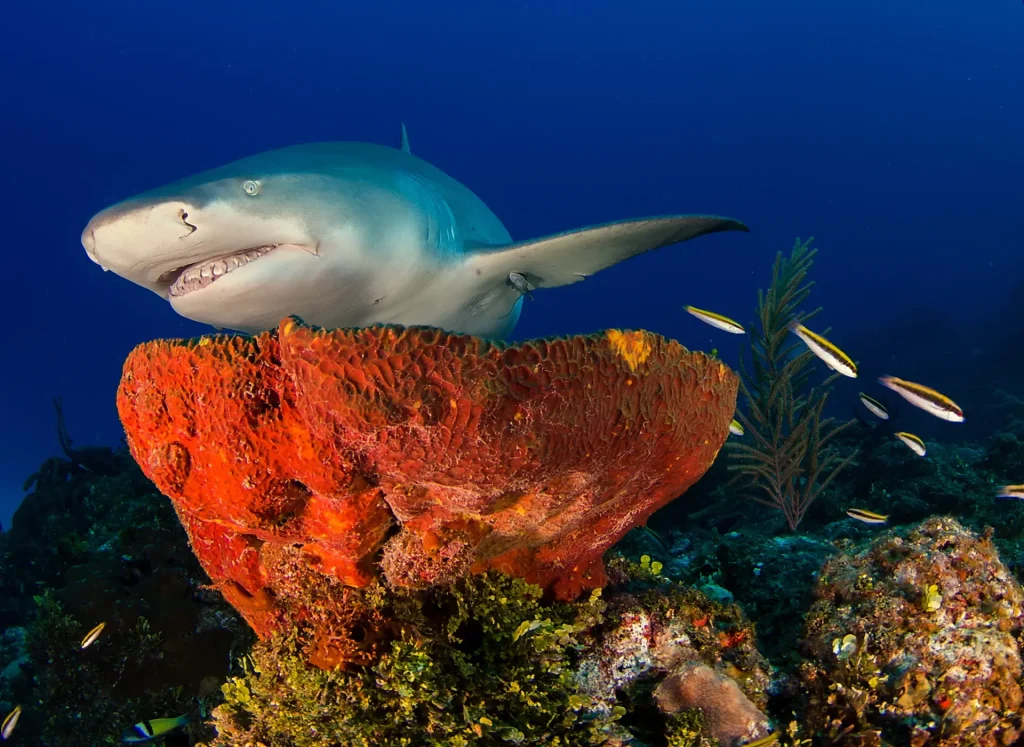
Sicklefin Lemon Shark
The Sicklefin Lemon Shark is a more elusive, but highly rewarding, shark encounter in Fiji’s waters. Named for its yellowish coloring, this large, stocky shark is a powerful bottom-dwelling predator often found in and around Beqa Lagoon. It is commonly seen during the shark dives at The Colosseum, a sighting of this normally shy creature is a true highlight for any diver.
Recognized by its broad, blunt snout and two nearly equal-sized dorsal fins, the Sicklefin Lemon Shark is a nocturnal hunter. During the day, it is often found resting motionless on the sandy seafloor or cruising slowly near the bottom. At night, it becomes an active predator, using its excellent camouflage to ambush prey like smaller fish, rays, and crustaceans. Though they can be curious, they are generally cautious and will often retreat if approached. Beqa Lagoon’s sheltered coves and sandy-bottomed channels provide an ideal habitat, serving as crucial nursery grounds where juvenile lemon sharks can grow in safety.
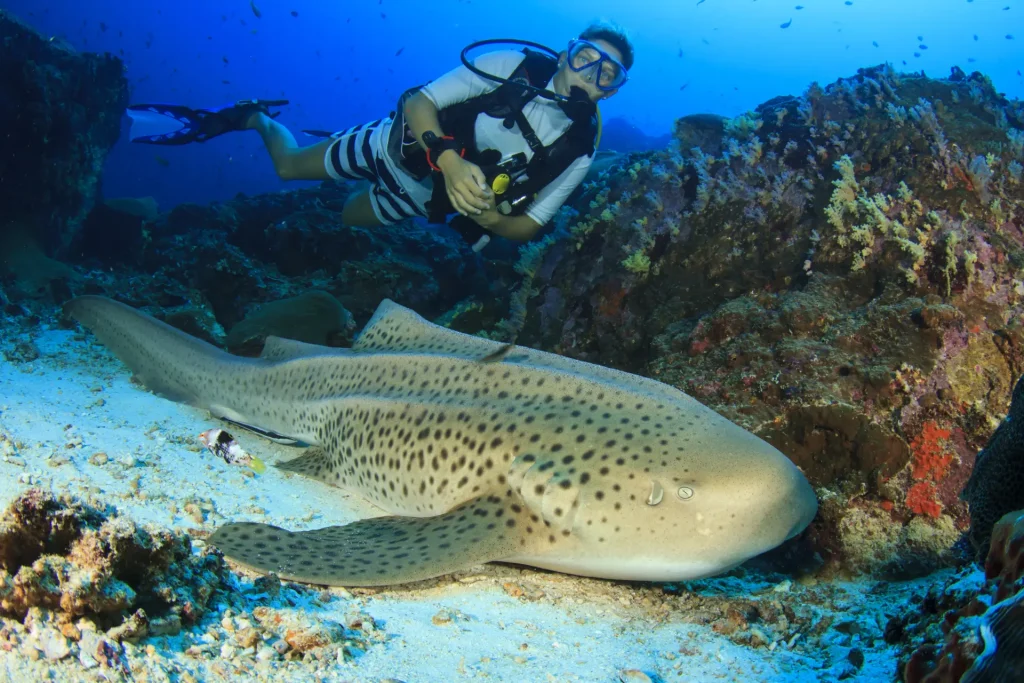
Zebra (Leopard) Shark
The Zebra Shark is a docile and distinctive bottom-dwelling shark that undergoes a dramatic transformation in appearance as it ages. The common name "Zebra Shark" refers to the juvenile stage, which is dark with vertical yellow stripes. As the shark matures, these stripes break apart into the small dark spots of the adult, which is why it is also commonly called the "Leopard Shark." Adults have a yellowish-brown body and a remarkably long, sweeping tail fin that is nearly the length of their body.
This nocturnal species is often found resting on sandy bottoms near coral reefs during the day, and its timid nature poses no threat to divers. At night, it becomes an active hunter, using suction to feed on mollusks and crustaceans in the sand.
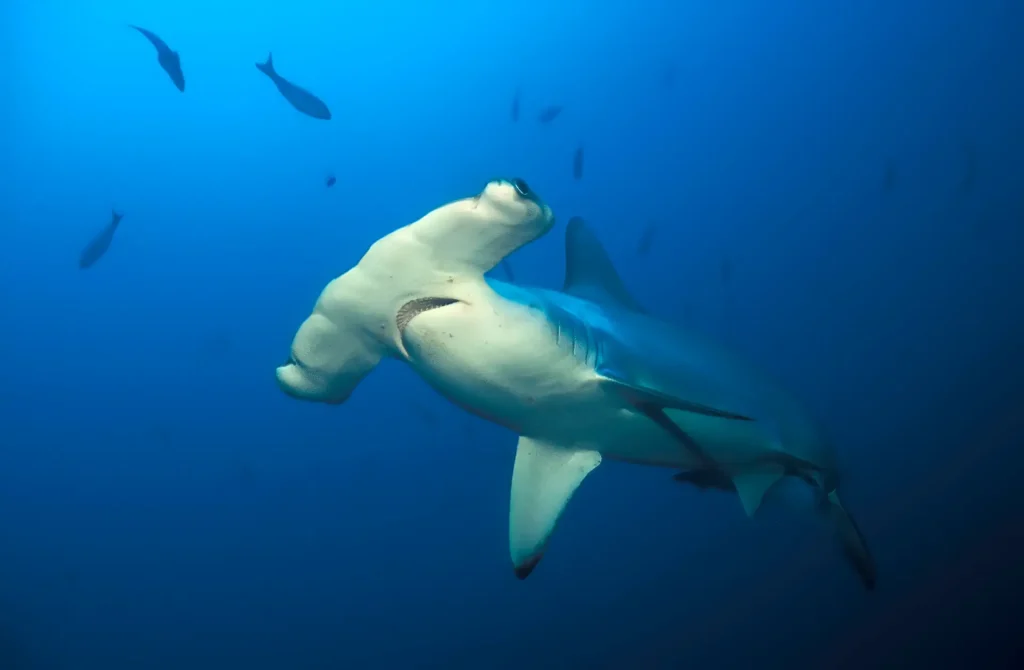
Scalloped Hammerhead Shark
The Scalloped Hammerhead is an iconic shark species, instantly recognizable by the unique shape of its head, known as a "cephalofoil." The leading edge of their wide, flattened head has a distinct central indentation, giving it a scalloped appearance that is thought to enhance its sensory abilities.
In Fiji, these pelagic sharks are found in deep water and are most reliably seen around offshore seamounts and pinnacles, such as Mt. Mutiny and E-6 in the Bligh Water and Namena Marine Reserve. While researchers have documented giant schools in very deep water, divers are more likely to encounter solitary individuals or small schools that venture into shallower depths to investigate the strange, bubble-blowing visitors.
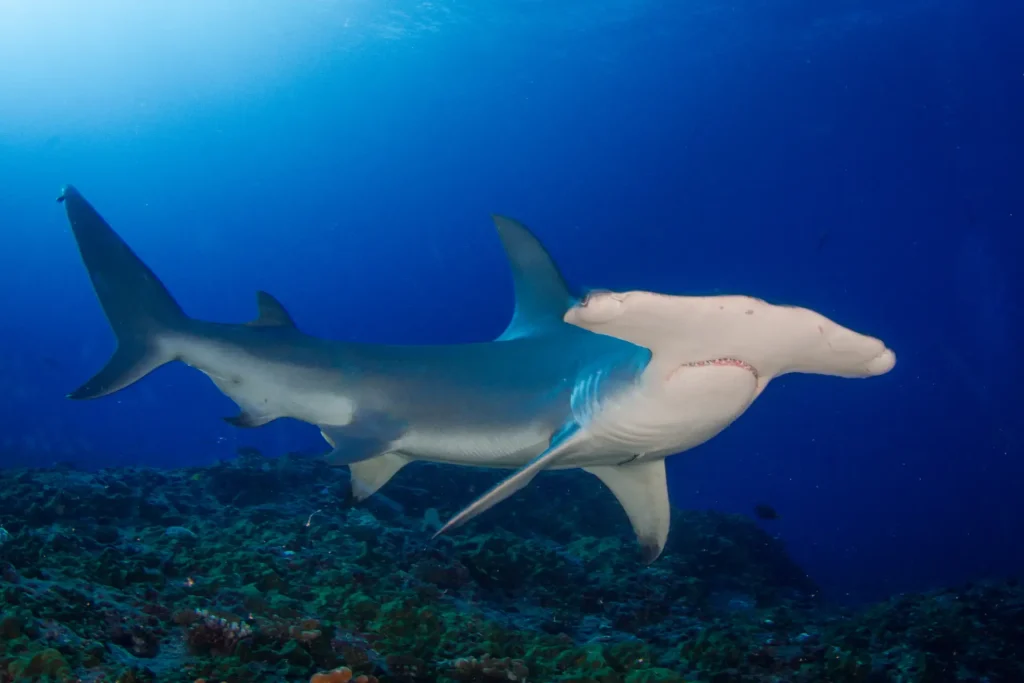
Great Hammerhead Shark
The largest of the hammerhead species, the Great Hammerhead is a powerful and solitary predator that represents a rare and prized sighting in Fiji. It is distinguished from its scalloped cousin by its larger size and a cephalofoil that is almost straight across the front edge. It also has a very tall, sickle-shaped first dorsal fin, adding to its impressive profile.
Typically found roaming the open ocean and along deep reef edges, the Great Hammerhead is more solitary and elusive than other hammerhead species. Encounters with this endangered shark are uncommon and truly special, highlighting the wild and untamed nature of Fiji’s offshore waters.
Rays of Fiji
Gliding through Fiji’s turquoise waters with unparalleled grace, rays are among the most majestic and awe-inspiring creatures of the reef. From the colossal Reef Manta Ray, with its incredible wingspan, to the strikingly beautiful Spotted Eagle Ray, these cartilaginous fishes captivate all who encounter them. Fiji’s nutrient-rich channels and pristine coral reefs create the perfect environment for these gentle giants and their smaller cousins, making the islands a world-class destination for swimming, snorkeling, and diving with them. An encounter with a ray in Fiji is a truly magical experience, a silent ballet that showcases the serene beauty and wonder of the underwater world.
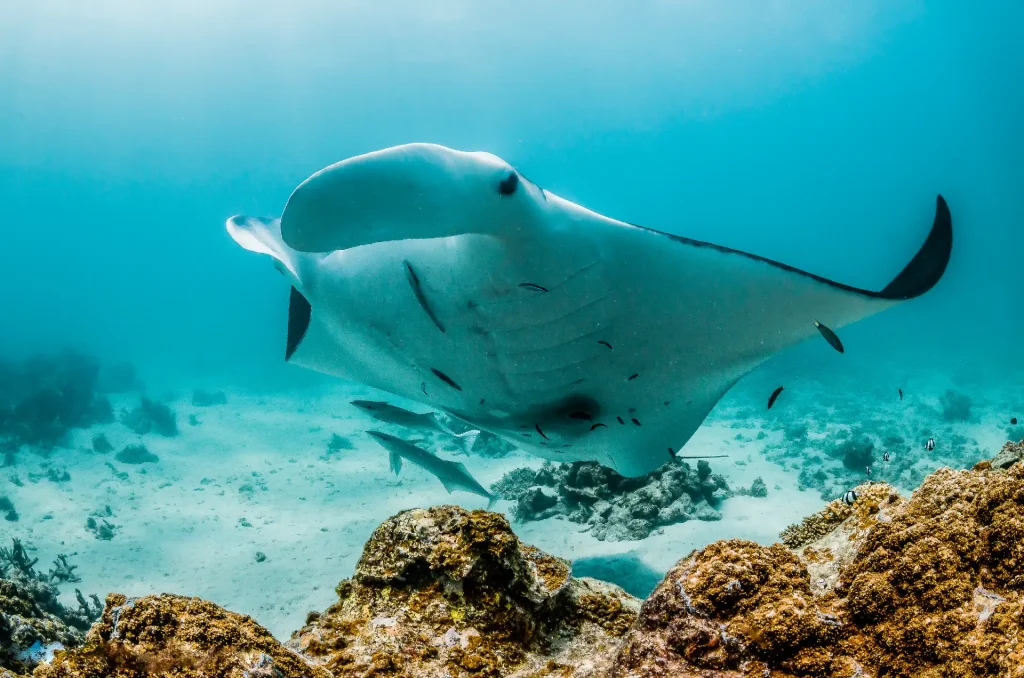
Reef Manta Ray
The Reef Manta Ray is one of Fiji’s most iconic and beloved marine animals. Known in Fijian as "Vai," these gentle giants are a major draw for snorkelers and divers, gathering seasonally in predictable locations to feed on plankton. With an average wingspan of three to three-and-a-half meters, their graceful flight through the water is a breathtaking spectacle.
The best time to see Reef Manta Rays in Fiji is from May to October, when currents funnel vast amounts of plankton through specific channels, creating a reliable feast. The most famous of these locations is the "Manta Ray Passage" between Naviti and Drawaqa Islands in the Yasawas. Other key aggregation sites include Manta Reef near Kadavu and the waters around Vanua Levu. These intelligent rays also frequent "cleaning stations," where they hover patiently as small fish remove parasites from their bodies, offering incredible opportunities for close, respectful observation.
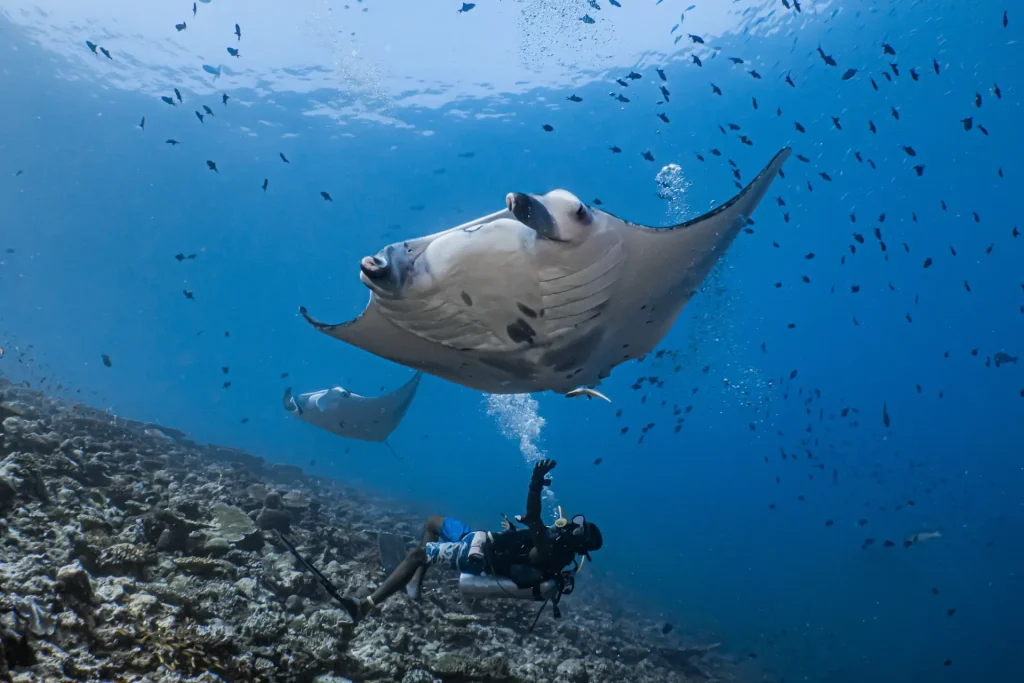
Oceanic Manta Ray
A truly colossal and rare sight, the Oceanic Manta Ray is the largest ray species in the world, capable of reaching a wingspan of over seven meters. Unlike its coastal cousin, the Reef Manta, this is a true giant of the open ocean, a pelagic wanderer that roams the deep blue. Sightings in Fiji are far less common, making any encounter an incredibly special and memorable event.
Oceanic Manta Rays are found in deeper, more open waters where they dive hundreds of meters in search of zooplankton. In Fiji, they are occasionally seen in areas with significant deep-water upwellings, such as the nutrient-rich Bligh Water. They can be distinguished from Reef Mantas by their immense size and distinct T-shaped markings on their back. The presence of these endangered giants highlights the health and productivity of Fiji’s offshore ecosystems.
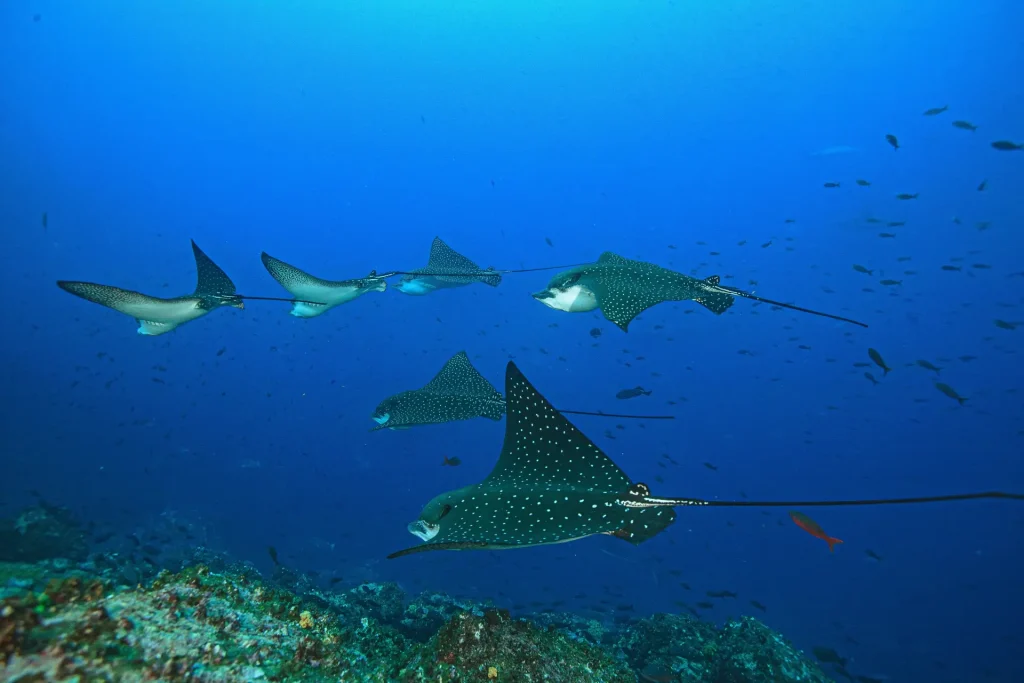
Spotted Eagle Ray
The Spotted Eagle Ray is one of the most strikingly beautiful rays in Fiji’s waters. Often seen "flying" gracefully in small groups, its dark dorsal surface is covered in a mesmerizing pattern of white spots and rings. A distinctive, flattened snout, resembling a duck's bill, is perfectly adapted for digging in the sand to uncover its favorite prey of mollusks and crustaceans.
These elegant rays are a common sight throughout Fiji, cruising over sandy flats, in shallow lagoons, and along the outer edges of reefs. A particularly well-known spot to see them is Eagle Rock, located within the Great Astrolabe Reef. While beautiful, they should be observed with respect, as their long, whip-like tail is armed with several venomous barbs at its base for defense.
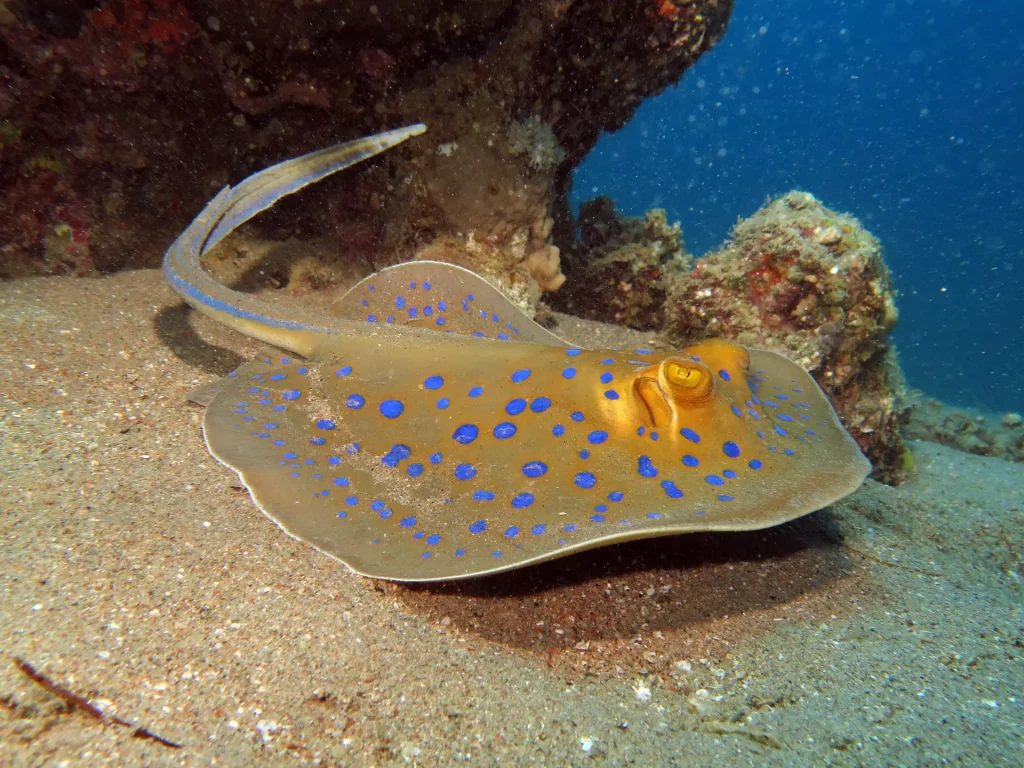
Bluespotted Ribbontail Ray
A vibrant jewel of the reef floor, the Bluespotted Ribbontail Ray is a colorful and common stingray found in sandy areas throughout Fiji. This relatively small ray has a greyish or tan oval-shaped body covered in brilliant, electric-blue spots, making it instantly recognizable.
This species is often found resting during the day, partially buried in the sand under coral ledges or inside small caves to hide from predators. At high tide, they become more active, moving onto shallow sandy flats to forage for invertebrates. While generally shy, their stunning coloration makes them a favorite find for snorkelers and divers exploring the interface between the reef and the sand.
See it for yourself
Questions or ready to book? Get in touch with the Coral Coast Divers team in Pacific Harbour.