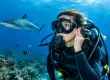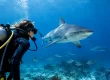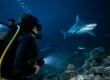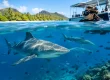
The top Beqa marine life is not defined by one headline encounter. It is the rare combination of powerful sharks, immense groupers, active reef fish, coral gardens, and the unexpected animals that appear when you slow down between the big moments. In Fiji’s Beqa Lagoon, a single descent can feel like a lesson in scale: one minute you are watching a bull shark move through blue water, and the next you are focused on a hawkfish no larger than your thumb.
For divers who travel for meaningful underwater experiences, that range matters. Shark diving may be the reason you book the trip, but the health and variety of the surrounding ecosystem are what make each day underwater feel complete.
Top Beqa Marine Life: Sharks That Define the Experience
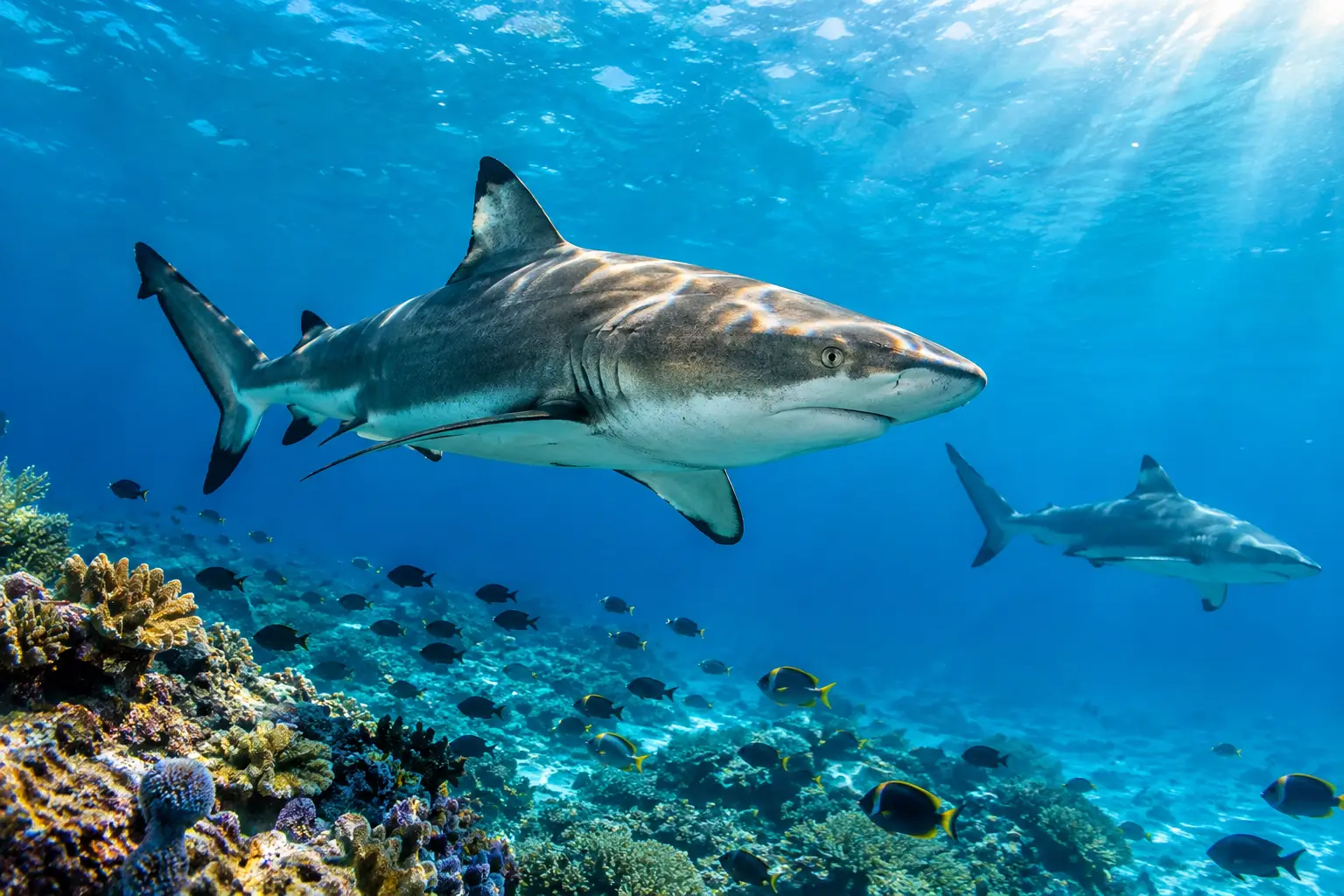
Beqa Lagoon is internationally recognized for shark encounters, particularly at The Colosseum, a private marine protected area where structured shark dives are conducted with experienced professionals, established safety procedures, and careful briefing standards. These encounters are exhilarating because the sharks are present on their own terms. Divers observe from designated positions, maintain awareness, and let trained guides manage the operation.
Bull sharks are often the species that leaves the strongest impression. They are substantial, confident animals with a broad profile and deliberate movement. Seeing one at close range changes the way many divers think about sharks. The experience is not about a staged thrill. It is about witnessing an apex predator behaving with purpose in its natural environment.
Tiger sharks can also make memorable appearances. Their size, distinctive markings, and unhurried presence create a very different kind of encounter from a faster-moving reef shark. Not every dive delivers every species, and that unpredictability is part of authentic wildlife diving. Conditions, seasonal patterns, and natural animal behavior always shape the day.
Other sharks may include whitetip reef sharks, blacktip reef sharks, gray reef sharks, lemon sharks, and occasional pelagic visitors. Each species occupies its own role in the ecosystem. Reef sharks patrol the reef edge and channels, while larger sharks move through a broader seascape. Watching those differences is one of the most rewarding parts of repeated diving in the lagoon.
How to Get the Most From a Shark Encounter
The best shark divers are calm, attentive observers. Good buoyancy helps you remain stable without touching the bottom or drifting into another diver’s space. A controlled breathing rhythm helps as well, especially when the first large shark comes into view.
Camera discipline matters. A wide-angle setup can be ideal for large animals, but the shot should never take priority over your position or the guide’s instructions. Avoid chasing, reaching toward, or blocking an animal’s path. The strongest images usually come from patience, correct placement, and respect for the encounter.
Giant Groupers and the Characters of the Reef
Sharks may command attention, but giant groupers are often the reef’s most charismatic residents. These large fish can appear remarkably composed as activity unfolds around them. Their size makes them impressive, yet they are also a reminder that reef ecosystems need mature, established animals to function well.
Look beyond the largest grouper and the reef begins to reveal a crowded community. Schools of snapper and trevally gather in moving silver formations. Surgeonfish graze over coral surfaces. Butterflyfish travel in pairs, while angelfish and bannerfish bring color to the mid-water scene. Parrotfish are especially valuable reef residents, grazing algae and helping keep coral habitat from being overgrown.
For photographers, these fish offer a useful counterpoint to shark imagery. A reef scene with schooling fish can show the full setting of a dive site, while a close portrait of a grouper or butterflyfish captures personality. It is worth planning for both perspectives rather than treating reef life as background scenery.
Corals, Crustaceans, and Small Life Worth a Closer Look
The most memorable dives often have two scales. There is the wide-angle spectacle of sharks and schooling fish, then there is the macro world hiding in plain sight. Beqa’s reef structure can support hard corals, soft corals, sea fans, sponges, and crevices where smaller marine life finds food and shelter.
Take time along coral heads and protected sections of the reef. Cleaner shrimp may work from small stations, while crabs and lobsters stay tucked under ledges. Nudibranchs, blennies, gobies, and juvenile fish reward divers who move slowly and look carefully. A good guide can help point out animals that would otherwise blend into the reef.
This is also where responsible diving becomes very practical. Never rest a hand, fin, camera, or pointer on coral. Even contact that seems minor can damage living tissue or disturb the animals using that habitat. Strong buoyancy skills protect the reef and make you a more capable diver in current, close to structure, and around other guests.
Turtles and Other Welcome Sightings
Sea turtles are among the most universally loved animals in the lagoon. A turtle moving across a reef can turn a quiet portion of a dive into a lasting memory, especially when it pauses to feed or rises toward the surface. Give turtles room and resist the urge to follow too closely. Their calm appearance does not mean they want company at arm’s length.
Other sightings can be less predictable. Rays may pass over sandy sections or along reef edges. Barracuda, jacks, and tuna can appear in the blue when water movement brings baitfish together. The exact mix changes from site to site, which is why a varied itinerary is usually more rewarding than repeating only one type of dive.
Why Protected Marine Areas Matter in Beqa Lagoon
Healthy marine life is not an accident. It depends on habitat protection, informed local stewardship, responsible tourism, and divers who understand that an encounter is a privilege rather than a performance. Marine protected areas can give animals and reef communities space to recover, feed, reproduce, and maintain natural behavior.
That protection is especially meaningful around large predators. Sharks mature slowly and produce relatively few young compared with many reef fish. Removing them can affect the wider food web. Seeing them alive, active, and respected offers a far more valuable experience than any trophy or one-time spectacle.
Coral Coast Divers approaches these environments with that long view in mind, combining guided marine experiences with conservation-led practices, coral restoration efforts, and marine education. The goal is not simply to show visitors what makes Beqa extraordinary. It is to help keep those encounters possible for years to come.
Choosing the Right Beqa Marine Life Experience
Your ideal day depends on your comfort level, certification, and interests. Certified divers seeking close shark encounters should choose an operator with clear procedures, professional guides, appropriate group management, and a detailed pre-dive briefing. Ask what skills are expected, how the dive is structured, and what equipment is recommended.
Newer divers should not assume that every advanced-looking experience is out of reach, but they should be realistic about their training and comfort. A refresher, guided reef dive, private experience, or additional SSI training may be the right first step. Confidence built through proper instruction makes future shark and deep-water experiences much more enjoyable.
Snorkelers can still experience Fiji’s bright reef fish, shallow coral life, and occasional larger visitors, though they should not expect the same access to deeper shark diving sites. Freedivers and underwater photographers may have different priorities again, from breath-hold skills and surface conditions to light direction and subject behavior. A tailored plan is worth the effort.
The best approach is simple: arrive curious, follow the briefings, refine your buoyancy, and give every animal the space to behave naturally. Beqa Lagoon will take care of the rest, revealing its most remarkable residents one calm, attentive descent at a time.