A Shark Dive may be the trip that brought you to Fiji, but the specialty course you choose can shape every dive that follows. When divers ask about SSI or PADI specialties, they are usually asking a bigger question: which training path will make me more confident, more capable, and better prepared for the underwater experiences I want most?
Both agencies offer respected recreational training recognized around the world. The best choice is rarely about which logo appears on your certification card. It is about the quality of instruction, the standards of the individual course, the conditions where you train, and whether the specialty supports your real diving goals – from filming reef life to managing buoyancy around sharks or exploring deeper wrecks.
SSI or PADI Specialties: The Real Difference
SSI and PADI have more in common than many divers expect. Both provide structured specialty courses taught by qualified professionals, both issue certifications accepted by dive operators internationally, and both offer a broad progression from foundational skills to advanced recreational diving.
The practical differences often come down to course structure and the dive center delivering it. SSI training is typically organized through an SSI-affiliated center, allowing instructors and dive professionals to follow a consistent digital training system and document your progress in one profile. PADI specialties are also widely available, with a large global instructor network and familiar course names that many traveling divers recognize immediately.
Neither agency guarantees a better experience by itself. A course can be technically valid yet feel rushed if it is taught in poor conditions or treated as a quick add-on between dives. Conversely, a well-run specialty develops judgment, awareness, and repeatable skills that remain useful long after vacation ends.
For travelers, recognition is usually not the deciding factor. A valid SSI or PADI specialty certification is broadly accepted at reputable dive operations. Before committing to an advanced site, operators may still ask about your recent experience, total number of dives, comfort in local conditions, and the nature of the planned dive. A card opens a door, but current competence is what makes the dive enjoyable and safe.
Start With the Diving You Actually Want to Do
The most useful specialty is not always the most impressive sounding one. Choose training that addresses the environments and experiences you are likely to seek out over the next few years.
A diver planning reef vacations, photography trips, and shark encounters will gain more from excellent buoyancy control than from collecting unrelated certifications. A diver with wrecks or deeper sites on the wish list may benefit from a more focused progression that builds comfort with depth, planning, gas management, and environmental awareness.
Consider your next ten dives, not just your next course. Ask yourself where you want to dive, what conditions make you hesitate, and what kind of diver you want to become. The answer often makes the right specialty obvious.
Peak Performance Buoyancy or Perfect Buoyancy
Buoyancy is the specialty that improves nearly everything else. SSI’s Perfect Buoyancy and PADI’s Peak Performance Buoyancy programs focus on trim, weighting, propulsion, hovering, and control. Names and exact exercises may vary, but the purpose is the same: help you move through the water with less effort and greater precision.
This is especially valuable in Fiji, where healthy coral reefs deserve careful finning and close marine encounters require calm, predictable movement. Better buoyancy can improve air consumption, reduce accidental contact with the reef, steady a camera, and make a diver feel far less task-loaded in current or open water.
For many certified divers, this is the smartest first specialty. It is not flashy, but it is foundational.
Enriched Air Nitrox
Nitrox is a natural choice for travelers who plan multiple dives over several days. By using a breathing gas with a higher percentage of oxygen than standard air, within recreational limits and proper planning, divers can extend no-decompression limits at certain depths. It can be particularly useful on repetitive diving schedules.
The trade-off is that nitrox requires attention to oxygen exposure, maximum operating depths, cylinder analysis, labeling, and dive-computer settings. It is not a gas that automatically makes every dive safer or longer. Used correctly, however, it gives experienced recreational divers more flexibility when the dive profile supports it.
SSI and PADI both offer nitrox training, and the core knowledge is comparable. What matters is learning to analyze your own cylinder, verify the blend, and understand why the limits exist rather than simply following someone else’s settings.
Deep Diving
Deep Diver specialties are appropriate for divers interested in sites beyond the standard 60-foot recreational range, typically down to a maximum training depth of 130 feet. These courses address dive planning, gas supply, narcosis awareness, descent and ascent control, emergency procedures, and the way colors, time, and judgment change with depth.
Depth should never be pursued simply for a number. Some of the world’s most memorable dives happen shallow, including vibrant reef scenes and meaningful shark encounters. But if a wreck, wall, or deeper pinnacle is part of your travel plans, formal deep-diving training can provide valuable preparation.
Choose an instructor who treats this course as more than a sequence of descents. The best training encourages conservative decisions and makes divers comfortable turning a dive when conditions, air supply, or personal readiness call for it.
Specialties for Shark Dives and Marine Encounters
There is no substitute for a thorough site briefing and an experienced local guide when diving with sharks. Behavior varies by species, location, feeding conditions, currents, visibility, and the established protocols of a particular operation. A specialty card alone does not qualify someone to ignore those procedures.
Still, several specialties can make a major difference to your readiness. Buoyancy training helps you hold position without stirring up sediment or drifting into another diver’s space. Nitrox can support a multi-day dive itinerary. Underwater photography training can help you work with a camera without losing awareness of your buddy, depth, or surroundings.
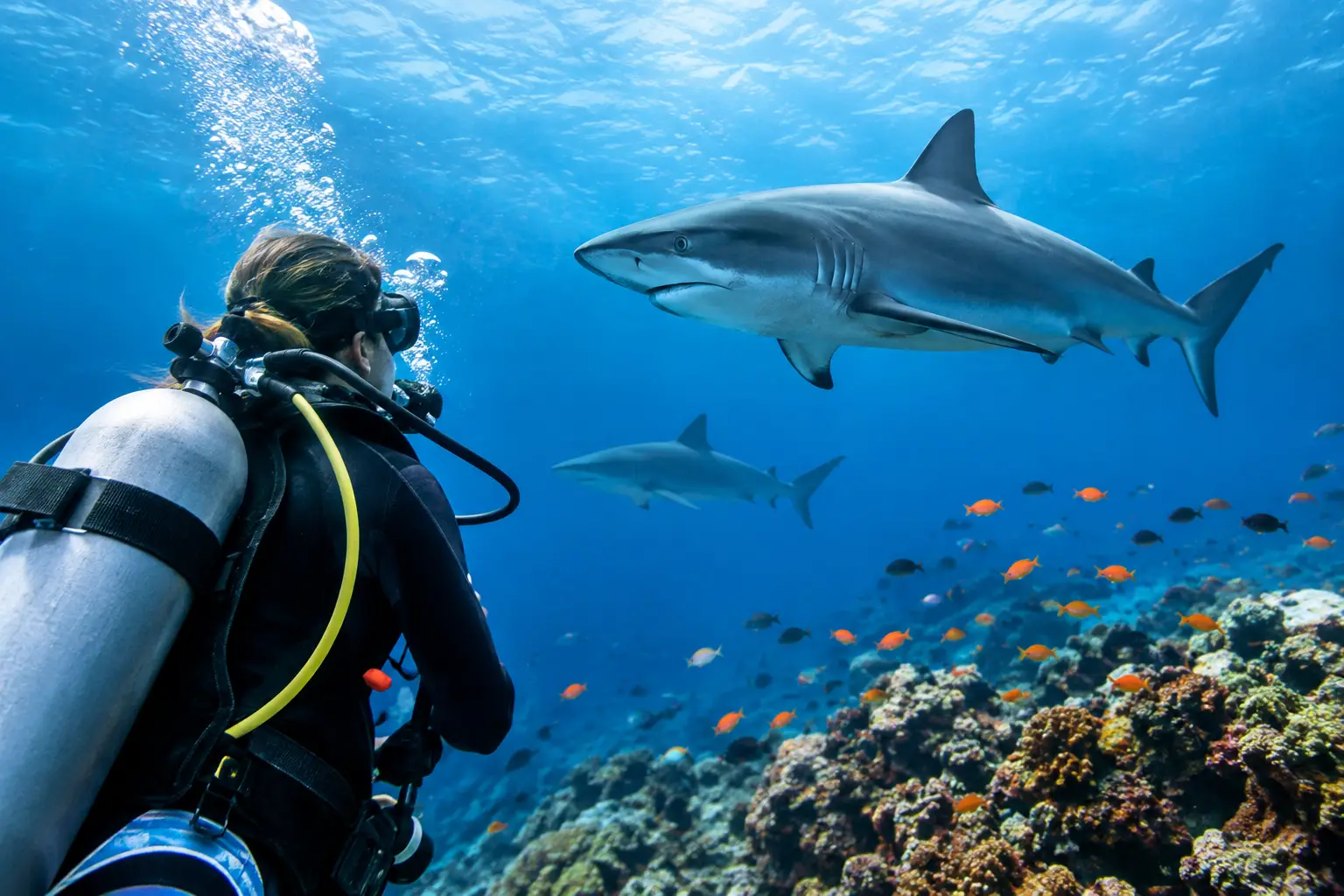
At The Colosseum in Beqa Lagoon, disciplined positioning, calm body language, and attention to the dive team’s instructions are central to a high-quality shark experience. This is where training becomes visible. Divers who are properly weighted, comfortable in the water, and focused on the briefing can spend less energy managing equipment and more time observing these remarkable animals responsibly.
Conservation-minded divers should also look for courses and briefings that explain marine ecosystems rather than treating wildlife as a backdrop. Shark behavior, reef health, and responsible tourism are connected. The way divers move, observe, and share the experience affects the places they came to see.
Underwater Photography and Video
For photographers and videographers, an underwater imaging specialty can be worth far more than another general certification. It addresses composition, lighting, equipment handling, approach techniques, and the extra situational awareness required when a camera occupies both hands and much of your attention.
The key trade-off is that camera skills should never outpace diving skills. A new diver carrying a large camera rig can become distracted, poorly trimmed, or separated from the group. Start with buoyancy, add a compact setup, and practice in conditions that allow you to focus on both the shot and the dive.
For experienced creators, specialty training can sharpen the habits that produce better footage with less impact on marine life. Great shark images come from patience, respectful distance, thoughtful framing, and predictable diving – not from chasing an animal for a closer angle.
Choose the Instructor and Environment, Not Just the Agency
When comparing SSI or PADI specialties, ask practical questions before booking. How many open-water dives are included? Will the course be conducted at real dive sites or mostly in calm, limited conditions? What is the maximum student-to-instructor ratio? Is equipment included? Will there be time for feedback between dives?
Also ask how the instructor evaluates skill performance. A specialty should involve more than watching digital materials and completing minimum requirements. You should leave knowing what you did well, what needs practice, and how to apply the skill on future dives.
At Coral Coast Divers, SSI specialty training can be paired with the kind of diving that gives each skill immediate context: reef conservation, controlled buoyancy around delicate coral, advanced planning for deeper sites, and professional briefings for world-class shark encounters. That combination matters because memorable diving rewards preparation.
Build a Progression That Feels Personal
There is no need to earn specialties as quickly as possible. A thoughtful progression usually produces stronger divers than a long list of certifications completed without meaningful practice.
For many recreational divers, buoyancy and nitrox are an excellent first combination. Add deep diving if your travel plans call for it, or underwater photography if documenting marine life is a central part of why you dive. If you are returning to diving after a long break, a refresher and several relaxed guided dives may be more valuable than jumping directly into a specialty.
The best certification is the one that changes how you dive for the better. Choose training that gives you more control, more awareness, and more respect for the ocean – then put those skills to work on dives worth remembering.