
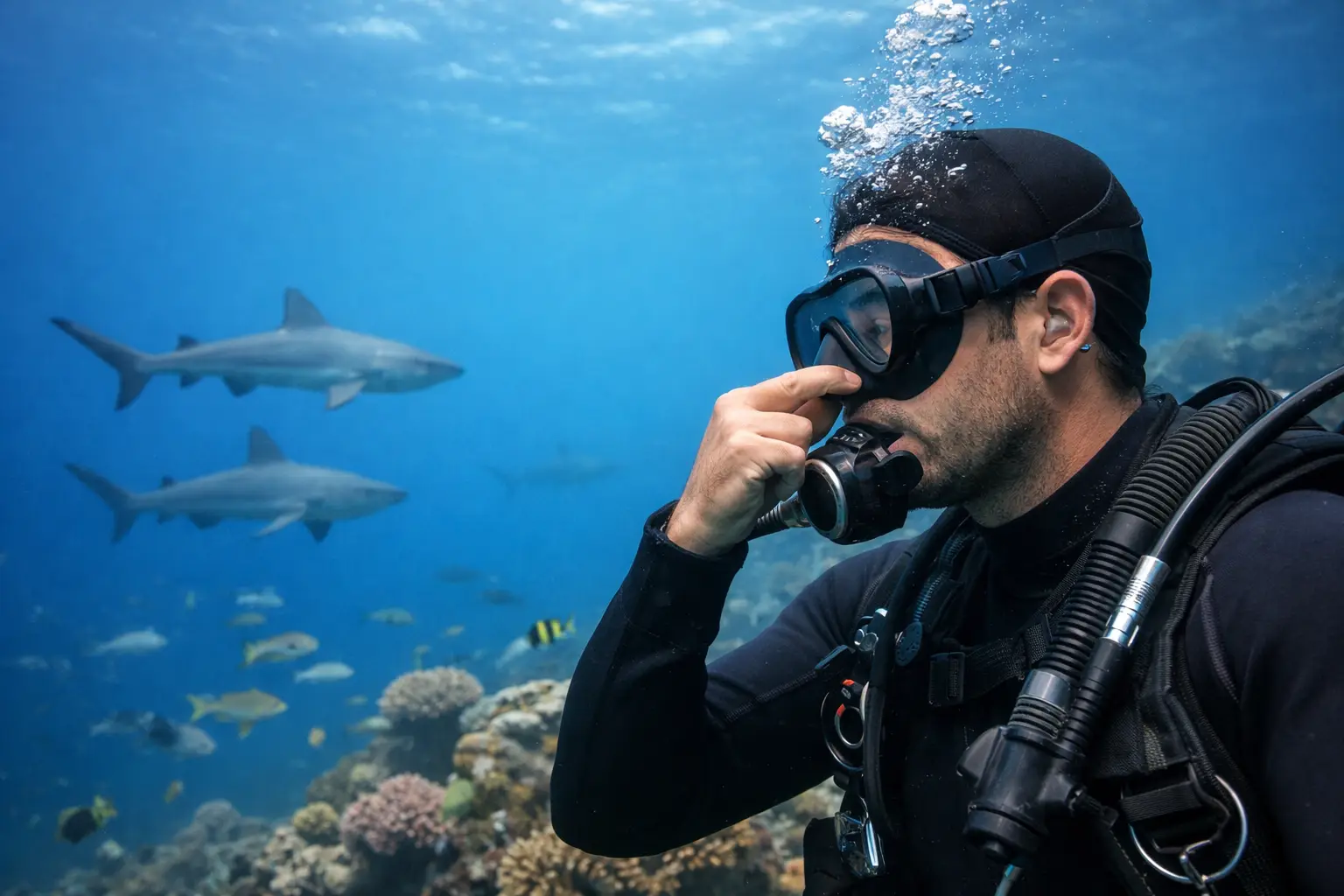
That sharp pressure behind the ears can arrive before a reef, wreck, or shark site is even in view. Scuba ear equalization is a foundational skill because it determines whether a descent feels calm and controlled or ends before the dive has properly begun. The good news is that most equalization problems are preventable with the right timing, technique, and decision-making.
Your ears do not need toughness. They need time, attention, and a diver who is willing to pause when their body asks for it.
Why scuba ear equalization matters
As you descend, surrounding water pressure increases quickly. The air spaces in your middle ears must match that change in pressure. Equalizing opens the Eustachian tubes, allowing air to move into the middle ear and balance the pressure on both sides of the eardrum.
The most dramatic pressure change happens close to the surface. In practical terms, the first 10 to 15 feet of a descent often demand the most frequent equalization. Waiting until you feel strong pressure or pain makes the process harder because the Eustachian tubes can become compressed shut.
A comfortable descent also helps you stay aware of your environment, buoyancy, buddy, and guide. That matters on every dive, from a first training session to a carefully managed shark encounter in Fiji. Divers who rush the descent can miss the calm, deliberate habits that make premium underwater experiences safer and more enjoyable.
Equalize early, gently, and often
The most reliable rule is simple: begin before you need to. Equalize at the surface, then again every few feet as you descend. Do not wait for discomfort. If you have cleared continuously from the start, you should feel pressure rather than pain, and the pressure should resolve quickly.
Keep your descent slow and feet-down when possible. This position can help air move more naturally toward the Eustachian tubes. Use a descent line if one is available, and signal your buddy or guide that you need to slow down. A professional dive operation would always rather pause a descent than have a diver push through pain.
Several methods can work, and the best technique varies from person to person.
The gentle Valsalva maneuver
Pinch your nose, close your mouth, and blow very gently as though trying to exhale through your nose. The word “gently” matters. A forceful Valsalva can irritate the ears and is not a solution for ears that will not clear.
Swallowing and jaw movement
Swallowing, wiggling the jaw, or mimicking a yawn can open the Eustachian tubes without added pressure. Many divers combine these movements with nose pinching. This approach can be especially useful for divers who find the Valsalva maneuver difficult or uncomfortable.
The Toynbee maneuver
Pinch your nose and swallow. This creates a different pressure change than a Valsalva and can be effective for some divers, particularly during a slow, controlled descent. It takes practice, so test it in shallow water during training rather than relying on it for the first time at depth.
Experienced freedivers may use advanced techniques such as the Frenzel maneuver, but scuba divers do not need to complicate a basic skill that responds well to early, frequent clearing. The right method is the one you can repeat comfortably and reliably.
What to do when an ear will not clear
Never descend through pain. Stop immediately, signal your buddy, and rise a few feet until the discomfort eases. Then try again slowly. That small ascent reduces the pressure difference and often gives the ear a chance to equalize.
If one ear remains blocked after a few patient attempts, end the descent. It can be disappointing to sit out a highly anticipated dive, especially on a limited vacation schedule, but forcing the issue risks barotrauma, dizziness, hearing changes, or a ruptured eardrum. No reef scene or shark pass is worth an injury that could end several days of diving.
Avoid the temptation to keep trying harder. Repeated forceful blowing can cause swelling around the Eustachian tube opening, making a minor issue worse. Instead, return to the surface, hydrate, rest, and speak with the dive professional leading your trip. If pain, fullness, hearing loss, ringing, vertigo, or drainage continues after the dive, seek medical advice from a clinician familiar with diving medicine.
Common mistakes that make equalization harder
The first mistake is waiting. A diver who begins equalizing only after feeling a squeeze is already working against increased pressure. The second is descending too quickly, often because a group is moving or because the diver is focused on reaching the site. A good team adjusts the pace. There is no prize for being first at the bottom.
Congestion is another frequent issue. Colds, allergies, sinus inflammation, and recent respiratory infections can all interfere with pressure equalization. If you are congested before a dive, be conservative. Decongestant medications may seem like an easy answer, but they can wear off underwater and create a reverse block during ascent. They also have individual side effects and may not be appropriate for every diver. Consult a qualified medical professional rather than self-prescribing around a dive trip.
Poor mask clearing habits can contribute as well. A mask that is painfully tight or a diver who holds their breath and tenses up during descent can turn a routine equalization into an anxious one. Slow breathing, a relaxed jaw, and neutral body position give you a better chance of clearing effectively.
The ascent matters too
Most divers focus on clearing during descent, but ears must also vent expanding air on ascent. Normally this happens passively. If you feel pressure building while ascending, slow down or stop, then descend slightly if needed until the pressure releases. Do not attempt to forcefully equalize on the way up.
An inability to release pressure on ascent is called a reverse block. It can occur when swelling or congestion traps expanding air in the middle ear. The correct response is patience and control, not a rapid dash to the surface. Stay close to your buddy, communicate with your guide, and follow safe ascent procedures.
Build the skill before your big dive
Ear equalization is not something to save for a bucket-list day. Practice your chosen technique on shallow, relaxed dives where you can focus on body position, timing, and hand signals without pressure from a demanding itinerary. During SSI training, ask your instructor to watch your descent and help identify whether you are waiting too long, dropping too fast, or using more force than necessary.
At Coral Coast Divers, attentive guidance is part of creating memorable marine experiences responsibly. Whether your goal is certification, vibrant reefs, or the powerful presence of sharks at The Colosseum, comfort in the water begins with the small skills that protect your body and strengthen your confidence.
Before your next descent, take an unhurried moment at the surface: relax your jaw, clear your ears, check your buddy, and go down only as fast as your ears allow. The ocean will still be there when you arrive.