
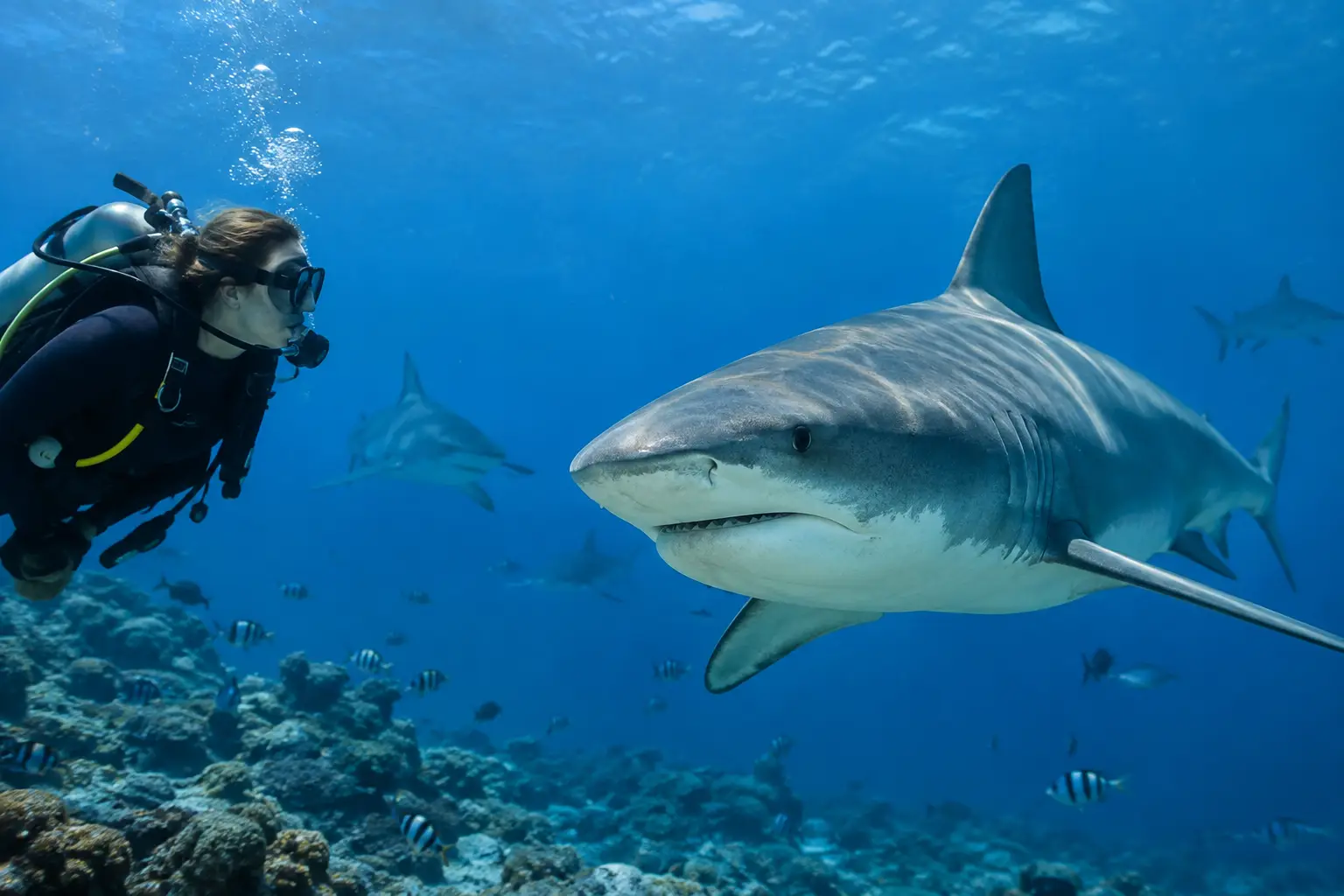
A bull shark passes close enough for you to see the pale edge of its eye, its powerful body moving with calm purpose through the blue. That moment is exactly why divers travel to Fiji – and why knowing how to prepare for bull shark dives matters long before you descend. The best shark encounters feel thrilling, not chaotic, because the diver, the guide, and the operation each understand their role.
At a professionally managed shark site, preparation is not about trying to control wildlife. It is about arriving physically ready, mentally steady, and willing to follow a disciplined plan. Bull sharks are impressive, intelligent animals with a strong presence underwater. Respect for their space, combined with sound dive skills, turns anticipation into a focused and unforgettable experience.
Prepare for Bull Shark Dives Before You Travel
Bull shark diving is generally best suited to certified divers who are comfortable in open water and able to maintain good buoyancy around other divers. Your exact eligibility depends on the site conditions, local standards, and the operator’s procedures. If it has been a while since your last dive, schedule a refresher before your shark dive day. Rebuilding comfort with mask clearing, regulator recovery, finning, and buoyancy control will make a meaningful difference.
Do not judge readiness only by your certification card. Consider how you feel in deeper water, in current, and when sharing a site with a group. A diver who can stay calm, hold position, and respond to a guide’s signals is better prepared than someone with more logged dives but rusty fundamentals.
Fiji’s warm water can make diving feel easy, but it can also lead people to overlook hydration and fatigue. Long flights, tropical heat, excitement, and repeated dives can catch up with you quickly. Drink water consistently, eat a sensible meal before departure, avoid excess alcohol the night before, and allow enough time to recover from travel. If you are congested, unwell, dehydrated, or struggling to equalize, tell the dive team. Sitting out a dive is always better than forcing a problem underwater.
Know What the Briefing Is Designed to Do
A shark dive briefing is not background information to half-hear while setting up your camera. It is the operating plan for the encounter. Your guides will explain entry and exit procedures, depth, positioning, hand signals, expected shark behavior, emergency protocols, and the rules that protect both divers and animals.
Listen especially closely to where you should be in the group. At structured shark sites, divers may be asked to remain along a designated viewing area or behind a protective feature, depending on the site design and conditions. This is not about reducing the experience. It creates a predictable environment where guides can manage the group and sharks can move naturally through the area.
If anything is unclear, ask before entering the water. Good questions include where to place your hands, how to respond if a shark comes close, whether photography is permitted from your position, and what signal means the dive is ending. A credible operator welcomes those questions because informed divers are safer divers.
Build the Skills That Matter Most
The most valuable skill on a bull shark dive is controlled buoyancy. You want to avoid rising above the group, dropping onto the reef or seabed, or sculling your hands to stay in place. Before the trip, check your weighting with a dive professional and make sure you can hold a stable safety stop without excessive effort.
Slow, efficient breathing is equally important. A close shark encounter can raise your heart rate, especially on a first visit. If you breathe quickly, you use more gas and may feel less composed. Practice long, steady breaths during easier dives. Focus on your surroundings and your guide rather than chasing every movement with your eyes or camera.
Situational awareness matters as much as buoyancy. Keep track of your buddy, guide, depth, remaining gas, and the group’s position. Sharks may be the center of attention, but the rest of the dive still requires the same sound judgment as any deeper or more advanced recreational dive.
Choose Gear for Control, Not for Show
Use equipment you know well. A shark dive is not the ideal time to test unfamiliar fins, a newly purchased mask, or a camera rig you have never taken underwater. Reliable, properly fitted gear lets you focus on the experience rather than solving preventable problems.
A streamlined setup is usually the right choice. Secure dangling gauges, alternate air sources, and accessories so they do not drift into another diver’s space or distract you while you are holding position. Check that your mask seals well, your BCD inflator works smoothly, and your computer is easy to read. Bring exposure protection appropriate for the water temperature and your own comfort level. Even in warm conditions, a diver who gets chilled may lose focus over a longer dive.
Cameras deserve special thought. Underwater images of bull sharks can be extraordinary, but photography should never override position, buoyancy, or awareness. If you are using a large housing for the first time, consider making an easier dive with it first. At the shark site, keep it close, avoid extending it into the sharks’ path, and accept that some of the strongest memories will not be recorded.
Understand Bull Shark Behavior Without Overreading It
Bull sharks have a reputation for power, and they deserve respect. They are also highly capable animals responding to their surroundings, food cues, other sharks, and the behavior of the group around them. A professional guide reads those conditions continuously and adjusts procedures when needed.
You do not need to become a shark behavior specialist before your trip, but you should arrive with realistic expectations. Sharks may approach closely, circle, change direction, or move through the site with little warning. That does not automatically signal aggression. Your job is to remain still, composed, and attentive to your guide’s direction.
Avoid touching, chasing, blocking, or trying to provoke a reaction from any shark. Keep your arms and equipment close to your body unless a guide gives a specific instruction. Do not turn a wildlife encounter into a performance. The privilege of seeing bull sharks at close range depends on treating them as wild animals, not attractions to be managed by divers.
Let the Guides Lead the Encounter
At sites such as The Colosseum in Beqa Lagoon, a private marine protected area, the experience is built around established procedures, trained personnel, and respect for the animals that make the site exceptional. Guides are not only there to point out sharks. They are monitoring conditions, diver behavior, positioning, and the pace of the dive from start to finish.
Follow instructions promptly, even if they differ from what you have done on another shark dive. Conditions can shift with visibility, current, the number of sharks present, and the composition of the group. The right response may be to change position, end the dive earlier than expected, or skip a planned descent entirely. That flexibility is a sign of strong operations, not a lesser experience.
At Coral Coast Divers, shark encounters are approached as both a premium dive experience and a responsibility to Fiji’s marine environment. The goal is not simply proximity. It is a well-managed encounter that supports safer diving, meaningful observation, and ongoing respect for shark conservation.
Make Space for the Conservation Story
Bull sharks play an important role in marine ecosystems, and seeing one underwater can change the way people think about sharks. The animal in front of you is not a stereotype. It is part of a living reef system shaped by prey, currents, habitat, and human choices.
Choose an operator that treats conservation as part of daily practice rather than an afterthought. That can include careful site management, diver education, reef protection, and support for marine research and restoration. Your own actions matter too: avoid leaving waste behind, use reef-conscious personal care products where possible, do not collect marine life, and share the experience in a way that encourages respect rather than fear.
When you prepare well, the first close pass of a bull shark becomes more than an adrenaline moment. It becomes a chance to witness one of the ocean’s most commanding animals with the calm, discipline, and respect that encounter deserves.