
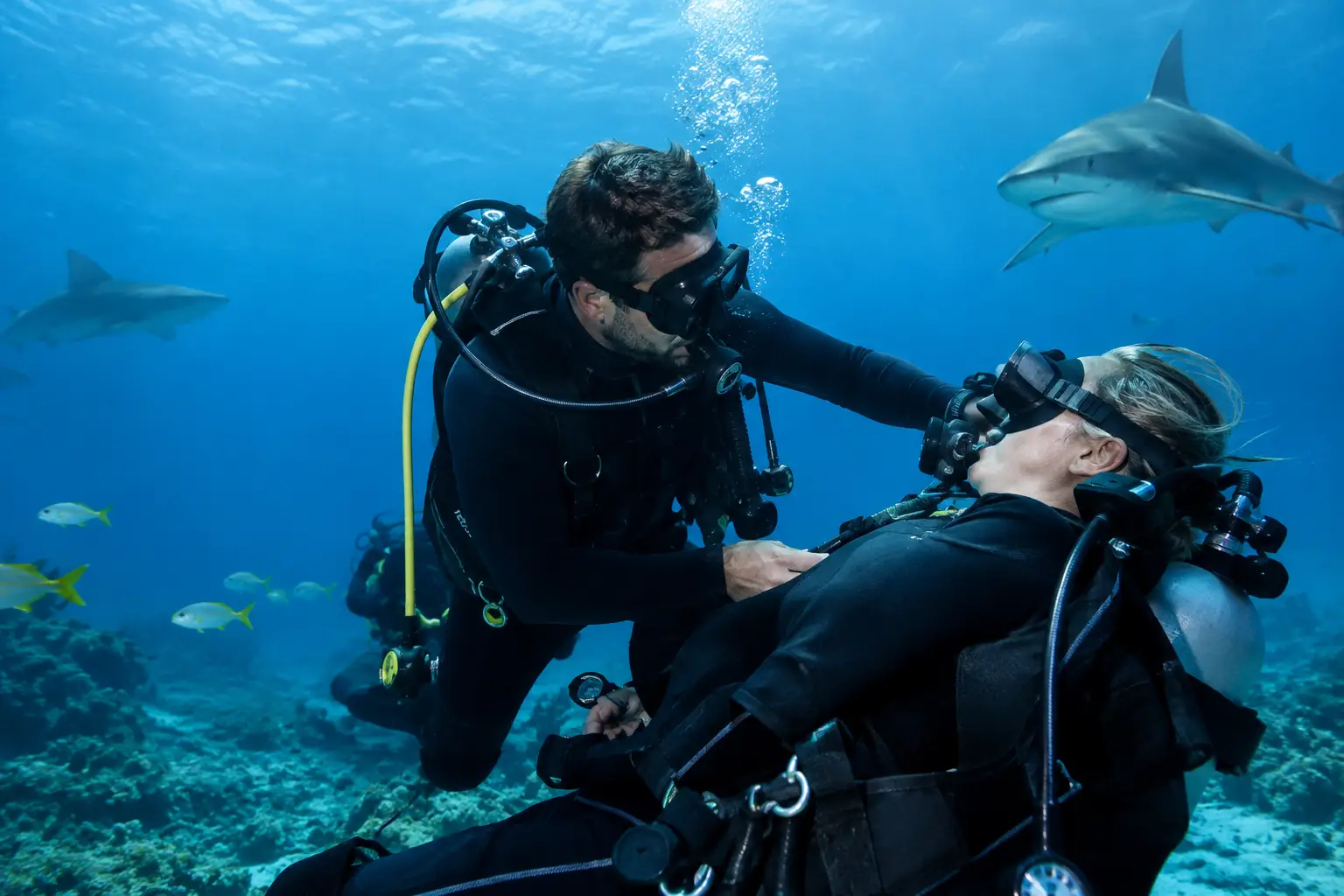
A diver who misses a descent because their mask keeps leaking may look mildly frustrated. A diver who begins breathing hard, loses buoyancy control, stops responding to signals, and pushes toward the surface has moved into a situation that demands decisive action. The SSI Diver Stress Rescue guide begins with that distinction: stress is common, but unmanaged stress can change the safety margin of any dive quickly.
Rescue training is not about expecting the worst from every buddy. It is about becoming the diver others want nearby when conditions shift, equipment distracts, or a small concern becomes a real problem. For travelers headed to Fiji for reefs, wrecks, and shark encounters, that calm competence adds depth to every experience.
Stress is a safety signal, not a personal failure
Divers experience stress for practical reasons. A current may be stronger than expected. A new camera rig can create task loading. Cold, fatigue, poor visibility, a tight wetsuit, or uncertainty around a site briefing can all affect judgment. Even highly experienced divers can have an off day.
The key is recognizing the change before it becomes panic. Stress narrows attention. A diver may fixate on one issue, such as a flooding mask, and stop monitoring depth, air supply, buddy position, or ascent rate. They may make movements that are abrupt rather than purposeful. Underwater, those small behavior changes often tell the story earlier than words can.
A prepared diver treats early stress as information. Slow down, establish neutral buoyancy if possible, make eye contact with the buddy, and communicate. Sometimes the right response is a simple reset. Sometimes the right response is to end the dive. Neither choice is a failure when it protects the team.
What an SSI Diver Stress Rescue guide teaches you to notice
Effective rescue training develops observation, not just a sequence of skills. Before entering the water, look for clues that a diver may need more support: unusual quietness, rushing to assemble equipment, repeated confusion about the plan, visible fatigue, or reluctance to discuss concerns. None of these guarantees a problem, but each is worth addressing with a respectful conversation.
During a dive, changes in rhythm matter. Watch for rapid breathing, wide eyes, tense posture, poor trim, uncontrolled finning, repeated equipment adjustments, separation from the group, or a diver who ignores ordinary signals. Stress can also appear as overconfidence, particularly when someone presses ahead despite changing conditions or an unfamiliar environment.
At the surface, a distressed diver may struggle to inflate their buoyancy compensator, remove a regulator, establish positive buoyancy, or explain what is wrong. A rescuer’s first priorities are simple but demanding: protect yourself, control the scene, keep the diver afloat, and call for appropriate assistance.
Training gives you a framework, but real incidents are never identical. Conditions, the number of available divers, distance to the boat or shore, and the person’s medical condition all shape the best response. That is why practice should build adaptable judgment rather than a mechanical performance.
Prevention starts before the giant stride
The strongest rescue is often the one nobody sees. Good planning lowers stress before it gets underwater. Review the site, entry and exit, depth profile, current, marine-life etiquette, hand signals, turnaround pressure, and separation procedures. Confirm that every diver understands the plan, rather than assuming a quick nod means agreement.
Equipment familiarity is equally valuable. A diver testing a new configuration, exposure suit, or camera should choose an appropriate first dive for it. High-tasking gear and ambitious conditions are a poor combination. On a premium shark dive, for example, disciplined positioning, stable buoyancy, and attention to the briefing protect both divers and wildlife. The experience is extraordinary precisely because it is structured.
Physical readiness matters too. Dehydration, jet lag, alcohol, illness, and skipped meals can reduce a diver’s ability to manage ordinary challenges. Calling off a dive when you are not fit to dive is sound judgment, not lost pride.
The rescue mindset: control yourself first
When another diver is distressed, urgency is real, but rushing can create a second casualty. Pause long enough to assess. Is the diver responsive? Are they underwater or at the surface? What immediate hazard is present? Where is the boat, shore, current, and the rest of the group?
Underwater, approach visibly and avoid startling a stressed diver. Establish contact and communicate with clear, familiar signals. If the diver can respond, assist with the specific issue and consider ending the dive in a controlled way. If they are panicked, maintain your own airway and buoyancy awareness. A frightened person may grab, climb on, or push away a rescuer without understanding the risk.
At the surface, establish buoyancy for both divers as soon as possible. Reassure the diver in a calm, direct voice, signal for help, and begin moving toward support when safe to do so. The exact towing method depends on sea state, equipment, the diver’s condition, and your available help. Efficiency matters, but control matters more.
An unresponsive diver calls for a different level of urgency. Rescue training covers the practical sequence of bringing a diver to safety, providing emergency care within your training, coordinating oxygen and emergency action procedures, and transferring care to professionals. Those skills require supervised practice. Reading about them is useful preparation, but it is not a substitute for hands-on instruction and regular refreshers.
Why scenario practice changes real-world performance
A rescue course can feel physically demanding because it is designed to reveal what stress does to the rescuer as well as the casualty. Towing against chop, managing equipment, keeping airway support in mind, navigating to an exit point, and coordinating a team consume energy and attention. Practice lets you feel that workload in a controlled setting.
The goal is not flawless choreography. It is learning to prioritize. You may need to delegate someone to call for the boat, bring oxygen, monitor other divers, or help at the exit. Clear direction prevents well-meaning confusion. Short commands are often best: “Call for assistance.” “Bring the oxygen kit.” “Stay with the group.”
Scenario training also exposes gaps worth fixing. Perhaps you need more comfort removing equipment at the surface, stronger surface-swimming fitness, better familiarity with emergency equipment, or a more consistent buddy check. Finding those gaps during training is a valuable outcome.
Keep skills current between courses
Rescue capability fades if it stays theoretical. Review your emergency action plan before unfamiliar trips. Practice deploying a surface marker buoy, handling your equipment in controlled conditions, and communicating clearly with a buddy. Refresh first aid, CPR, and oxygen-provider skills according to agency guidance and local requirements.
Ask dive operators practical questions as well. Where are emergency oxygen and first aid supplies? What are the communication procedures? How is the nearest evacuation coordinated? Professional operators welcome informed questions because rescue readiness is a team responsibility, not a sales detail.
At Coral Coast Divers, structured briefings, small-group awareness, and respect for the marine environment support the same principle taught in rescue training: prepared divers make better decisions. That matters whether you are photographing soft corals, completing a deep specialty, or observing sharks in a managed encounter.
Rescue skills make you a better buddy
The most useful change after rescue training is often quieter than people expect. You become more observant. You check in rather than assuming. You speak up when a plan no longer fits conditions. You understand that ending a dive early can preserve a great dive trip, while forcing it can compromise everyone involved.
Carry that mindset into every briefing and every buddy pairing. Notice the diver who seems rushed, listen to the one who voices uncertainty, and give yourself permission to say, “Let’s slow this down.” Calm action begins long before a rescue is needed, and it is one of the finest skills you can bring beneath the surface.