
Your first true open-water descent should feel exciting, not rushed by a vacation calendar. A guide to SSI referral dives helps you complete the early stages of certification at home, then finish your required open-water training in a destination where the reef, visibility, and professional support make the experience count.
For travelers headed to Fiji, a referral can be a smart way to protect valuable holiday time without compromising the quality of training. It does, however, require coordination. Your home dive center, receiving SSI Dive Center, instructor, documentation, medical readiness, and local conditions all need to align before the first checkout dive.
What Is an SSI Referral Dive?
An SSI referral is a training pathway for students who begin an SSI certification with one dive professional or training center and complete the remaining in-water requirements with another authorized SSI center. Most commonly, a student completes the digital learning and confined-water skill development before traveling, then finishes the required open-water training dives at their destination.
This approach is especially useful when local water is cold, visibility is limited, or your travel schedule makes it more appealing to reserve the ocean portion of your course for Fiji. The referral is not a shortcut. You are still expected to meet the same performance requirements for the certification. The advantage is that you arrive prepared to focus on applying skills in real open-water conditions.
A referral can also work for continuing education programs, though the exact structure depends on the course and your documented training progress. Before you plan around a referral, ask both your original instructor and receiving center which portions are complete, which must be repeated or reviewed, and what current SSI standards require for your course.
Why Finish Your Training in Fiji?
The practical benefit is simple: you can use your destination days for diving rather than classroom sessions and shallow-water practice. When the foundational knowledge and core skills are already familiar, there is more mental space to enjoy buoyancy control, reef awareness, and the remarkable sensory experience of breathing underwater in a tropical setting.
Fiji also rewards students who arrive ready to learn. Warm water can make extended skill practice more comfortable, while reef environments provide a meaningful setting for developing calm, precise diving habits. A properly paced open-water course is not just about checking off exercises. It is where a diver learns to monitor air, manage position in the water column, communicate clearly, and notice how every movement affects the reef below.
Conditions still matter. Wind, current, visibility, surface chop, and your own comfort level can affect site selection and the day’s schedule. A responsible operator will choose suitable training sites and may adjust plans rather than force a course through conditions that do not support a safe learning environment.
How to Prepare for SSI Referral Dives
Complete the right work before you travel
Do not assume that watching the course materials is enough. Your home instructor should confirm exactly which academic sections, evaluations, and confined-water sessions you have completed. You should be comfortable with essential skills before departure, including mask clearing, regulator recovery, alternate-air-source use, neutral buoyancy, and safe ascents.
Skills that feel easy in a pool can feel different with a wetsuit, waves, a new buddy, and the visual depth of open water. A little extra practice at home can make your referral dives more relaxed and enjoyable.
Bring accurate training records
Your receiving dive center needs a clear record of your progress. That may include your SSI digital profile, referral documentation, medical forms, logbook information, proof of completed sessions, and contact details for your original instructor. Requirements can vary by course and may change as SSI updates its standards, so submit documents in advance rather than presenting them at the dock on your first morning.
A complete record allows the receiving instructor to review your training efficiently and concentrate on what matters: evaluating your ability to perform required skills safely in open water.
Be honest about your comfort and experience
A referral student is not expected to arrive as an experienced diver. You are expected to arrive ready to learn. Tell the instructor if you have been anxious in deep water, struggled to equalize, found a skill difficult, or have not been in the water for several weeks. This is useful safety information, not a failure.
The best instructors adapt their briefing and coaching to the student in front of them. That may mean a refresher in shallow water, a slower descent, extra buoyancy work, or a different progression through the required exercises. Taking the time to get comfortable is always preferable to pushing through stress.
Scheduling Your Referral Course on Vacation
Plan certification dives early in your trip when possible. Diving carries conservative no-fly recommendations, and certification days should never be squeezed against a departure flight. Leaving buffer time also gives you flexibility if weather, sea conditions, or a needed review changes the schedule.
Avoid stacking your first training day with a long-haul arrival, poor sleep, dehydration, or a full itinerary of land activities. Jet lag affects awareness and comfort more than many travelers expect. Give yourself a quiet evening, drink water, eat well, and arrive ready to focus.
It is also wise to keep the days after certification flexible. Once your instructor confirms that you have met all requirements and earned certification, you may be able to join appropriate recreational dives, depending on your experience, conditions, and the operator’s assessment. A newly certified diver does not need to prove anything by choosing the most demanding site immediately. Gentle reef dives can be the ideal first step toward confidence.
What Your Receiving Instructor Will Evaluate
Open-water training is where an instructor verifies that your skills transfer beyond confined water. You may repeat skills learned at home, demonstrate proper buddy procedures, practice safe entries and exits, manage equipment, control buoyancy, and show sound awareness throughout each dive.
The assessment is broader than a single skill performed once. An instructor watches how you prepare, communicate, respond to feedback, and maintain composure. Good diving is built on deliberate habits: checking equipment before entering, staying close to your buddy, maintaining depth awareness, ascending slowly, and respecting the plan.
If a skill needs more practice, that is not an inconvenience or a mark against you. It is the course working as intended. The goal is certification earned through demonstrated competence, not a rushed credential for a travel itinerary.
Equipment, Fit, and Familiarity
Quality rental equipment can make referral training easier, particularly if you are traveling light. Still, fit matters. A mask that leaks constantly, fins that cause pain, or a poorly weighted setup can distract from learning. Arrive early enough for a proper equipment fitting and speak up if something feels wrong.
If you own a mask, consider bringing it after testing it at home. Familiarity with your own mask can reduce one common source of stress during skill practice. Beyond that, the right gear choice depends on baggage limits, the local water temperature, and what the dive center provides.
At Coral Coast Divers, training is approached as preparation for a lifetime of responsible exploration, not simply a requirement before a memorable vacation dive. That mindset matters in an environment where healthy reefs and marine life deserve calm, capable divers.
Referral Dives and Responsible Marine Encounters
Fiji’s reefs, schooling fish, and larger marine encounters can be unforgettable motivation for learning to dive. They should not alter the training priorities. A student diver should only participate in dives suited to their certification status, demonstrated ability, and the day’s conditions.
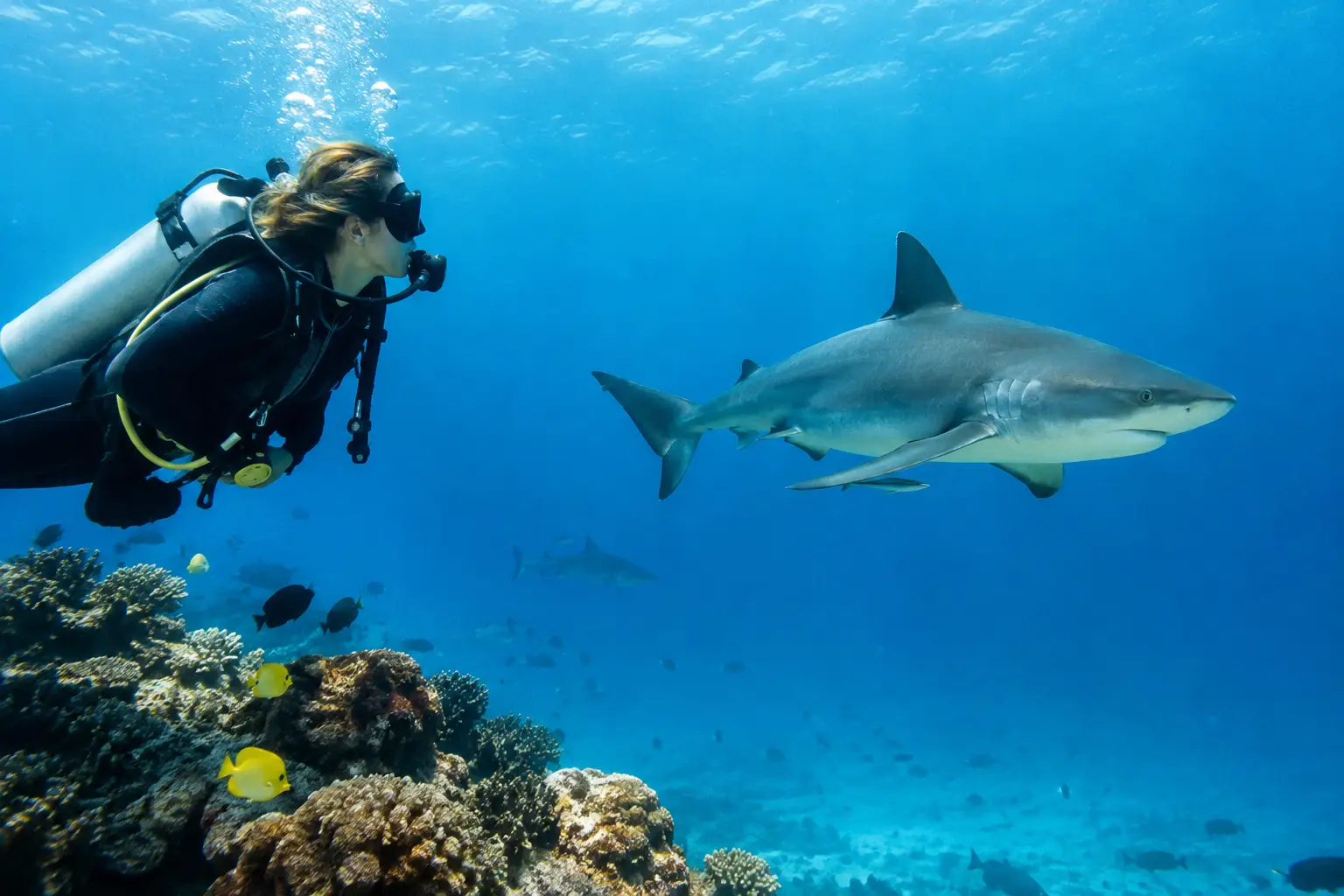
This is particularly relevant for shark diving. Professional shark encounters depend on disciplined procedures, clear positioning, site-specific briefings, and strict respect for animal behavior. Referral training dives are generally about core certification skills, not chasing an advanced experience before you are ready. Once certified, your dive team can help identify appropriate next steps based on your confidence and experience.
The same restraint protects the reef. Good buoyancy is conservation in practice. Staying off the bottom, securing gauges and alternate air sources, and moving slowly around coral prevent avoidable damage to a living ecosystem that takes years to recover.
Questions to Ask Before You Book
Before confirming a referral, ask whether the center can complete your specific SSI course during your travel dates, how many days to allow, which documents must be sent in advance, and what happens if weather or skill reviews add time. Ask about minimum age, medical clearance, equipment, transportation, and whether private instruction is available if you prefer a more personalized pace.
Also ask what your course schedule will look like. A clear answer should explain the meeting time, briefing process, expected water sessions, surface intervals, and how the instructor will confirm completion. Professional clarity before arrival is usually a good indicator of professional care in the water.
A well-planned referral lets your first certification dives become part of the destination, not an interruption to it. Arrive prepared, leave room in the schedule, and give yourself permission to learn at the pace that turns a new skill into lasting confidence underwater.