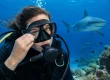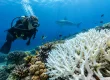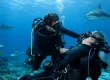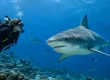
A healthy reef changes the entire feeling of a dive. Color returns to the landscape, clouds of juvenile fish move through branching coral, and predators have a living system to patrol. Coral conservation is not a side project for divers who care about Fiji – it is what protects the reefs, wildlife encounters, and extraordinary underwater memories that make a journey here worth taking.
For visitors to Pacific Harbour, that connection is especially clear. From vibrant reef dives to close, carefully managed shark encounters in Beqa Lagoon, the ocean experience depends on habitats that can support life from the smallest reef fish to apex predators. Protecting coral is not simply about preserving a beautiful backdrop. It is about maintaining the living foundation of the marine environment.
Why coral conservation matters to every diver
Corals are animals, but they also act as architects. Over time, their calcium-carbonate structures create the complex shelter that reef fish, crustaceans, mollusks, and countless other species need to feed, reproduce, and avoid predators. When coral cover declines, the effects move through the food web.
A reef can still look dramatic after damage, particularly to a first-time visitor. Large fish may remain, and clear water can disguise a loss of coral diversity. But fewer healthy coral colonies usually mean less shelter for young fish, less resilience during storms, and a less stable ecosystem over the long term. The most rewarding dives are rarely defined by one species alone. They are defined by the energy of an intact reef.
Coral reefs also support coastal communities. They help reduce wave energy, contribute to fisheries, and provide the natural setting that brings divers and snorkelers to Fiji. Responsible dive tourism gives reefs an economic value that favors long-term protection over short-term extraction. That benefit is real, but only when operators and guests treat the environment with care.
What puts Fiji’s reefs under pressure
Coral reefs face several overlapping pressures. Rising sea temperatures can cause bleaching, a stress response in which corals lose the microscopic algae that supply much of their energy. A bleached coral is not automatically dead, but prolonged heat stress can leave it weakened, vulnerable to disease, or unable to recover.
Severe weather, sediment runoff, pollution, destructive fishing practices, and physical contact from people can add to that stress. Even a single careless fin kick can break delicate branching coral that took years to grow. Anchors dropped in the wrong place can scar a reef in minutes. The challenge is not one isolated problem with one easy fix. It is cumulative pressure, which makes prevention and local stewardship especially valuable.
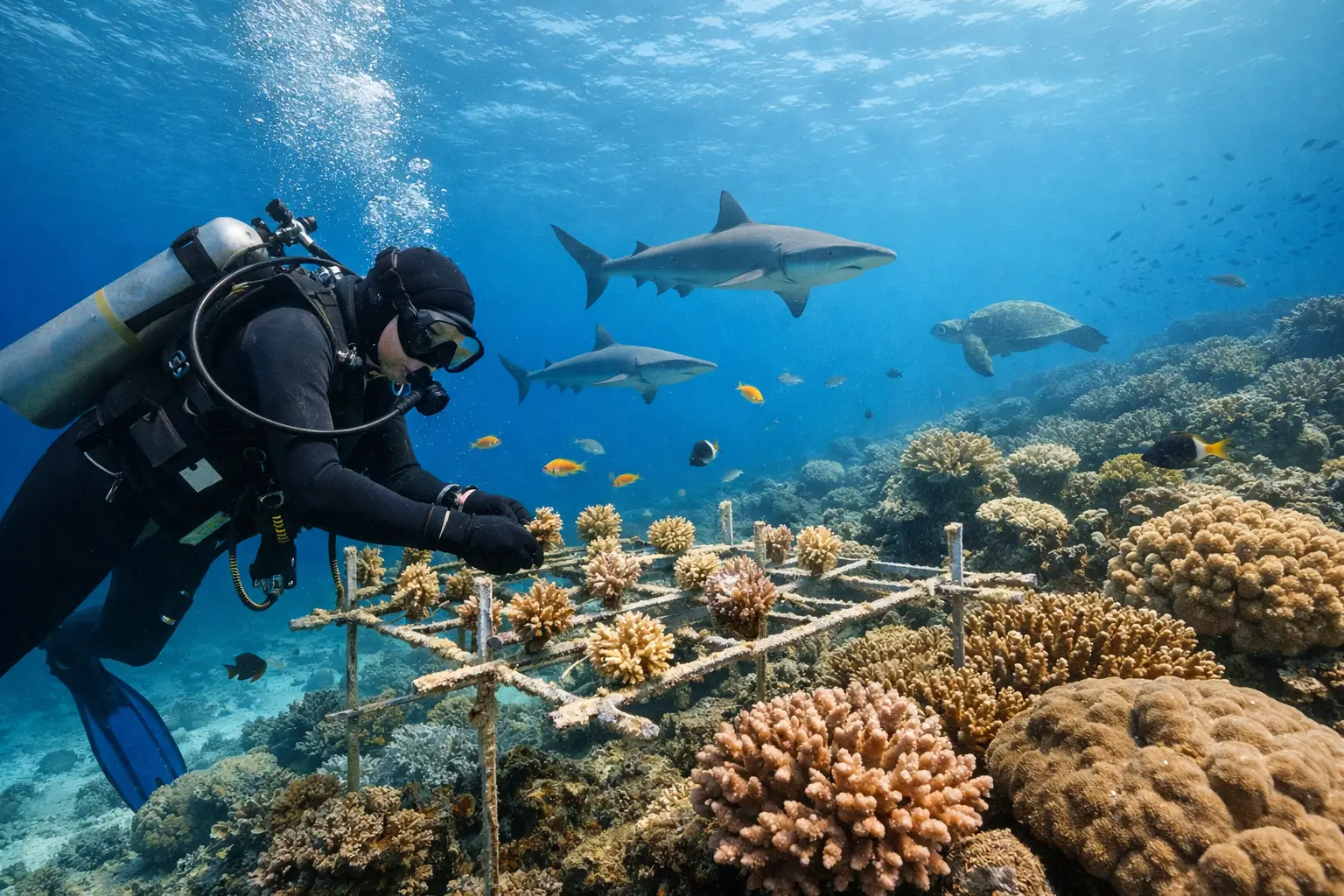
This is also why coral restoration should be discussed honestly. Planting coral fragments can support recovery in selected sites, strengthen local awareness, and help rebuild damaged areas when paired with sound science and ongoing monitoring. It is not a substitute for reducing the conditions that caused coral loss in the first place. Healthy water quality, careful site management, protected areas, and climate action remain essential.
How responsible diving protects coral
Divers have more influence than they may realize. Good buoyancy is conservation in practice. Hovering calmly above the reef rather than standing, kneeling, or reaching for stability prevents accidental damage to living coral and the animals that call it home.
Before entering the water, take time to secure gauges, alternate air sources, cameras, and accessories. A dangling console can drag across the reef during a moment of distraction. Photographers should be particularly deliberate: no image is worth touching coral, blocking an animal’s path, or hovering so close that a fin wash damages fragile tissue.
Reef-aware diving also means following the briefing precisely. Guides know where currents build, where marine life gathers, and where the reef is most sensitive. Staying with the group and using established entry and exit procedures reduces avoidable impacts. At Coral Coast Divers, experienced guides pair memorable reef and shark diving with clear safety standards because thoughtful diving is better for both guests and the marine environment.
On the surface, choose reusable water bottles where possible, keep litter contained, and avoid leaving anything behind on boats or beaches. Reef-safe choices matter, although the term itself is not a complete guarantee. The best approach is to minimize unnecessary products before swimming, use sun protection responsibly, and follow local guidance on what is appropriate for the sites you visit.
Marine protected areas give reefs room to recover
Protected areas are among the most practical tools available for reef conservation. When well managed, they can reduce fishing pressure, preserve breeding populations, and protect critical habitats. Larger fish are not just exciting to see underwater. Many play important ecological roles, from grazing algae to maintaining balance within the reef food web.
The value of protection is especially visible around shark populations. Sharks reproduce slowly compared with many reef fish, so losses can take a long time to reverse. Protecting them helps sustain the natural structure of the ecosystem while creating powerful opportunities for education. A properly managed shark dive is not about treating wildlife as a spectacle without limits. It is about experienced supervision, defined procedures, respect for animal behavior, and a clear reason to value living sharks.
Protected areas are not identical, and management quality matters. Boundaries on a map are only the beginning. Effective protection requires local support, enforcement, scientific monitoring, and tourism practices that do not exceed a site’s capacity. Divers can support this work by choosing operators that brief guests thoroughly, limit damage to reefs, and invest in conservation rather than merely using the language of sustainability.
Coral restoration: meaningful work, not a photo opportunity
Coral nurseries and planting programs can give visitors a direct connection to reef stewardship. Fragments may be grown in controlled nursery structures before being attached to suitable reef areas. The work can be detailed and patient: selecting resilient fragments, cleaning nursery frames, recording growth, maintaining attachment points, and monitoring survival over time.
Success depends on the species, location, water conditions, disease risk, and the original cause of decline. A site damaged by a storm may respond differently from one affected by chronic heat stress or pollution. That is why responsible restoration projects collect data and set realistic expectations. The strongest programs do not promise instant reef recovery. They focus on measurable progress and long-term care.
For travelers, participation can be rewarding when it is done with proper instruction and a genuine local conservation framework. Ask what happens after a coral is planted. Who monitors it? How is survival measured? What broader protections are in place for the surrounding reef? Those questions help distinguish meaningful stewardship from a one-time visitor activity.
Make your Fiji dive trip part of the solution
Your choices before and during travel shape the impact of your visit. Select a dive center that prioritizes small, well-managed groups, thorough briefings, trained professionals, and site-specific environmental practices. If you are still building confidence underwater, invest in buoyancy training before attempting close reef photography or more demanding conditions. Better control makes you a safer buddy and a lighter presence on the reef.
Listen closely when guides explain wildlife behavior. Whether you are observing reef fish, turtles, or sharks, distance and calm movement matter. Do not chase animals, feed them without an established and professionally managed protocol, or attempt to create an encounter for the camera. The best marine encounters happen when divers adapt to the ocean, not when the ocean is forced to adapt to divers.
You can also carry the message home. Share what you learned about reef protection, support credible conservation work, and make travel decisions that reward operators and communities protecting their natural resources. A dive vacation can be thrilling, luxurious, and deeply personal while still contributing to a healthier ocean.
Every careful descent, controlled hover, and respectful wildlife encounter sends the same message: Fiji’s reefs are not scenery to be consumed. They are living places worth defending, one responsible dive at a time.