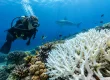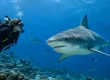
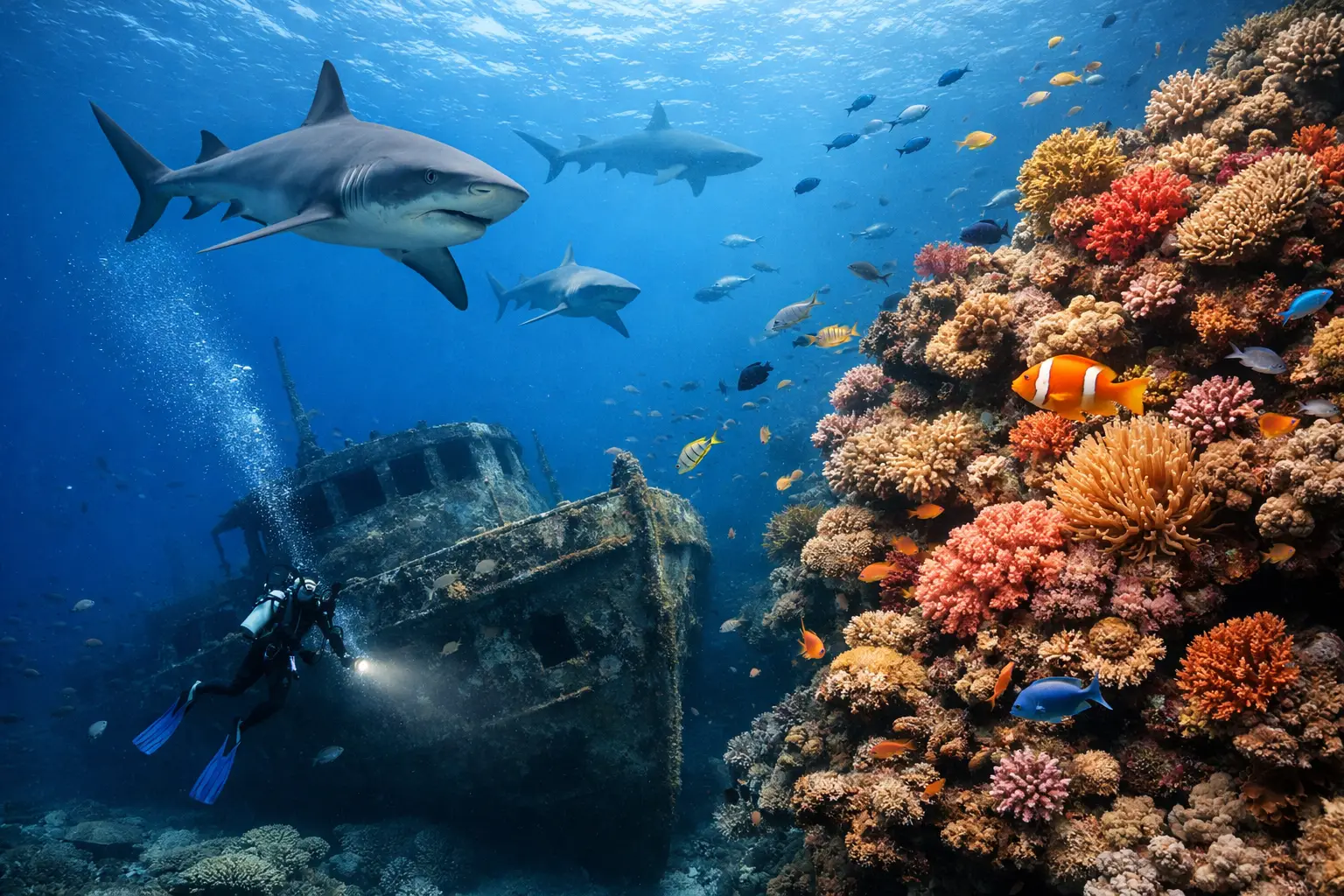
A bull shark emerging from blue water is not an encounter you forget. Neither is a reef wall glowing with soft corals as the current brings it to life. The best Fiji dive sites deliver both extremes, along with dramatic passages, protected marine reserves, manta encounters, and wrecks that reward a closer look.
Fiji is often called the Soft Coral Capital of the World, but that description only tells part of the story. Conditions, currents, seasonal marine life, and your experience level all influence which sites belong on your itinerary. A diver seeking wide-angle shark footage needs a different plan than someone who wants slow macro dives, first-time ocean confidence, or a serious drift-dive challenge.
Best Fiji Dive Sites for Big Marine Encounters
1. The Colosseum, Beqa Lagoon
For divers drawn to a truly high-energy shark experience, The Colosseum is in a category of its own. Located within a private marine protected area off Pacific Harbour, this site is known for close, carefully managed encounters with multiple shark species. Bull sharks are the headline presence, while tawny nurse sharks, whitetip reef sharks, blacktip reef sharks, and other visitors may add to the action depending on conditions and the season.
This is not a casual drop-in dive. A professional shark dive relies on clear briefings, precise positioning, disciplined buoyancy, and strict respect for the animals. Divers remain with their guides and follow established protocols throughout the experience. That structure is what allows the encounter to feel thrilling without treating sharks as a spectacle detached from safety or stewardship.
The Colosseum suits certified divers who want an iconic Fiji shark dive with experienced supervision. It is also a compelling site for underwater photographers, though solid buoyancy and comfort around large marine life matter more than a long lens.
2. Nigali Passage, Gau Island
Nigali Passage is a current-driven channel dive where pelagic encounters can arrive quickly. The passage is especially associated with gray reef sharks, schooling jacks, barracuda, and seasonal movement of larger animals. When current runs, divers can settle into protected areas and watch the water column become busy.
It is a site for divers comfortable with changing conditions and attentive to their guide. The reward is a sense of scale: reef sharks cruising beyond the coral, dense schools shifting overhead, and a blue-water backdrop that makes even familiar reef fish feel cinematic.
3. Grand Central Station, Namena Marine Reserve
Namena Marine Reserve is one of Fiji’s great marine conservation success stories, and Grand Central Station shows why protected waters matter. The site is known for shark activity, large schools of fish, and healthy reef structure. Gray reef sharks are common enough to keep divers scanning the blue, while the reef itself supports anthias, fusiliers, turtles, and clouds of smaller life.
The site can have current, so it is best approached as an advanced recreational dive. For experienced divers, it offers the rare combination of big-animal potential and detailed reef photography in one descent.
4. Manta Reef, Kadavu
Manta sightings cannot be promised, but Manta Reef earns its name during the periods when these graceful rays visit local cleaning stations. Seeing a manta circle overhead is a quieter kind of excitement than a shark dive. The best experiences come from remaining low, calm, and observant rather than chasing the animal.
Kadavu’s remote setting adds to the appeal. Trips here generally require more travel planning than dives around Viti Levu, but divers who value uncrowded reefs and a slower expedition feel often find the effort worthwhile.
Fiji’s Signature Soft-Coral and Reef Dives
5. Great White Wall, Taveuni
Great White Wall is one of Fiji’s most photographed reef dives, and its name makes sense the moment the current brings the soft corals to life. A broad wall becomes covered in pale, flowing Dendronephthya soft corals, creating an underwater scene that looks almost snow-covered from a distance.
Timing matters. Soft corals often appear most open when nutrient-rich water is moving through the site, which may mean current and a more demanding dive profile. Experienced guides can make the difference between simply seeing the wall and reaching it at its most spectacular.
6. The Rainbow Reef, Taveuni
The Rainbow Reef is not one single site but a celebrated stretch of reef in the Somosomo Strait, offering colorful pinnacles, walls, channels, and coral gardens. Its variety makes it an excellent choice for a multi-day dive itinerary. One dive may focus on soft corals and sea fans, while the next reveals schooling fish, reef sharks, nudibranchs, and striking hard-coral formations.
Divers of different experience levels can find appropriate sites here, although the more exposed locations may involve current. It is a destination where a guide’s local knowledge is particularly valuable because conditions can change the character of a site from one tide to the next.
7. E6, Bligh Water
Named for its unusual submerged pinnacle shape, E6 rises from deep water and is often surrounded by swirling schools of fish. The site has dramatic topography, colorful fans, soft corals, and the potential for reef sharks and larger passing fish in the blue.
E6 is commonly treated as an advanced dive due to depth, current, and exposure. It is worth choosing if you are comfortable with boat entries, controlled descents, and paying close attention to your air and no-decompression limits. The payoff is a true offshore seamount atmosphere, with life gathering around a structure that seems to rise out of nowhere.
8. Vatu-i-Ra Reef
Vatu-i-Ra Reef offers some of the most consistently impressive color and fish life in Fiji. Purple and pink soft corals, sea fans, schooling snapper, and reef sharks give these sites a full-spectrum reef experience. Current can be present, but it is also part of what keeps the ecosystem so productive.
This area works well for divers who want Fiji’s classic soft-coral scenery without limiting the trip to one type of encounter. Wide-angle photographers can frame reef scenes packed with color, while macro-focused divers will find plenty to investigate along the coral edges.
Wrecks, Passages, and Local Favorites
9. The MV Ovalau Wreck, Pacific Harbour
The MV Ovalau is a purpose-sunk wreck that has become an artificial reef, making it an excellent option for divers who enjoy structure, history, and marine growth in the same dive. The wreck attracts reef fish and offers a different visual rhythm from Fiji’s walls and bommies.
Wreck conditions should always be assessed on the day. Visibility, current, depth, and a diver’s training determine whether a site is appropriate. Penetration should only be considered with the proper training, equipment, and a specific plan. For many divers, viewing the exterior and watching marine life reclaim the vessel is more than enough.
10. Frigate Passage, Beqa Lagoon
Frigate Passage can be a beautiful drift dive, with reef walls, channels, and frequent fish activity shaped by moving water. It is a strong choice for divers who want to pair shark diving with a more traditional Fijian reef day. The mix of coral formations and blue-water exposure keeps the profile interesting from descent to safety stop.
Because passages are governed by tide and current, flexibility is essential. The best operators plan the timing around conditions rather than forcing a schedule that does not suit the water.
11. The Chimneys, Namena Marine Reserve
The Chimneys are coral formations that rise into the water column, creating an ideal setting for wide-angle images and slow, layered exploration. Schools of fish gather around the structures, while reef sharks and turtles may appear beyond them. The topography provides natural shelter from current in some areas, though conditions can still be variable.
This is the kind of site that rewards good buoyancy. A controlled hover lets divers enjoy the full architecture of the reef without damaging the coral or losing the small details along the walls.
12. Beqa Lagoon Coral Reefs
Beyond its shark-diving reputation, Beqa Lagoon holds a diverse collection of reef sites with coral gardens, pinnacles, swim-throughs, and fish-rich slopes. These dives are especially valuable for travelers building confidence, completing SSI training, or traveling with dive partners whose experience levels differ.
A well-planned Beqa Lagoon itinerary can combine an advanced shark encounter with relaxed reef dives and skills-focused sessions. Coral Coast Divers approaches that range with the same priorities: thorough preparation, attentive guiding, and respect for the marine environment that makes every dive possible.
How to Choose the Right Fiji Dive Itinerary
The right Fiji dive site is rarely just the most famous one. Start with your certification level, recent diving experience, and comfort in current. A newer diver may get more from calm coral gardens and guided skill development than from an ambitious deep drift. An experienced diver may prefer sites such as E6, Nigali Passage, or Grand Central Station, where currents and depth add challenge as well as excitement.
Your interests should shape the route, too. Shark-focused travelers can base time around Beqa Lagoon and add reefs or wrecks for variety. Soft-coral photographers may prioritize Taveuni, Vatu-i-Ra, or Bligh Water. Divers hoping for manta rays need flexibility and patience, since wildlife operates on its own schedule.
Season also affects visibility, water movement, coral presentation, and animal behavior. Rather than chasing a single “perfect” month, choose an operator that can adapt daily plans to the weather, tides, and the group’s ability. In Fiji, the best dive is often the one selected well that morning.
Bring a willingness to slow down, listen closely to the briefing, and leave the reef exactly as you found it. That approach turns a remarkable Fiji dive vacation into something more lasting: a direct connection to an ocean worth protecting.