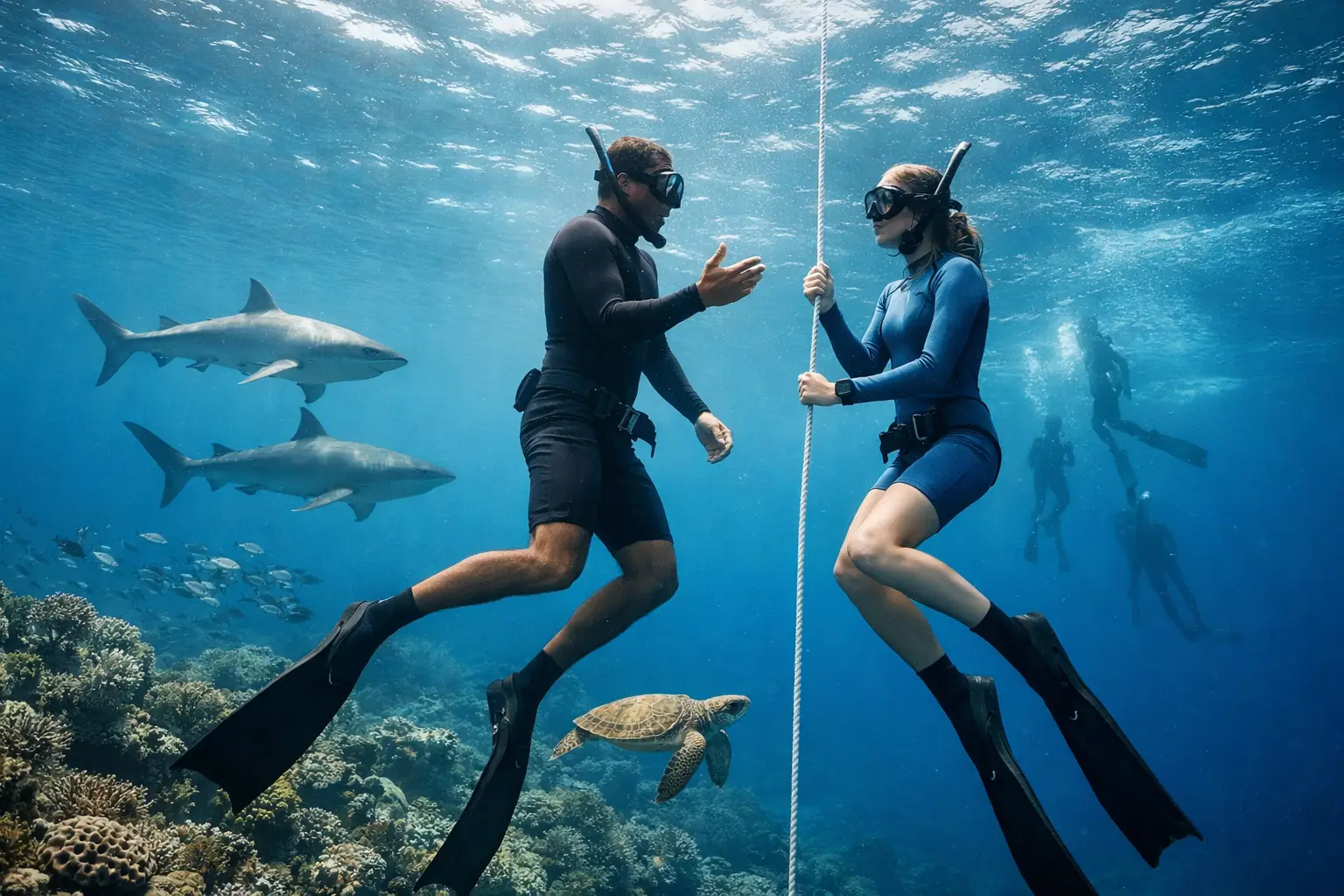
The first thing you notice when you hold your breath underwater is not silence. It is the urge to rush. Learning how to start freediving safely means replacing that instinct with calm, trained habits before you ever chase depth, a longer breath hold, or a dramatic reef photo.
Freediving is a focused, rewarding way to experience the ocean. It asks for little equipment, yet it demands sound judgment. A mask, fins, and a single breath can take you close to coral gardens, schooling fish, and the blue water beyond the reef. But the sport has risks that are easy to underestimate because the surface can look calm. The right start is not about proving what you can do. It is about learning to recognize your limits, use reliable procedures, and come home with the same respect for the ocean that you entered with.
How to Start Freediving Safely: Train Before You Test Yourself
A certified freediving course is the best first investment you can make. Online breath-hold tips and confident friends cannot replace an instructor who can assess technique, explain physiology, and supervise skill practice in the water. A quality course introduces you to breath-hold disciplines gradually, beginning with controlled relaxation and surface procedures rather than depth.
Look for training that covers equalization, efficient finning, buoyancy, rescue skills, blackout recognition, and buddy supervision. You should also learn why hyperventilation is dangerous. Rapid, deep breathing before a dive does not provide useful extra oxygen. It lowers carbon dioxide, which can delay your natural urge to breathe while oxygen levels continue to fall. That increases the risk of a loss of consciousness underwater.
Medical readiness matters as well. If you have heart, lung, ear, sinus, or seizure-related conditions, or if you are pregnant, speak with a physician familiar with dive medicine before beginning. A recent cold, congestion, fatigue, dehydration, alcohol, or certain medications can also make a particular day unsuitable for freediving. The ocean will still be there tomorrow.
For guests visiting Pacific Harbour, Fiji, guided instruction offers a practical advantage: calm, structured sessions can build foundational skills before you take those skills into more dynamic reef conditions. At Coral Coast Divers, the goal is not simply to get people beneath the surface. It is to build divers who understand what safe, responsible ocean time looks like.
Your Buddy Is a Safety System, Not a Swimming Companion
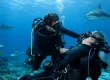
Never freedive alone. This is the rule that deserves to be repeated because it applies to every level of experience. A freediver can appear comfortable until the final moments of an ascent, when a hypoxic blackout may occur with little warning. A buddy at the surface is there to watch closely and respond immediately.
The buddy system is active. One person dives while the other stays on the surface, alert and close enough to assist. The surface buddy watches the diver through the last part of the ascent and for at least 30 seconds after surfacing. That is when the risk of blackout or loss of motor control is highest.
Before entering the water, agree on simple signals, the planned depth or distance, and who is watching whom. Avoid the casual pattern of two people descending together, taking photos, or hunting separately while assuming the other person is nearby. If neither diver is fully watching, neither has a safety buddy.
A sound freediving plan includes these non-negotiables:
- Never hold your breath underwater alone, including in a pool.
- Do not hyperventilate before a dive.
- Keep early dives conservative and increase depth slowly.
- Use a float and visible dive flag where boat traffic is possible.
- End the session if anyone is cold, tired, stressed, congested, or struggling to equalize.
These habits are not restrictive. They create the confidence to enjoy the underwater environment without turning every dive into a gamble.
Start in Calm Water and Keep Depth Out of the Equation
New freedivers often fixate on a number: 10 feet, 30 feet, 60 feet. Depth is a poor first measure of progress. A better early goal is to feel relaxed at the surface, breathe normally, duck dive with control, and return without urgency.
Begin in a pool or a sheltered, clear-water setting with a trained instructor. Practice floating face down, clearing your mask, recovering at the surface, and moving slowly with fins. When you are ready for line diving, a buoy and weighted line give you a defined descent path, clear reference point, and a place for buddies to supervise effectively.
A relaxed descent is usually more efficient than a forceful one. Keep your movements smooth, streamline your body, and avoid burning energy with fast kicking. As you go deeper, pressure changes quickly. Equalize early and often, before discomfort begins. Never force an equalization. Pain, persistent pressure, dizziness, or vertigo are clear reasons to stop the descent and return to the surface.
Some people equalize easily at first; others need time to learn the coordination. That difference is normal. Do not try to push through an ear issue because a buddy reached a certain depth or because conditions seem perfect. Forced equalization can cause injury that ends your trip before it truly begins.
Learn Recovery Breathing, Then Make It Automatic
The dive is not finished when your face breaks the surface. Your first few seconds above water deserve deliberate attention. Lift your head, establish positive buoyancy if needed, and perform recovery breathing: a quick, controlled inhale followed by a longer exhale, repeated while remaining calm and alert.
This is not the same as aggressive breathing before a dive. Recovery breathing happens after surfacing and supports oxygen replenishment during a vulnerable period. In training, you will learn the precise sequence and how to recognize when a diver needs help.
Take real recovery time between dives. A common baseline is resting at least twice as long as the previous breath hold, although the correct interval depends on the dive profile, water temperature, exertion, and individual condition. Beginners should err on the side of more rest, not less. Repeated dives with short surface intervals can quietly increase risk even when each individual dive felt easy.
Choose Conditions That Match Your Experience
Beautiful water is not automatically beginner-friendly water. Current, wave action, changing tides, boat traffic, low visibility, and cold can turn simple skills into demanding ones. Even tropical water can cool you over a long session, and being cold raises your workload and makes relaxation harder.
Choose a site with manageable conditions and clear entry and exit plans. Use appropriate exposure protection, a correctly fitted mask, comfortable fins, and a weight system that allows you to float comfortably at the surface after a normal exhale. Proper weighting is essential. Being overweighted can make a surface rescue more difficult and creates an unnecessary hazard near the end of a dive.
A trained professional can help you dial in equipment, especially when switching from a pool to saltwater. Saltwater buoyancy, changing wetsuit thickness, and unfamiliar gear all affect how you move in the water. Small adjustments can have a major effect on comfort and control.
Let Curiosity, Not Competition, Guide the Session
Freediving has a quiet competitive trap. A friend reaches the bottom plate, someone posts a depth milestone, or a camera makes a descent look effortless. Comparing yourself can encourage rushed progression and poor decisions. The best freedivers are often the ones most willing to turn around early.
Approach each session with one achievable purpose. It may be cleaner equalization, a calmer duck dive, better buddy observation, or simply enjoying a shallow coral slope without tension. Keep a brief record of conditions, how you felt, and what worked. Over time, this builds awareness that no depth app can provide.
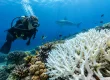
That same awareness protects the marine environment. Maintain distance from coral, avoid standing on the reef, secure loose gear, and observe wildlife without chasing or touching it. A reef is not a backdrop for a personal record. It is a living system, and respectful freedivers are part of its protection.
Freediving rewards patience. Start with skilled instruction, a vigilant buddy, conservative conditions, and the willingness to stop when something does not feel right. The result is not only safer time underwater, but a deeper connection with the ocean worth returning to again and again.