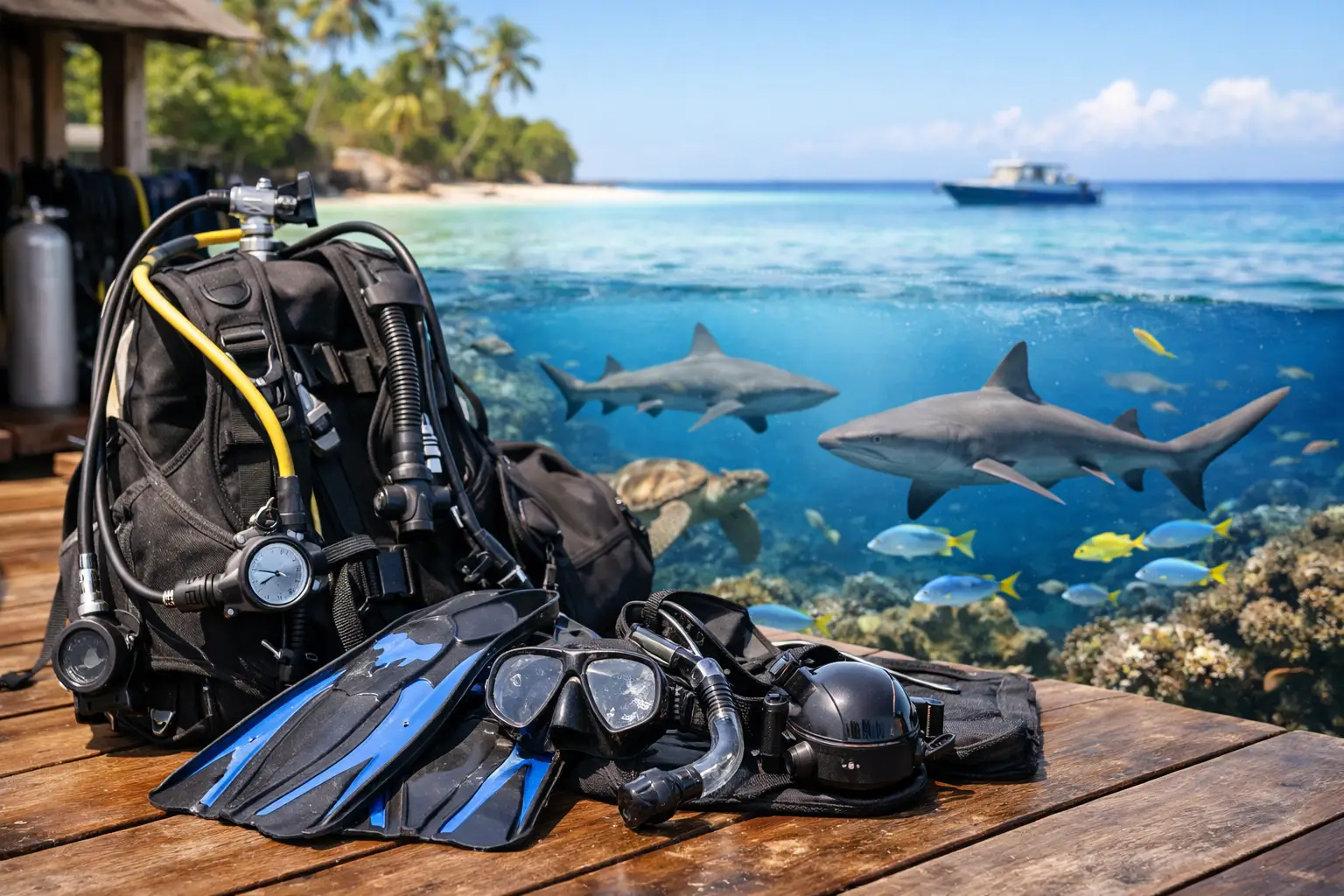
A mask that floods on the descent or a BCD that rides too high can pull your attention away from what matters: the first shadow of a bull shark at The Colosseum, a reef wall alive with color, or the quiet concentration of a new skill underwater. The best dive gear rentals do more than fill a suitcase-saving need. They give you equipment that fits correctly, performs predictably, and supports the dive plan from the moment you board the boat.
For travelers coming to Fiji, rental equipment is often the smartest choice. It eliminates the burden of flying with heavy bags, reduces concerns about airline damage or excess baggage charges, and lets divers use gear suited to local water conditions and the experience ahead. But rental quality varies. Knowing what to look for helps you choose a dive operator with standards worthy of a memorable underwater adventure.
What Defines the Best Dive Gear Rentals?
Premium rental gear starts with professional maintenance, but it does not end there. Regulators need to be regularly serviced, cylinders need current inspections and proper fills, and BCD inflators and dump valves need to work cleanly under pressure. A reputable dive center has a clear system for inspecting equipment between uses rather than treating rental kits as anonymous inventory.
Fit is equally important. Your mask should create a comfortable seal without being painfully tight. Fins should be secure without pinching your toes or heels. A wetsuit should be close-fitting enough to manage warmth and buoyancy, while still allowing you to move freely when climbing a ladder or adjusting your position in the water. Even a well-maintained piece of gear becomes a distraction when it is the wrong size.
The best operators also match gear to the guest and the dive. A recently certified diver may benefit from a streamlined, familiar setup and extra time for a pre-dive equipment review. An experienced traveler shooting video may need a stable trim configuration, suitable exposure protection, and space to organize camera equipment. For a demanding shark dive, the priority is dependable life-support equipment, clear procedures, and a setup that allows you to stay calm, controlled, and aware of your surroundings.
Renting Gear for Shark Diving and Reef Exploration
Fiji’s warm water can make packing feel simple, but local conditions still deserve attention. Water temperature, wind, current, depth, and time in the water affect the exposure protection and weighting that feel right for each diver. A thin wetsuit may be comfortable on a short, sunny reef dive, while longer days offshore or multiple dives can call for more insulation.
Shark diving adds another consideration: control. Close wildlife encounters are not a reason to overload yourself with gear or test unfamiliar equipment without guidance. You want a BCD that allows stable buoyancy, a regulator you can breathe from comfortably, and weights distributed to support a balanced, horizontal position. Good trim is not just about better photos. It helps divers avoid damaging the reef, maintain respectful distance from marine life, and move with confidence when conditions change.
At Coral Coast Divers, equipment support is part of a professionally managed diving experience, particularly on signature shark and reef excursions in Beqa Lagoon. The goal is not to make every diver use one identical configuration. It is to provide an appropriate, checked setup and make sure the diver understands it before entering the water.
Your mask is personal, even when it is rented
Masks are the most personal item in a rental kit because face shapes differ dramatically. Take time at the dive center to test the seal. Place the mask lightly against your face and inhale through your nose. If it stays in place without the strap, it is a promising fit. Then check that the skirt does not press uncomfortably against the bridge of your nose or interfere with facial hair.
If you wear prescription lenses, ask in advance about options. Some divers use contact lenses successfully, while others prefer a prescription mask. This is not an item to leave until boat departure. Clear vision is central to safety, navigation, and appreciating the details of the reef.
Regulators and BCDs should feel familiar before splash time
Before the boat leaves, breathe from the primary and alternate second stages. Inflate and deflate the BCD, locate every release, and confirm how the weight system works. If the setup differs from your own gear, ask the instructor or dive guide to walk through it with you. A two-minute review on land is far more useful than trying to solve a small mystery while descending.
Do not judge a regulator solely by whether it looks new. A well-maintained, professionally serviced regulator can be an excellent piece of rental equipment. What matters is how it breathes, whether it has been inspected, and whether the team can explain its operating features clearly.
Questions Worth Asking Before You Book
A quality operator should welcome practical questions about its rental program. Ask whether the rental package includes mask, fins, BCD, regulator, wetsuit, weights, and dive computer, or whether some items are separate. Confirm sizing availability if you are particularly tall, petite, broad-shouldered, or require larger footwear.
It is also reasonable to ask how equipment is maintained and sanitized. The strongest answer will be specific: regular servicing schedules, visual checks, functional checks, appropriate cleaning practices, and staff who know the history of the gear they issue. Vague reassurance is less valuable than a clear process.
If you are bringing some of your own equipment, discuss how it will integrate with the rental setup. Many travelers bring a personal mask, dive computer, and sometimes fins, while renting heavier items. This hybrid approach can work well, provided the operator can help you confirm weighting and compatibility. A new computer or unfamiliar BCD can change your buoyancy habits more than expected.
When Bringing Your Own Gear Makes Sense
Owning equipment is worthwhile for divers who travel frequently, need highly specific fit, or prefer an established configuration. A personal mask and computer are especially common choices. Photographers may also prefer their own fins and exposure protection because small changes in buoyancy affect stability around a camera rig.
Still, bringing everything is not automatically the premium option. Checked baggage can be delayed, airlines can be restrictive with weight, and saltwater exposure takes a toll on equipment that has not been recently serviced. Renting tanks, weights, BCDs, and regulators locally can make travel simpler while keeping your dive bag focused on the items that are most personal to you.
The best choice depends on your experience, comfort with unfamiliar gear, and the type of diving planned. For an occasional traveler, a complete high-quality rental kit is often ideal. For a diver with exact equipment preferences, a mixed setup may provide the best balance of familiarity and convenience.
Rental Gear Is Part of Responsible Diving
Equipment quality has an environmental dimension. A diver who is properly weighted and comfortably streamlined is less likely to make contact with coral. A mask that fits reduces repeated clearing and stress. A reliable regulator and BCD allow attention to stay on buoyancy, situational awareness, and the marine environment rather than on preventable gear problems.
Responsible rental programs also extend the useful life of equipment through proper servicing instead of disposable habits. That operational discipline aligns naturally with marine stewardship, whether the day includes observing sharks, exploring reefs, or participating in a conservation-focused experience.
Your rental gear should disappear from your thoughts once you enter the water. Not because it is unimportant, but because it works, fits, and has been prepared by people who understand the dive ahead. That leaves room for the experience you came for: controlled breathing, extraordinary marine life, and the lasting perspective that comes from visiting a protected underwater world with care.