You can tell a lot about a shark experience by what separates you from the animal. In shark cage diving versus open water, that difference is not just steel bars versus open blue. It changes your mindset, your level of participation, the skills required, and the kind of respect you build for the shark in front of you.
For travelers planning a bucket-list encounter, the question is rarely which option sounds more thrilling. Both can be unforgettable. The real question is which experience fits your comfort level, your training, and the kind of underwater interaction you actually want.
Shark cage diving versus open water: what changes underwater
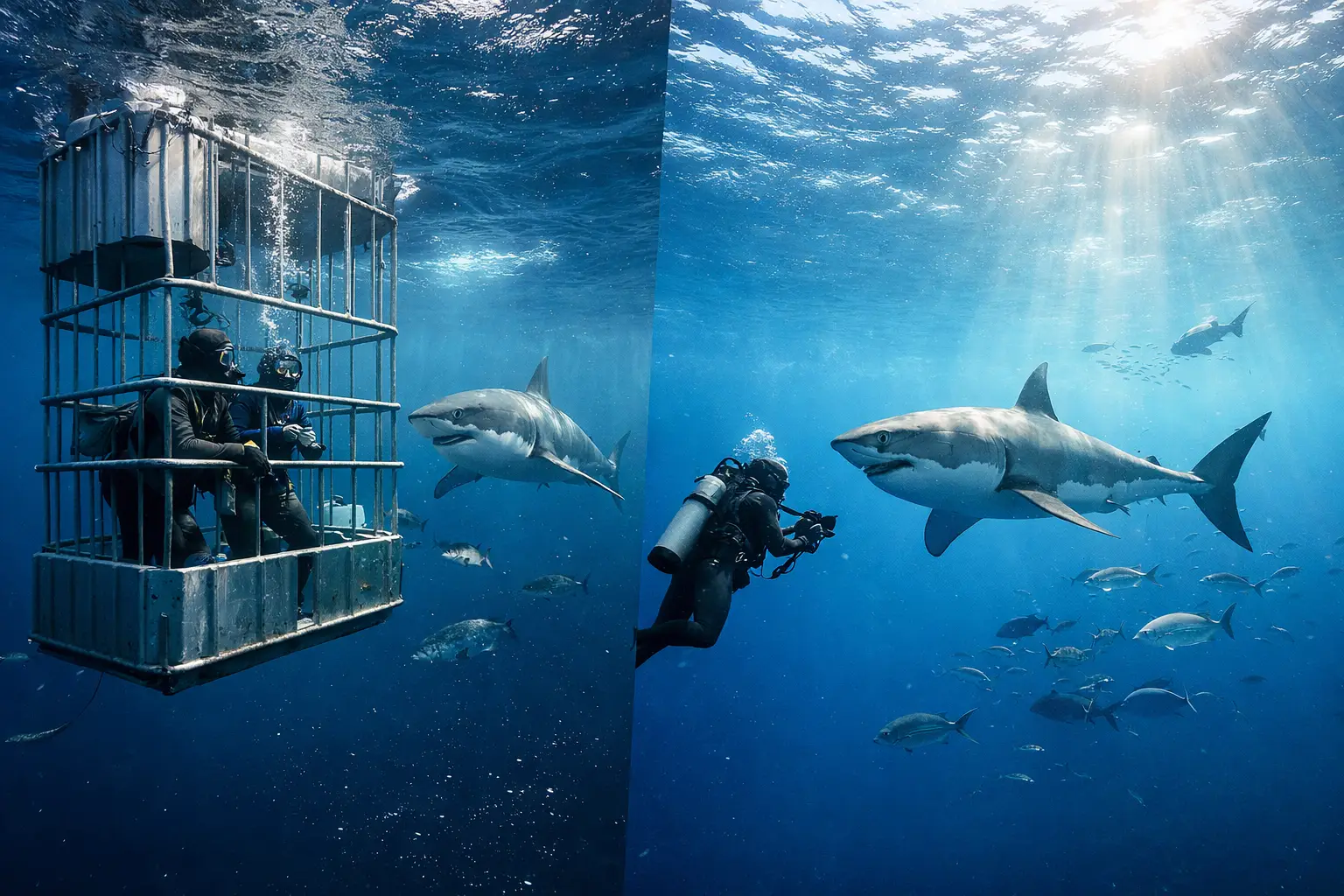
Cage diving is built around physical separation. You enter the water inside a metal enclosure designed to create a clear barrier between diver and shark. That setup often appeals to non-divers, first-time marine adventure travelers, and anyone curious about sharks but not ready to meet them in fully open conditions.
Open water shark diving removes that barrier. You are in the environment as a diver, with professional procedures, briefing protocols, and site-specific safety systems guiding the experience. That does not mean reckless proximity. It means the encounter depends more heavily on diver behavior, situational awareness, buoyancy control, and the discipline of the operation.
The emotional difference is just as significant as the physical one. A cage can help people feel protected enough to relax and observe. Open water often creates a stronger sense of presence. You are not watching a shark pass a window. You are sharing space with a wild animal on its own terms.
Who each experience is really for
Cage diving tends to suit people who want access without a steep skill requirement. In many destinations, you do not need scuba certification to participate. That makes it a practical entry point for families, casual travelers, and nervous first-timers who still want a memorable shark encounter.
Open water is better suited to people who want a true dive experience rather than a one-off adrenaline activity. Certified divers usually get more from it because they can focus on observation instead of basic underwater survival skills. Even when introductory options exist, open water shark diving works best when guests are comfortable in the water and able to follow direction precisely.
That distinction matters. If you are tense, task-loaded, or fighting your buoyancy, you will miss much of what makes shark diving remarkable. The best encounters happen when divers are calm enough to notice body language, spacing, social patterns, and how sharks move through the site with complete efficiency.
Safety is not a slogan
When people compare shark cage diving versus open water, safety usually dominates the conversation. Fair enough. But the comparison only makes sense if you look beyond the simple idea that a cage is automatically safe and open water is automatically dangerous.
A cage adds a physical barrier, which can reduce psychological stress and limit direct interaction. But the cage itself does not replace professional standards. Conditions, operator discipline, entry and exit procedures, current, visibility, shark behavior, and guest briefing all still matter.
In open water, safety relies even more on structure. That includes diver screening, site selection, clear positioning, experienced guides, controlled group behavior, and a strong understanding of local shark patterns. Well-run shark dives are not casual. They are built on procedure.
This is where experienced operators stand apart. At a professionally managed shark site, the dive plan accounts for the environment, the species expected, guest ability, and emergency readiness. Divers are not asked to improvise. They are asked to follow a system designed around calm observation and controlled conditions.
The experience gap: observation versus immersion
Cage diving is often visually dramatic. Sharks may approach closely, circle, and pass directly in front of the bars. For photography, that can create bold, high-impact frames, especially for travelers shooting topside or with basic underwater setups.
Open water offers a different kind of value. The interaction often feels more complete because you are reading the full scene, not just the shark nearest the cage. You notice the reef or blue-water setting, the other species in the water column, and the way the shark holds distance, changes direction, or patrols through the site. For many divers, that creates a deeper understanding of shark behavior.
There is also less visual clutter. No bars in the frame, no cage lines, no metal structure interrupting the shot. For experienced underwater photographers and videographers, that alone can make open water the more compelling option.
Still, immersion is not automatically better for everyone. Some guests prefer the defined boundaries of a cage because it allows them to focus on the animal without the added intensity of unrestricted water around them. The stronger experience is the one that lets you stay present rather than overwhelmed.
How training changes the answer
If you are not certified, cage diving may be the more realistic choice. It can provide a close encounter without requiring the skill base that open water diving demands. That matters if your trip is short or your goal is simply to see sharks up close.
If you are certified, the equation shifts. Open water shark diving rewards divers who can maintain trim, control breathing, and stay composed. Those skills are not about looking polished. They directly affect safety, comfort, and how marine life responds to your presence.
For aspiring divers, this is often where the path becomes clear. If sharks are your motivation, investing in proper training opens up a much broader range of experiences. You move from being a spectator in a contained setup to becoming an informed participant in the underwater environment.
That is one reason destinations known for structured shark diving attract serious travelers. A well-run operation can combine education, local expertise, and premium encounters in a way that builds both confidence and respect. In Pacific Harbour, Fiji, that blend is a major part of why divers seek out shark experiences that go beyond novelty.
Conservation and ethics deserve a closer look
Not all shark encounters carry the same conservation value. Some are built primarily as spectacle. Others are designed with education, marine protection, and research in mind.
Cage diving can absolutely introduce people to sharks in a powerful way. For many guests, it replaces fear with fascination, and that shift matters. Public support for shark conservation often starts with a single close encounter.
Open water experiences, especially those tied to marine protected areas, ecological monitoring, or local conservation programs, can go further. Divers are more likely to hear detailed briefings about species behavior, habitat pressure, and why live sharks are worth more to reefs and coastal economies than dead ones. The setting itself often reinforces that lesson. Seeing healthy shark activity in a protected environment makes the argument for conservation feel immediate.
This is where operator philosophy matters. A serious eco-minded dive center does not treat sharks as props. It frames the experience around education, animal behavior, and responsible practices that support long-term reef health.
Which one feels more intense?
People assume open water is always more intense, but intensity works in different ways. A cage can feel claustrophobic to some guests, especially in rough surface conditions or crowded setups. The metal barrier may create reassurance for one person and stress for another.
Open water usually feels more exposed, but not always more chaotic. In a controlled dive with strong briefings and experienced professionals, many divers find it surprisingly calm. Once you settle in, the experience often feels less like a thrill ride and more like a highly focused wildlife encounter.
Species, site conditions, and visibility also shape intensity. A clear day with predictable shark movement feels very different from lower visibility or stronger current. So the better question is not which one is scarier. It is which environment helps you stay calm, attentive, and responsive.
So which should you choose?
If you want the simplest path to seeing sharks up close, especially without scuba certification, cage diving may be the right fit. It can be accessible, memorable, and an excellent first step.
If you are a certified diver, or you want a more authentic underwater experience grounded in skill, structure, and animal behavior, open water usually offers more depth. It asks more from you, but it gives more back.
Neither option should be sold as a shortcut to bravery. The better choice depends on your experience, your comfort in the water, and whether you want to observe sharks from a protected enclosure or meet them within a professionally managed dive environment.
The best shark encounter is not the one that sounds toughest at dinner afterward. It is the one that leaves you calmer, more informed, and more committed to protecting the ocean than when you arrived.