Some shark encounters raise your pulse because of the animal’s size. Others stay with you because of the way the shark moves – calm, precise, completely in control of its environment. When divers ask about the best shark species for divers, they are usually asking two questions at once: which sharks offer the most memorable experience, and which ones are most rewarding to meet underwater in a safe, well-managed setting.
The answer depends on your experience level, your comfort in blue water, the conditions at the site, and what kind of encounter you want. Some divers want fast action and dramatic passes. Others want to study body language, spacing, and behavior on a healthy reef. The best shark diving is not only about adrenaline. It is about visibility, predictability, responsible protocols, and the rare privilege of seeing apex predators in their own world.
What makes the best shark species for divers?
A great shark species for diving is not necessarily the biggest or the rarest. It is one that creates a meaningful underwater encounter without turning the dive into guesswork. Divers tend to value a combination of strong site reliability, clear visibility, recognizable behavior, and enough calm observation time to actually appreciate the animal rather than just react to it.
Temperament matters, but so does context. A species that is manageable in one location may feel very different in another if currents are stronger, visibility is reduced, or the dive plan is poorly organized. That is why experienced operators place so much emphasis on briefing quality, positioning, and diver control. Shark diving is at its best when the environment is structured enough to let the encounter unfold naturally.
1. Bull sharks
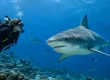
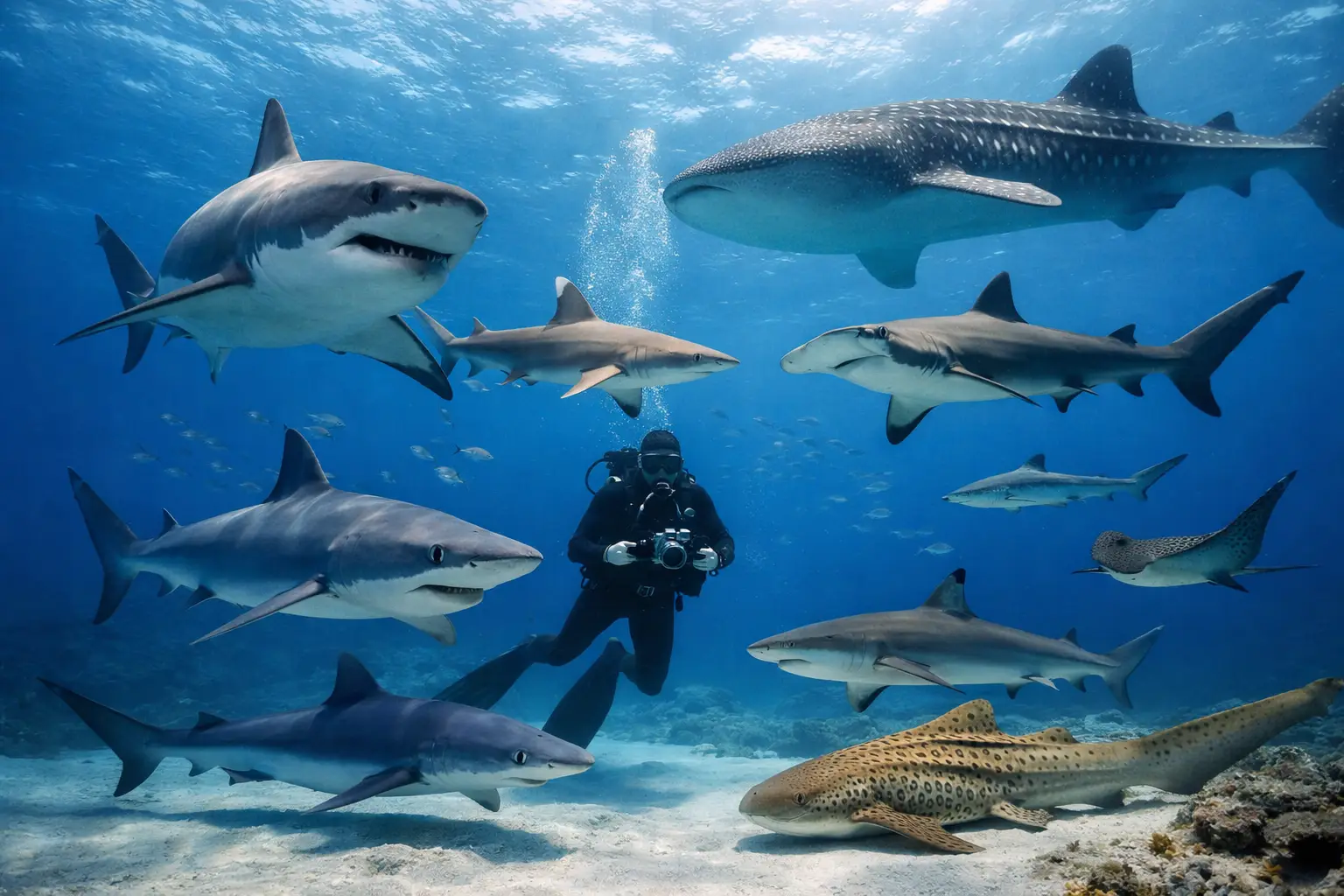
Bull sharks deserve their place near the top of any serious list because they combine power, presence, and consistency in a way few species can match. They are thick-bodied, confident, and unmistakably impressive at close range. For many divers, the appeal is not just their reputation. It is the way they command attention underwater.
They are best appreciated on professionally run dives with strict procedures and highly experienced guides. Bull sharks reward calm divers who can maintain position, manage buoyancy, and follow direction exactly. In the right setting, they offer one of the most unforgettable shark encounters in the ocean. In Pacific Harbour, Fiji, this is the species that has defined world-class shark diving for many traveling divers, especially when paired with rigorous safety standards and long-term conservation work.
2. Tiger sharks
Tiger sharks bring a different kind of gravity to a dive. Their size, broad head, and deliberate movement create a slower, heavier presence than many reef-associated species. A tiger shark encounter often feels less frantic and more cinematic. You notice every approach, every turn, every shift in posture.
This is not usually the first shark species a new diver should seek out. It is better suited to divers who are already comfortable around large marine animals and understand the importance of discipline in the water. The reward is extraordinary. Very few species deliver the same combination of scale, beauty, and raw authority.
3. Oceanic blacktip sharks
Blacktips are often what people imagine when they picture a classic tropical shark dive. They are streamlined, active, and highly photogenic, especially when visibility is strong and the light is clean. Their movement tends to be more energetic than that of larger, heavier species, which makes encounters feel lively and dynamic.
For many divers, blacktips are an ideal introduction to shark diving because they are easier to read and generally less intimidating than bulls or tigers. That does not mean casual. Any shark encounter deserves respect. But blacktips often help newer shark divers build confidence while still delivering a genuine thrill.
4. Gray reef sharks
Gray reef sharks are a favorite among divers who enjoy healthy reef systems and natural behavior. They are alert, athletic, and often associated with drop-offs, channels, and current-exposed sites where marine life is abundant. Seeing a gray reef shark on patrol can tell you a lot about the health of a reef.
Their appeal is subtle compared with headline species like tiger sharks, but experienced divers often value them highly for exactly that reason. Gray reefs feel authentic. They are part of the reef’s working ecology, and encounters with them can feel less staged and more like stepping into a living marine landscape.
5. Whitetip reef sharks
Whitetip reef sharks are not usually the species that makes divers book a bucket-list trip, but they are one of the most enjoyable sharks to observe closely. They are often seen resting under ledges or cruising slowly along reef structure, which gives divers more time to watch details such as breathing rhythm, fin posture, and body movement.
They are especially good for newer divers, underwater photographers, and anyone who wants a less intense shark experience without losing the magic of the encounter. If your goal is to become more comfortable sharing space with sharks, whitetips are often one of the best teachers.
6. Hammerhead sharks
Hammerheads have an almost mythical pull. Even divers who have seen many shark species often speak differently about hammerheads because the silhouette is so distinctive and the sighting can feel so unreal. A school of scalloped hammerheads in blue water is one of the great experiences in diving.
The trade-off is reliability. Hammerhead dives are often more conditional than reef shark dives. You may need the right season, specific current patterns, early entries, and a willingness to accept that wildlife does not perform on schedule. When it works, though, few encounters feel as special.
7. Nurse sharks
Nurse sharks are often underestimated because they are slower and less dramatic than more athletic species. That misses the point. They are accessible, recognizable, and usually excellent for building familiarity with shark behavior. Watching a nurse shark rest, feed naturally along the bottom, or move with surprising efficiency can be deeply rewarding.
They are a strong option for mixed-experience groups, snorkeling add-ons in some destinations, and divers who want to focus on observation rather than intensity. Not every memorable shark encounter needs to feel extreme.
8. Whale sharks
Technically, whale sharks are not what most people mean when they talk about shark diving with apex predators, but they belong on the list because they are sharks and because the experience is unforgettable. Their size is almost impossible to process in the water. Even a calm, distant pass can feel enormous.
The experience is usually less about close stationary observation on scuba and more about timing, conditions, and ethical wildlife interaction. Whale shark encounters can be life-changing, but they require extra care around crowd control and animal welfare. The best operators treat the moment with restraint, not urgency.
Choosing the right shark dive for your experience level
The best shark species for divers are not the same for everyone. If you are newly certified or returning to diving after time away, reef-associated species such as whitetips, blacktips, or nurse sharks may give you a better experience than jumping straight into high-adrenaline dives. You will notice more, breathe better, and carry less stress into the encounter.
If you are already comfortable with current, precise buoyancy, and close briefing compliance, larger species such as bull sharks and tiger sharks can be extraordinary. The difference is not courage. It is control. Good shark diving rewards divers who stay settled, follow the plan, and understand that their own behavior shapes the quality of the encounter.
Safety and conservation should shape the experience
Shark diving should never be separated from safety systems and marine stewardship. The same operator qualities that protect divers also tend to protect the sharks: clear briefings, controlled group sizes, experienced guides, strong local knowledge, and respect for the site’s ecology.
This matters because shark encounters influence how people think about the ocean. A well-run dive can replace fear with respect and turn a bucket-list moment into long-term support for marine protection. That is especially true in destinations where shark diving supports protected areas, research, and reef conservation alongside tourism.
For divers planning a dedicated shark trip, it is worth asking practical questions before booking. What species are regularly seen? What certification level is recommended? How is the briefing structured? How are divers positioned in the water? Those details matter more than dramatic marketing language.
The best shark species for divers are the ones that leave you with more than a rush. They sharpen your awareness, challenge your composure, and remind you that the ocean is still full of animals powerful enough to command real respect. Choose the encounter that matches your skill level, dive it with a disciplined team, and let the moment do what great shark dives always do – change the way you see the sea.