A mask clears, a current picks up, and a reef scene suddenly comes into focus – or it does not. For divers who rely on corrective vision, the question is practical: can divers wear contact lenses without compromising comfort, safety, or the experience? In most cases, yes. Many recreational divers safely wear contacts underwater, including on reef, wreck, and shark dives. The best choice depends on the lens type, your eye health, the dive conditions, and how prepared you are to manage a lost or irritated lens.
For a destination where every detail matters – from reading a buddy signal to appreciating the movement of sharks at The Colosseum – clear vision is part of good dive awareness. Contacts can be an excellent solution, but they deserve the same thoughtful planning as mask fit, exposure protection, and buoyancy setup.
Can Divers Wear Contact Lenses Safely?
Yes, divers can generally wear contact lenses beneath a properly fitted dive mask. A contact lens sits directly on the eye, while the mask creates an air space around it. Under normal recreational diving conditions, the lens does not experience the same direct water pressure or movement it would during swimming without a mask.
The main concern is not pressure squeezing the lens. It is water entering the mask. A flooded mask, an imperfect mask clear, or a full mask removal drill can expose the eyes to seawater and make a lens shift, fold, irritate the eye, or wash out. This is manageable for most divers, but it is why contact wearers should be comfortable with mask skills before a demanding dive.
Divers with dry eyes, a history of eye infections, corneal issues, or recent eye surgery should get individualized advice from their optometrist or ophthalmologist before diving in contacts. A dive professional can help with equipment and procedures, but medical clearance belongs with an eye-care professional.
Soft Contacts Are Usually the Better Choice
For most divers, soft lenses are the preferred option. They are less likely to move around on the eye than rigid lenses and are generally more comfortable if a small amount of water enters the mask. Daily disposable soft contacts are especially practical for dive travel because each day starts with a fresh pair.
Rigid gas-permeable lenses can work for some people, but they have more potential to shift or dislodge if the mask floods. They can also trap a tiny bubble between the lens and the cornea during pressure changes, causing blurred vision or discomfort. That does not mean every rigid-lens wearer must stop diving, but it does mean a conversation with an eye-care professional is worthwhile before the trip.
Extended-wear contacts are less appealing for dive days. Seawater exposure, long travel days, wind, sun, and air-conditioned boats can all make eyes feel dry. Daily disposables reduce the hassle of cleaning solutions and let you replace a lens immediately if one is lost or contaminated.
The Real Trade-Off: Contacts vs. Prescription Masks
A prescription dive mask is another strong option, particularly for divers who dislike contacts or have a stable prescription that works with available corrective lenses. It removes the concern of a lens floating away during a mask-clear exercise and can be more comfortable for people prone to dryness.
Contacts, however, are often more flexible. They provide clear vision before and after the dive, work with any well-fitting mask, and are helpful for people with prescriptions that are difficult to match with standard mask lenses. They also allow divers to use a backup mask without needing a second prescription mask.
Neither choice is automatically superior. If you are joining a multi-day dive itinerary, photographing marine life, or want clear vision on the boat as well as underwater, daily soft contacts may be the simpler option. If you only need mild correction underwater and prefer not to touch your eyes on vacation, a prescription mask can be the more relaxed choice.
What Happens if Your Mask Floods?
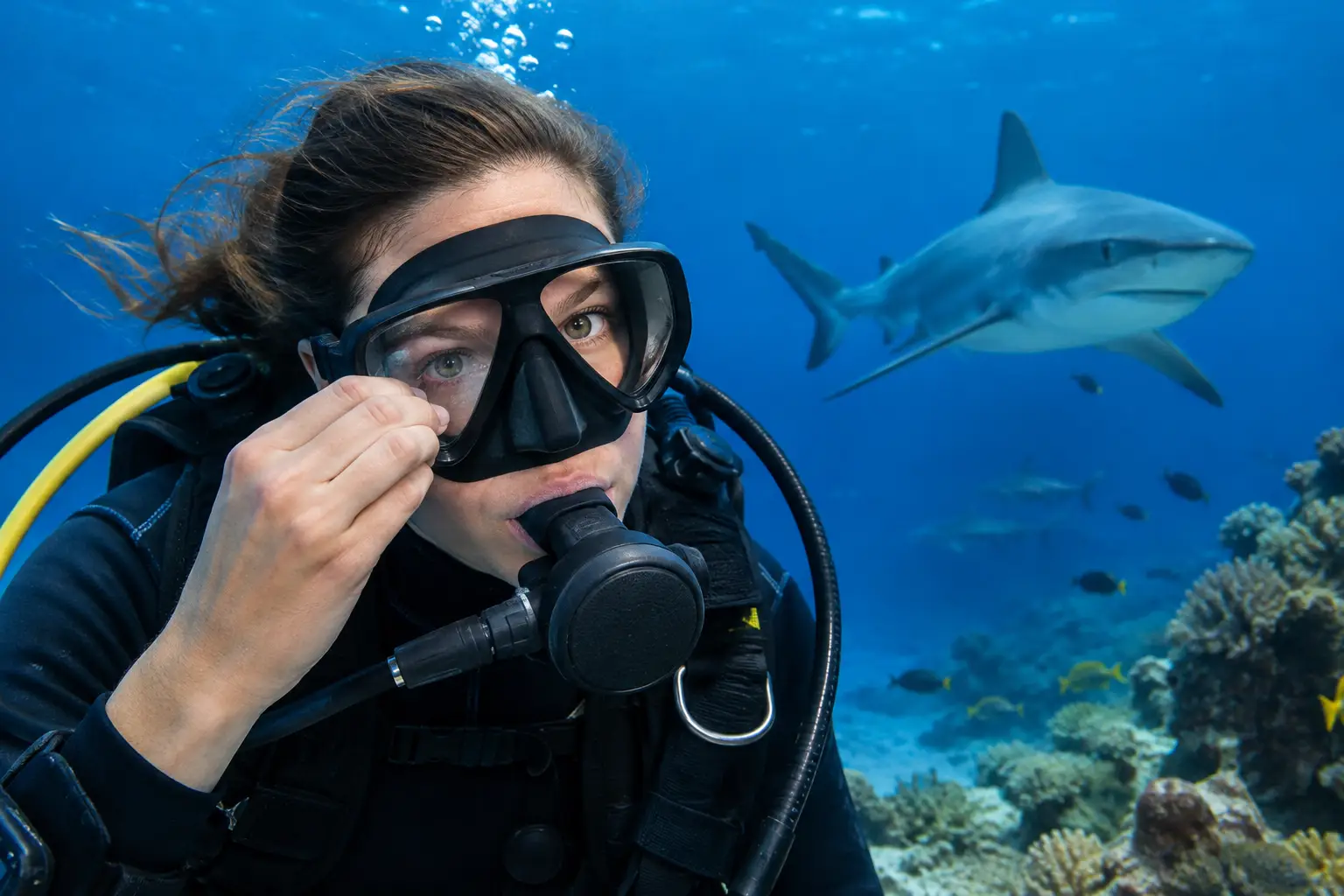
A little water in the mask is common and not an emergency. If you wear contacts, keep your eyes closed while clearing the mask whenever practical. This minimizes direct exposure to saltwater and reduces the chance of losing a lens.
If a mask fully floods during training or an unexpected situation, stay calm, maintain your breathing, and follow the mask skill you were taught. Do not rush to rub your eyes underwater. Once the mask is clear and you are stable, assess whether your vision feels normal. If a lens has shifted or you have significant irritation, signal your buddy and guide, then end the dive in a controlled manner if necessary.
A lost contact does not need to create panic. Your buddy, depth, breathing gas, and safe ascent procedures matter more than perfect vision. This is one reason divers should avoid relying solely on visual detail for communication and should review hand signals before entering the water.
Practical Precautions for Diving With Contacts
A few small habits make a meaningful difference. Put your contacts in with clean, dry hands before reaching the boat. Avoid rinsing lenses with tap water, bottled water, or seawater. If a lens comes out after a dive, discard it if it is a daily disposable rather than trying to rinse and reinsert it.
Bring spares in your day bag, not buried in checked luggage at the resort. A backup pair of glasses is equally valuable for the surface interval, travel days, and any situation where your eyes need a break. If you use reusable lenses, pack your approved solution and case, but remember that daily lenses are usually more convenient in humid, active dive environments.
Before a dive trip, make sure you can comfortably complete these basics:
- Clear a partially flooded mask while keeping your eyes closed.
- Remove and replace your mask without losing control of buoyancy or breathing.
- Recognize early signs of dry-eye irritation, such as stinging, persistent blur, or a gritty feeling.
- Communicate to your buddy and guide that you wear contacts, especially if you need strong correction.
These are not advanced skills. They are confidence skills, and confidence lets you focus on the dive rather than the possibility of a minor inconvenience.
Saltwater, Freshwater, and Eye Infection Risk
All natural water contains microorganisms, and contact lenses can increase the chance of irritation or infection if water becomes trapped against the eye. This is one reason divers should never open their eyes underwater without a mask while wearing contacts. Freshwater exposure also deserves care. Lakes, rivers, and pools can carry organisms that should not come into contact with lenses.
After diving, remove lenses with clean hands according to your usual schedule. If your eyes are red, painful, unusually sensitive to light, producing discharge, or still blurry after removing the lenses, stop wearing them and seek medical attention promptly. Do not assume serious eye pain is simply saltwater irritation.
On a full dive week, hydration can help comfort more than people expect. Wind on the boat, sun exposure, dehydration, and long hours in air conditioning can aggravate dry eyes. Lubricating drops approved for contact lens wear may help, but choose them with advice from your eye-care provider and avoid using drops while underwater.
Planning for Shark Dives and Big-Experience Days
On an exhilarating shark dive, situational awareness is non-negotiable. You want to see guide positioning, hand signals, the movement of other divers, and the wider marine environment clearly. If contacts are your normal correction, wearing fresh soft lenses can be a sensible way to enjoy the encounter with sharp vision.
The key is to remove avoidable variables. Test a new mask before your marquee dive day. Do not try unfamiliar lenses for the first time on a boat. Carry spare contacts and glasses. Tell the dive team if your uncorrected vision is limited, so they understand that losing a lens could affect your ability to read details at a distance.
At Coral Coast Divers, our approach to premium shark encounters is built around clear briefings, controlled diver positioning, and disciplined safety procedures. Reliable vision supports that system, but it never replaces sound training, calm decision-making, or attention to the guide.
A contact lens should be one of the least dramatic pieces of your dive plan. Choose a lens type your eyes tolerate well, practice your mask skills until they feel routine, and pack a backup. Then let your attention return where it belongs: the reef, your buddy, and the extraordinary life moving through the water around you.