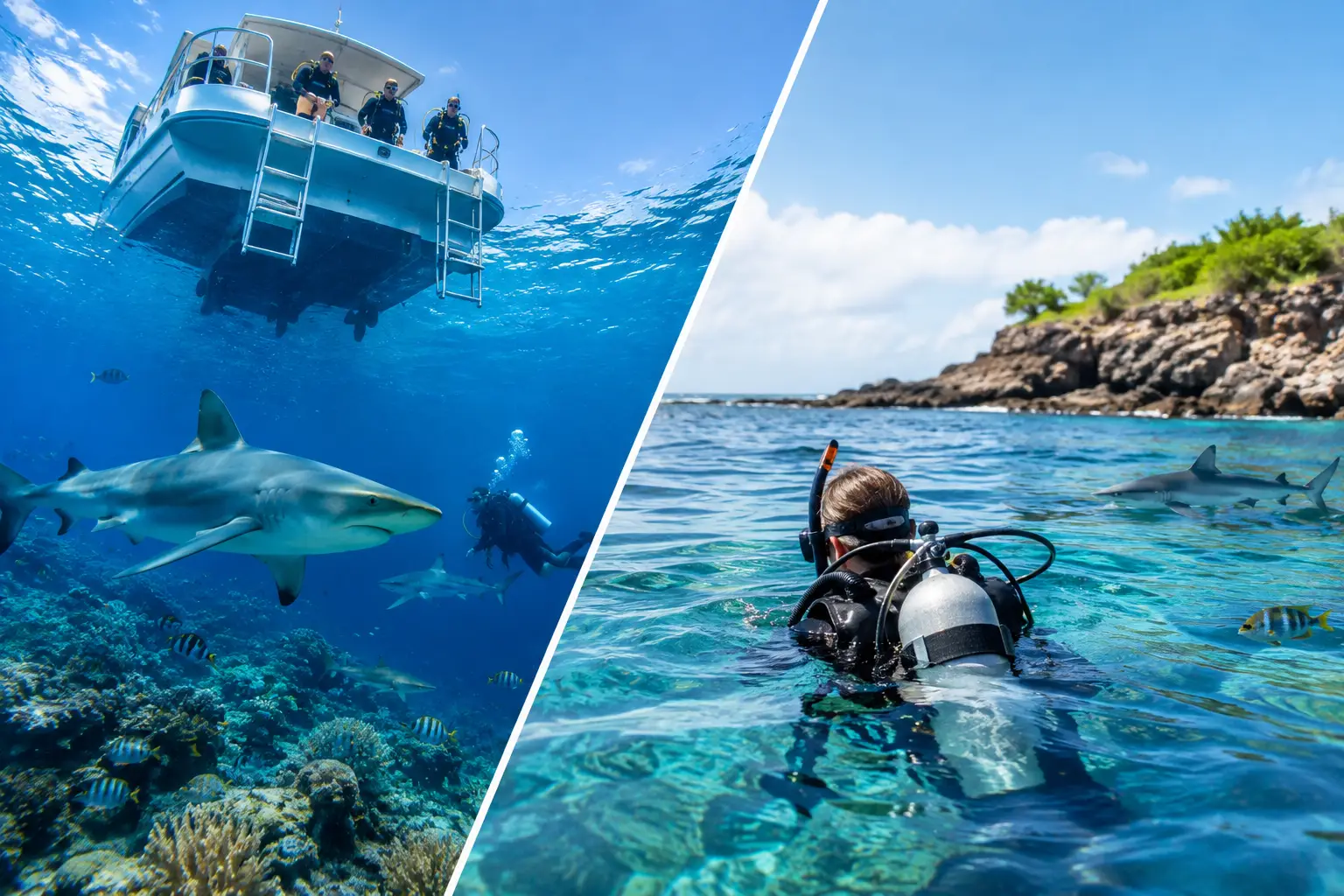
A great dive day can start in two very different ways: by stepping from a calm beach entry into a fringing reef, or by riding a purpose-built boat toward a site that cannot be reached from shore. When choosing boat diving versus shore diving, the better option is not simply about cost or convenience. It is about the kind of underwater experience you want, the conditions you can handle, and how much support you value before and after the descent.
For travelers coming to Fiji for vivid reefs, serious marine encounters, and guided expertise, boat diving often opens the door to sites that define the destination. Shore diving still has a valuable place, especially for building comfort, extending bottom time, and enjoying a quieter, more self-paced day.
Boat Diving Versus Shore Diving: The Core Difference
Shore diving begins at the water’s edge. Divers walk in from a beach, dock, rocky coastline, or protected bay, then swim to the descent point. It can be wonderfully direct. There is no boat schedule, no transit time, and often more freedom to plan the dive around your own pace and air consumption.
Boat diving takes you to a site by vessel, usually with a professional crew handling navigation, site selection, equipment setup support, and surface safety procedures. The boat may anchor, tie into a permanent mooring, or conduct a drift dive where divers enter at one point and are collected downstream. That access is the central advantage: reefs, pinnacles, walls, wrecks, and shark sites frequently sit well beyond a comfortable shore swim.
Neither format is automatically easier. A sandy beach entry may be gentle for one diver and tiring for another carrying full scuba equipment through surf. A boat may feel effortless to a confident diver but challenging for someone prone to motion sickness. The right decision depends on the site, the sea state, and your experience level.
What Boat Diving Makes Possible
The best dive sites are not always close to land. Boat access allows operators to reach offshore formations with clearer water, stronger reef structure, and marine life that is less affected by shoreline activity. In Pacific Harbour, that can mean traveling to Beqa Lagoon’s renowned reefs and managed shark-diving locations, where the journey itself is part of reaching a truly distinctive underwater environment.
A boat also gives the dive team flexibility. If wind, current, or visibility changes at one site, the captain and guides may be able to select a more protected alternative. On a well-run trip, that decision is based on conditions, diver experience, and the planned objective for the day, not on forcing a dive that no longer suits the group.
For experienced recreational divers, boat diving commonly delivers greater variety. One day may include a coral-covered slope with schooling fish; the next may focus on a wall, a wreck, or a carefully managed shark encounter. Photographers benefit from access to subjects and scenery that cannot be reached by walking in from the beach, while divers pursuing advanced training can practice skills in environments that better match real-world conditions.
Boat diving also tends to provide a more supported experience. Crews can assist with gear handling, conduct detailed briefings, monitor weather and surface traffic, and maintain communication equipment. That does not replace personal responsibility. Divers must still manage buoyancy, air, buddy awareness, and their own limits. But it creates a strong operational framework, especially when conditions require disciplined planning.
The trade-offs of a boat trip
A boat ride adds time and usually increases the cost of the day. You need to arrive on schedule, listen carefully to site briefings, and be comfortable with entries and exits that may involve a giant stride, back roll, or ladder. Surface conditions can be choppy even when the water below is excellent.
Motion sickness deserves an honest conversation. If you know you are susceptible, take appropriate precautions well before departure, eat a light meal, hydrate, and tell the crew. Choosing a seat in open air and looking toward the horizon can help. Do not wait until you feel unwell to mention it.
Why Shore Diving Still Has Serious Appeal
Shore diving is often the more flexible choice. If a site is accessible and conditions are favorable, you can spend more time in the water and less time traveling to it. It can be especially useful for diver training, buoyancy practice, refresher sessions, and relaxed exploration in a protected setting.
There is also something satisfying about a shore dive’s simplicity. You can plan your entry, settle into a calm pace, and return when your gas plan says it is time. For divers who enjoy careful macro observation, a familiar shoreline reef can reveal new details on every visit: juvenile fish sheltering in coral, nudibranchs along the substrate, or crustaceans emerging from a crevice.
For new divers, an easy shore entry can reduce the moving parts of a first open-water experience. There is no boat motion, no need to time an entry around waves, and no pressure to manage equipment in a compact deck space. A qualified instructor or guide still matters greatly, particularly where tides, surge, boat traffic, or uneven footing are involved.
Shore entry is not always the gentler option
A shore dive can demand more physical effort than many visitors expect. Walking in fins while carrying a cylinder, navigating slippery rocks, and timing an entry through small waves can be tiring. Soft sand may conceal uneven ground, and surge near the shoreline can make exits awkward.
Visibility can also be more variable near shore, especially after rain or in areas with runoff. The best shore sites are shaped by local knowledge. A professional guide understands the tides, entry points, current patterns, and marine hazards that may not be obvious from the beach.
Safety Is About Planning, Not Just the Platform
The question is not whether boat diving or shore diving is safer in the abstract. Either can be conducted to a high standard or poorly planned. Conditions and procedures matter more than the label.
On a boat dive, strong operations include a clear briefing, buddy assignments, emergency oxygen, first-aid capability, a reliable diver-accounting process, and a captain who understands the site and weather. Good teams explain entry methods, maximum depth, current expectations, marine-life protocols, and the plan if a diver surfaces away from the vessel.
On a shore dive, safety begins before anyone puts on fins. The team should assess surf, tides, visibility, shoreline footing, local traffic, and the route back to land. A simple rule applies to both formats: if the conditions exceed your training, comfort, or fitness level, it is appropriate to sit out the dive. Missing one descent is always better than pushing through a decision that does not feel right.
For shark dives, structured protocols are particularly important. Responsible operations use detailed pre-dive briefings, clear positioning, experienced guides, and established procedures that respect both diver safety and animal behavior. The goal is not to chase a dramatic moment. It is to observe powerful wildlife from a controlled, informed position.
Which Experience Better Supports Conservation?
Boat diving can reach offshore reefs that need thoughtful management, and responsible operators can use permanent moorings rather than dropping anchors on coral. It also enables guided visits to protected areas where access, diver behavior, and site capacity are carefully managed.
Shore diving can have a lighter transport footprint, but it is not automatically lower impact. Repeated fin contact, careless entries across shallow coral, litter, and poor buoyancy control can damage a nearshore ecosystem quickly. The most conservation-minded choice is the one conducted with sound site practices: neutral buoyancy, no touching or collecting marine life, reef-safe habits, and respect for local rules.
At Coral Coast Divers, the connection between memorable diving and marine stewardship is central to the experience. Whether divers travel by boat to a major marine encounter or train in calmer water, the standard should be the same: leave the reef healthier than your presence suggests.
How to Choose for Your Fiji Dive Plan
Choose boat diving if your priorities include remote reefs, shark encounters, walls, wrecks, broad site variety, or the support of a professional crew. It is often the right fit for divers traveling a long way for signature experiences and for anyone who wants access to the offshore ecosystems that make Fiji exceptional.
Choose shore diving if you value flexibility, a relaxed pace, extra practice time, or a protected environment close to your accommodation. It can be an excellent addition to a trip, particularly for newer divers and photographers who want to slow down and observe.
Many of the strongest dive vacations include both. Use shore diving to settle in, check weighting, refine buoyancy, and become comfortable in the water. Then reserve boat days for the sites that demand the journey. Match the plan to your certification, recent experience, and confidence, and you will arrive at each descent ready to enjoy what the reef has to offer.