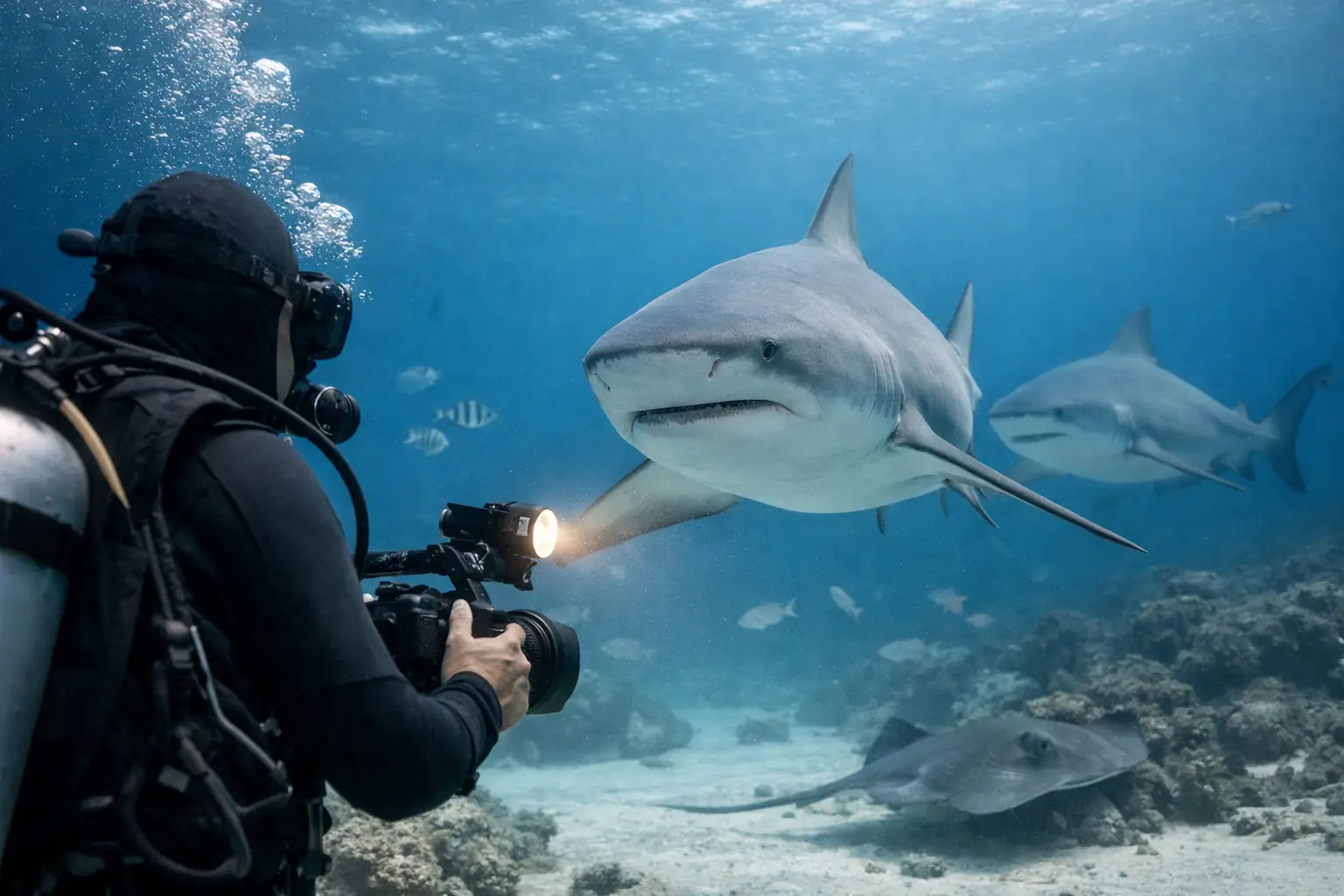
A bull shark passes differently than most first-time divers expect. There is no movie soundtrack, no sudden chaos, and no need for bravado. In a properly managed setting, bull shark encounter safety comes down to preparation, positioning, and behavior – yours as much as the shark’s.
That matters because bull sharks deserve respect, not mythology. They are powerful, intelligent, and highly adapted predators, but they are also predictable in ways trained professionals understand well. When divers enter the water with the right briefing, the right team, and a clear plan, the experience becomes what it should be: controlled, memorable, and deeply humbling.
What bull shark encounter safety really means
Safety around bull sharks is not based on luck. It is built on structure. Before anyone sees a fin, the most important work has already happened through site selection, current assessment, diver screening, equipment checks, and a thorough briefing.
This is where many travelers get the wrong idea. They assume shark safety is only about what to do if something goes wrong. In reality, the goal is to create conditions where divers know exactly how to behave, guides know exactly how to manage the encounter, and the animals are not pressured into unpredictable responses.
For that reason, the best shark dives are never casual. They may feel smooth and exciting, but behind that experience is disciplined operational planning. Smaller groups, clear entry and exit procedures, trained in-water staff, and established diver positioning all reduce unnecessary risk.
Why bull sharks require a different kind of respect
Bull sharks are compact, muscular, and comfortable in a wide range of environments. They can be assertive and curious, especially around food stimuli or fast, erratic movement. That does not make them indiscriminate attackers. It means divers need to understand that body language, spacing, and control matter.
A bull shark encounter is different from spotting a reef shark on a casual drift. The proximity can be closer, the animal’s confidence more obvious, and the psychological impact stronger for the diver. Even experienced divers sometimes underestimate how much their own breathing rate, finning style, or camera handling changes when adrenaline rises.
That is why self-awareness is part of safety. A diver who stays still, follows the guide, and manages buoyancy well is far safer than a diver with excellent logged experience but poor composure. Skill matters, but discipline matters just as much.
Bull shark encounter safety starts before the boat leaves
Good operators begin evaluating safety long before descent. They look at weather, visibility, current, sea state, diver qualifications, and comfort level. They also decide whether conditions support the planned experience or call for a change.
This is one of the clearest signs of a professional shark program. If an operator is unwilling to adjust for conditions or diver readiness, that is not adventurous – it is careless. Premium shark diving should feel confident, not improvised.
The pre-dive briefing is where expectations get aligned. Divers should know their position in the water, the route to and from the site, hand signals, no-go behaviors, and how the team will respond if a shark makes a close pass. They should also understand the difference between normal investigative behavior and behavior that requires the guides to tighten control.
For newer divers, this briefing is often what transforms anxiety into focus. When you know where to be, where to look, and what not to do, the encounter becomes far easier to enjoy.
In-water behavior that keeps the encounter controlled
Once underwater, the fundamentals are straightforward. Stay where you are placed. Maintain neutral buoyancy. Keep your movements measured. Watch the sharks without chasing them, and do not break formation because you want a better photo.
Fast ascents, wide fin kicks, and reactive grabbing at other divers create more risk than the shark itself. Bull sharks are attentive to movement and posture. Calm, consistent behavior helps maintain a stable interaction.
Eye contact also matters, although not in the exaggerated way popular culture suggests. You do not need to stare down a shark like it is a duel. What matters is awareness. Know where the animal is, avoid turning into a flustered silhouette, and remain engaged with your surroundings.
Camera divers need an extra layer of discipline. A large housing can narrow awareness quickly, and photographers sometimes drift out of position while tracking a shot. Great shark images come from patience and control, not from pushing closer than the guide intends.
The guide’s role is bigger than most divers realize
A shark guide is not just there to point things out. In a well-run encounter, the guide is reading the entire water column – shark movement, diver spacing, current shifts, attention lapses, and the pace of the interaction.
That expertise changes everything. Guides trained specifically in shark behavior can often identify subtle cues before a guest notices anything unusual. They know when to steady a group, when to reposition a diver, and when an encounter is progressing normally even if it feels intense to someone seeing a large bull shark at close range for the first time.
This is also why independent behavior is such a poor idea on shark dives. Freelancing, changing depth without direction, or swimming off for a different angle undermines the safety framework that protects the whole group.
In destinations known for premium shark diving, including Pacific Harbour, the best experiences are built around this exact kind of structured supervision. The excitement is real, but it is never unmanaged.
Common mistakes divers make around bull sharks
The biggest mistake is treating the encounter like a test of nerve. Shark diving is not about proving you are fearless. It is about being competent, calm, and coachable.
Another common mistake is overestimating personal readiness. A diver may be certified and comfortable on reef dives yet still feel overloaded by depth, visibility, current, and close animal interaction all at once. There is no shame in recognizing that. In fact, honest self-assessment is one of the safest habits a diver can have.
Touching marine life, chasing a pass, surfacing without direction, or ignoring the briefing are obvious problems. Less obvious is fixation. Some divers become so focused on one shark that they lose track of the rest of the scene, including their buddy, guide, and exit route.
Even gear choices can affect safety. Poorly secured accessories, dangling gauges, and camera rigs that are too ambitious for the diver’s comfort level all add complexity. Shark dives reward streamlined equipment and simple decisions.
How conservation supports safer encounters
There is a practical connection between conservation and safety. Sites that are protected, consistently managed, and used by experienced teams tend to produce more stable wildlife interactions. Sharks that are encountered within a structured framework are easier to observe and interpret than sharks exposed to erratic human behavior.
This does not mean sharks become tame. It means the environment is managed responsibly, diver conduct is standardized, and the interaction is approached with ecological respect rather than spectacle.
That is a major difference. Conservation-minded shark diving treats the animals as wildlife first. The encounter is built around minimizing stress, supporting education, and reinforcing why shark habitats matter. For guests, that usually leads to a better experience anyway. People leave with more than adrenaline. They leave understanding what they saw.
At Coral Coast Divers, that philosophy shapes the entire experience – strong procedures in the water, serious respect for shark behavior, and a clear commitment to protecting the ecosystems that make these encounters possible.
Who should and should not do a bull shark dive
Not every diver is ready for every shark experience, and that is fine. Some bull shark dives are appropriate for confident recreational divers who can hold position, manage buoyancy, and follow instructions under pressure. Others may be better suited to divers with more experience in current, depth, or advanced group procedures.
The key question is not whether you are excited. It is whether you can stay composed and responsive when the encounter feels close and intense. If you are unsure, a trustworthy operator will tell you where you stand and what preparation would help.
That may mean doing an easier check dive first, refreshing core skills, or choosing a different marine experience before progressing to a signature shark site. The right call is the one that sets you up for confidence, not just access.
The best bull shark encounters are not the wildest ones. They are the ones where training, guidance, and respect come together so cleanly that the power of the animal can be appreciated without losing control of the moment. If you want a truly world-class shark dive, look for the operation that takes safety seriously enough to make the experience feel effortless.