You do not want to figure out how to choose scuba certification after you have already booked a trip, packed your bags, and realized the course you picked does not match the diving you actually want to do. That happens more often than people expect. A certification card is not just a formality. It shapes how you learn, how confident you feel underwater, and what doors open next.
For some people, scuba is a vacation activity they want to do well and safely. For others, it becomes the gateway to shark dives, wrecks, night dives, freediving crossover skills, underwater imaging, or a much deeper connection to the ocean. The right starting point depends less on finding the “best” agency in the abstract and more on finding the best fit for your goals, timeline, and learning style.
How to choose scuba certification for your goals
Start with the simplest question: what kind of diver are you trying to become in the next year, not just on day one?
If your goal is to try scuba once on vacation, an introductory experience may be enough. If you want the freedom to dive on future trips without repeating beginner instruction, an entry-level open water certification is the smarter move. If you already know you are drawn to advanced marine encounters, stronger buoyancy control, navigation skills, and comfort in changing conditions, you should think beyond the first card and look at the training path that follows it.
That matters because beginner certifications are usually similar in broad outcome, but the quality of your progression can vary a lot. A program that leads naturally into continuing education, specialty training, and real-world diving experience tends to serve travelers better than one focused only on getting you certified as quickly as possible.
A good question to ask yourself is whether you want minimum qualification or durable confidence. Those are not always the same thing.
Certification agency matters, but instruction matters more
Many new divers get stuck comparing logos. In practice, the instructor, standards, and dive center culture often have a bigger impact than the name on the card.
Most globally recognized training agencies offer an open water pathway that allows you to dive internationally. What changes the experience is how those standards are delivered. Are skills explained clearly or rushed? Are confined water sessions used to build calm, repeatable habits? Are ocean dives treated like a box to check, or a chance to develop awareness and control?
If you are deciding how to choose scuba certification, look closely at the operator behind the course. A professional training environment should feel structured, unhurried, and safety-led. You should know what is included, what performance is expected, and how instructors handle nerves, equalization issues, and pacing differences between students.
This is especially important for travelers training in destination settings. Warm water and beautiful reefs are a real advantage, but only if the course is still taught with discipline. The best programs combine a memorable location with clear standards, not shortcuts.
Think about your comfort in the water
Not every beginner starts from the same place, and pretending otherwise leads to poor decisions.
If you are already comfortable snorkeling, swimming in open water, and using a mask for extended periods, you may move through entry-level training with fewer mental hurdles. If you are excited but nervous, or have limited water time, you may need an operator that gives you more coaching, more patience, and smaller group attention.
That does not mean scuba is only for naturally confident water people. It means your certification choice should support how you learn. Some divers need more repetition before mask clearing feels normal. Some need extra time to settle breathing and buoyancy. Some are physically comfortable in the ocean but need more mental framing around equipment and safety procedures.
A strong dive center will not sell you bravado. It will assess where you are and build from there.
Do not choose based on speed alone
Fast certifications are appealing, especially when travel days are limited. But speed is one of the easiest ways to end up with a card and very little confidence.
A rushed course can still meet minimum standards on paper while leaving a diver unsure about basic skills, air management, descent control, or problem-solving. That usually shows up later, when conditions are less forgiving or the dive is more demanding than a shallow, calm training site.
If your long-term plans include shark diving, deeper reef dives, or specialty experiences, your entry-level training should create a solid platform. The difference between a nervous diver and a capable one is often not talent. It is time in the water with the right coaching.
When comparing options, ask how the course is paced. Ask how many students are in each group. Ask whether there is room to repeat skills if needed. Those details tell you more than a promise to get certified quickly.
How to choose scuba certification if travel is part of the plan
For many people, scuba is tied to travel from the start. That changes the decision.
You need a certification that is widely recognized, easy to verify, and useful across destinations. You also want training that prepares you for real recreational diving, not just ideal pool conditions. Ocean entries, surface procedures, buoyancy in current, and respectful marine interaction all matter if your future dives include reefs, pelagics, or protected marine areas.
This is one reason destination-based training can be excellent when done well. Learning in clear, warm water helps many students relax and connect classroom concepts to actual diving faster. In Pacific Harbour, Fiji, for example, students can train in an environment that makes the ocean feel like the reason for learning, not just the backdrop. That tends to produce stronger motivation and better retention.
Still, destination learning is not automatically better. If your schedule is packed with excursions, poor weather would derail your plan, or you do better when studying at home without travel distractions, a referral model may suit you better. Completing academics and pool work before your trip, then finishing open water dives on location, can be an excellent middle ground.
Match the course to the diving you actually want
This is where beginners often underestimate the value of planning ahead.
If you picture yourself drifting over coral gardens and enjoying relaxed recreational dives, an open water certification is the right starting point. If you are already interested in underwater photography, fish identification, navigation, night diving, or peak performance buoyancy, look at whether the operator offers a clear path into specialties after your first certification.
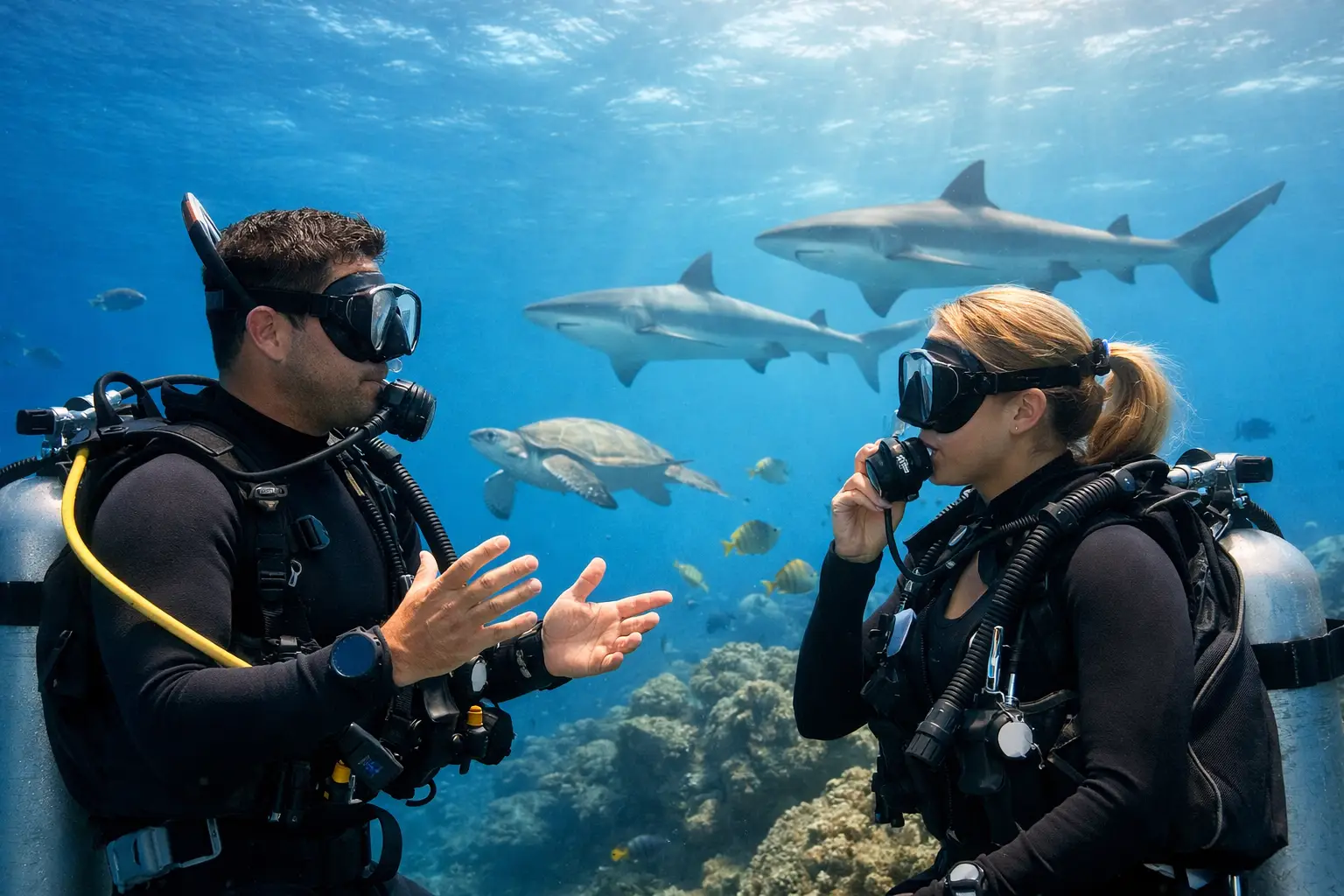
If big-animal encounters are part of the dream, your foundation matters even more. Shark diving, in particular, is not just about excitement. It rewards divers who are calm, observant, and precise in the water. Good buoyancy, situational awareness, and respect for briefing protocols shape the experience. The right certification journey should build those habits early.
That is one reason experienced instructors often talk less about collecting cards and more about competence. Certification should expand your options, but it should also prepare you to be a diver others trust on the boat.
Questions worth asking before you book
Before committing, ask who will teach you, how many students are in the course, and what happens if you need more time. Ask whether equipment is included and whether the gear is properly maintained and fitted for training, not just available.
You should also ask how the dive center approaches environmental responsibility. That may sound secondary when you are focused on skills, but it says a lot about the operation. A center that teaches good trim, careful finning, and respectful wildlife behavior from day one is usually teaching scuba the right way. Conservation-minded instruction creates better divers because it builds awareness, control, and accountability underwater.
If you are choosing a training destination, ask whether the center actively dives the environments it teaches in. Operators that work daily around reefs, marine protected areas, and advanced adventure sites tend to bring more applied knowledge into entry-level courses. The training feels more grounded because it comes from lived conditions, not generic theory.
The best certification is the one that sets up your next dive
There is no single answer to how to choose scuba certification because the best decision depends on your goals, confidence, schedule, and the kind of ocean experience you want to grow into. But there is a reliable filter: choose the program that makes you safer, calmer, and more capable after the course, not just certified at the end of it.
That usually means choosing quality instruction over convenience, progression over shortcuts, and a dive center whose standards you trust when the water gets deeper, the marine life gets bigger, and the experience starts to feel unforgettable.
If your first course leaves you eager for the next briefing instead of relieved it is over, you chose well.