You do not need more certification cards for the sake of collecting them. The right advanced scuba specialty courses should make your diving safer, sharper, and more rewarding in the exact environments you care about most. If your next trip includes strong marine life encounters, deeper reef structure, better underwater imaging, or more control in open water, the smartest course is the one that changes how you dive, not just what your logbook says.
That distinction matters. Plenty of divers reach the point where basic recreational training no longer matches the dives they want to do. They are comfortable underwater, but they want better trim around coral, calmer decision-making in current, stronger gas awareness on deeper profiles, or more confidence when conditions become less forgiving. Specialty training fills that gap when it is chosen with intention.
Why advanced scuba specialty courses matter
A good specialty course is not about adding complexity. It is about reducing uncertainty. The most valuable programs take a specific type of dive and break it into skills, planning habits, and awareness that make the experience more controlled.
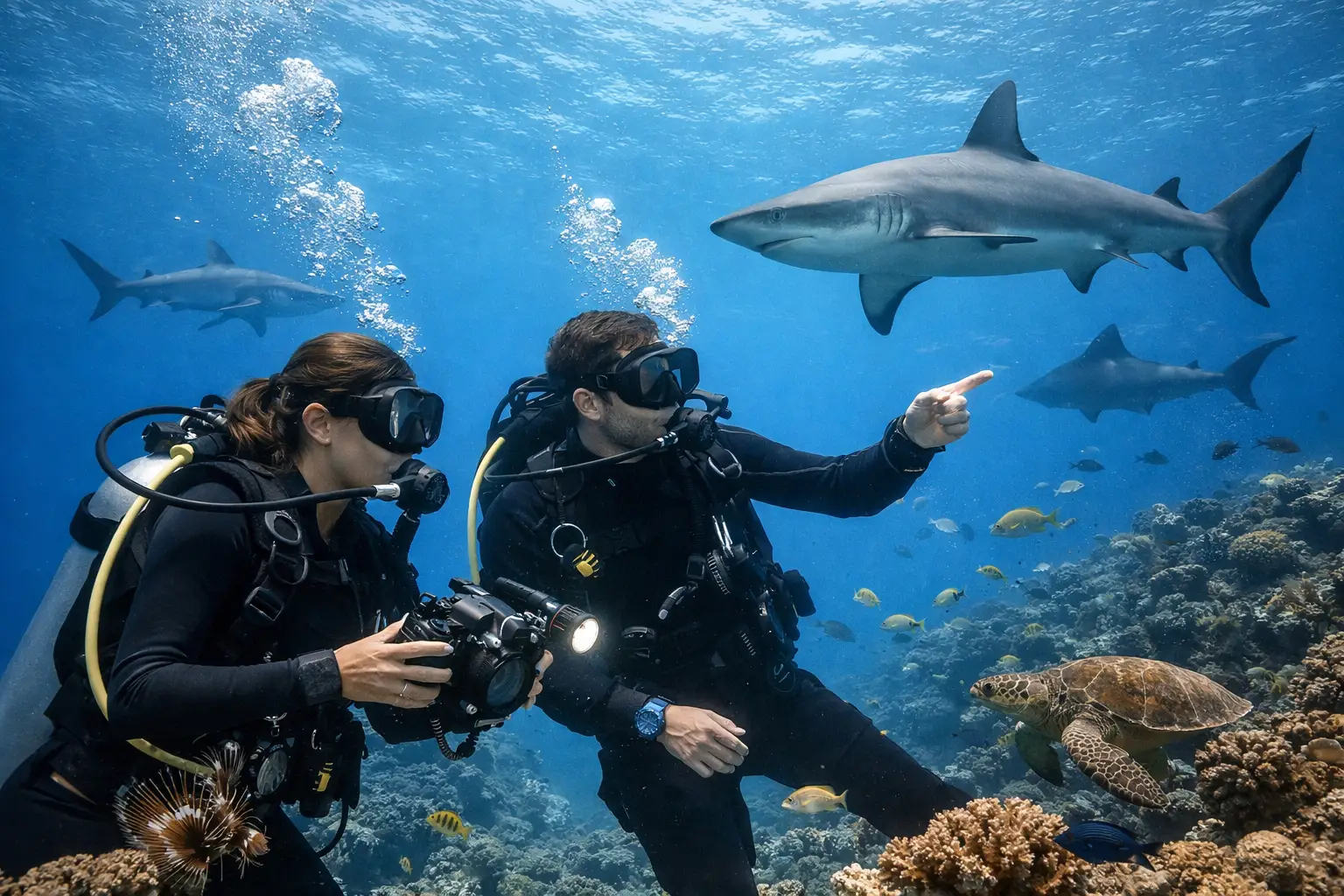
That is especially true when the environment is dynamic. A shark dive, for example, asks for more than excitement. It demands disciplined buoyancy, situational awareness, calm body language, and the ability to follow a structured dive plan without drifting out of position. The same goes for deep diving, navigation, night diving, or photography in busy marine environments. The course matters because the margin for sloppy technique gets smaller as the stakes rise.
There is also a second benefit many divers underestimate – enjoyment. When buoyancy becomes automatic and task loading feels manageable, you stop spending the dive fixing small mistakes. You notice behavior, light, reef detail, and movement. That is often when diving becomes truly immersive.
How to choose advanced scuba specialty courses
Start with the kind of diver you want to be over the next year, not the course title that sounds most impressive. Some specialties are experience multipliers. Others are highly situational. The difference is worth understanding before you book.
If you travel often and dive in a range of conditions, core performance specialties usually give the best return. Perfect buoyancy, deep diving, navigation, nitrox, and stress and rescue oriented training tend to improve almost every future dive. They build a foundation that transfers from reefs to wrecks to shark sites.
If your goals are more specific, a focused specialty can make more sense. Underwater photography, freediving crossover skills, marine ecology, fish identification, or search and recovery training can all be excellent choices when they align with how you actually spend time in the water.
The key question is simple: will this course change my decisions underwater, or only add a new label? If it does not improve judgment, awareness, control, or access to the dives you want most, it may not be the right next step yet.
The advanced scuba specialty courses with the strongest payoff
Perfect buoyancy
If there is one specialty that improves nearly everything, it is buoyancy. Better buoyancy reduces air consumption, lowers stress, protects coral, and makes you a steadier diver around wildlife. It also helps with photography, navigation, and group positioning.
This course can sound basic to experienced divers, but that is often the point. Small inefficiencies become habits. A dedicated buoyancy program corrects them faster than simply logging more dives and hoping your control improves on its own.
Deep diving
Deep training is one of the most practical specialties for certified divers who want access to more dramatic topography, wall features, and certain marine life encounters. It gives structure to depth limits, gas planning, narcosis awareness, descent control, and time management.
The trade-off is that deep diving is only worth pursuing if you are disciplined. Depth can magnify minor mistakes. A strong course should make you more conservative, not more casual, about pushing limits.
Enriched air nitrox
Nitrox is not glamorous, but it is one of the most useful specialties for traveling divers. On multi-day dive schedules or repetitive diving trips, the additional flexibility can be valuable. It supports smarter dive planning and can help reduce surface interval pressure when your schedule is full.
It is not a substitute for good judgment, and it does not make deep diving automatically safer. But for many divers, it quickly becomes one of the most used certifications in their wallet.
Navigation
Navigation is where confidence becomes independence. Learning to work with natural references, compass patterns, and changing bottom features makes a real difference on reef systems, limited visibility dives, and sites where you need to hold orientation while managing other tasks.
This is also one of the specialties that quietly improves stress levels. A diver who knows where they are is usually a calmer diver.
Shark ecology and shark diving preparation
Not every specialty card on the market carries the same practical value, but training related to shark behavior, positioning, and situational awareness can be extremely worthwhile if shark diving is one of your main goals. The best versions of this training go beyond adrenaline and focus on reading behavior, understanding protocols, maintaining composure, and respecting the environment that makes these encounters possible.
That matters in places known for premium shark experiences, where the dive is memorable precisely because it is structured. Excitement and discipline belong together underwater.
Matching the course to the experience you want
Some divers choose courses based on aspiration. Others choose based on weakness. Both approaches can work.
If you are planning a bucket-list trip with high-energy marine life, choose specialties that support control under pressure. Buoyancy, nitrox, deep, and shark-focused education are often more useful than a niche elective. If you are a photographer or videographer, buoyancy and navigation may improve your footage more than a camera-specific course taken too early.
If your goal is conservation involvement, ecology-driven specialties can be a strong fit, especially when they are taught by operators who actively participate in reef stewardship, coral restoration, or marine research. In that case, the value comes from context. You are not just learning species names. You are learning how ecosystems function and how diver behavior affects them.
Pacific Harbour, Fiji is a good example of why that context matters. In a destination known for world-class shark encounters and vibrant reef systems, advanced training is not just academic. It shapes how responsibly and confidently you interact with the marine environment.
What separates a worthwhile specialty course from a weak one
Not all advanced scuba specialty courses are equal. The card alone tells you very little. What matters is how the training is delivered.
A strong course is built around real conditions, clear standards, and instructor feedback that goes beyond passing the minimum requirements. You should leave with better habits, not just completed tasks. That usually means smaller groups, thoughtful briefing structure, practical in-water coaching, and instructors who can explain why a skill matters at an operational level.
The setting matters too. If you are training for shark diving, deep reef diving, or high-awareness wildlife encounters, learning in an environment that regularly hosts those dives is a major advantage. There is a difference between simulated relevance and actual relevance.
This is where an experienced SSI training operation with a strong conservation ethic stands out. When education is tied to marine stewardship and high standards in the water, divers tend to come away more capable and more respectful of the environment they are entering.
When not to take advanced scuba specialty courses
There are times when the best next step is not another specialty. If your air consumption is inconsistent, your trim is unstable, or basic buoyancy still requires constant correction, stacking advanced courses too quickly can create false confidence.
It may be smarter to log more dives with intention, refresh core skills, or focus on one high-value specialty before adding more. More training is only better when it is absorbed and applied. A diver with fewer cards and stronger fundamentals is often the safer buddy.
The same caution applies if you are choosing a course because it sounds extreme. Specialty training should expand capability in a controlled way. If the motivation is mainly bragging rights, the payoff tends to be shallow.
The best path forward for most certified divers
For many recreational divers, the strongest sequence is straightforward: improve buoyancy, add nitrox, build deep and navigation skills, and then branch into specialties tied to personal goals such as shark diving, photography, marine ecology, or search and recovery. That path builds control first and specialization second.
There are exceptions. A marine biologist may prioritize ecology. A content creator may benefit early from photography support. A diver returning after a long break may need a tune-up before anything else. It depends on your comfort, your travel plans, and the kind of experiences you are investing in.
What does not change is the standard worth aiming for. The best advanced scuba specialty courses leave you calmer, more observant, and more precise underwater. They make exciting dives feel more manageable and demanding dives feel less rushed.
Choose training that respects the environment, reflects the dives you actually want to do, and is taught by professionals who care as much about safety and stewardship as they do about adventure. That is where certification stops being a checkbox and starts becoming part of the experience itself.