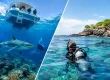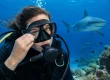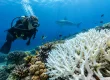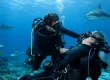
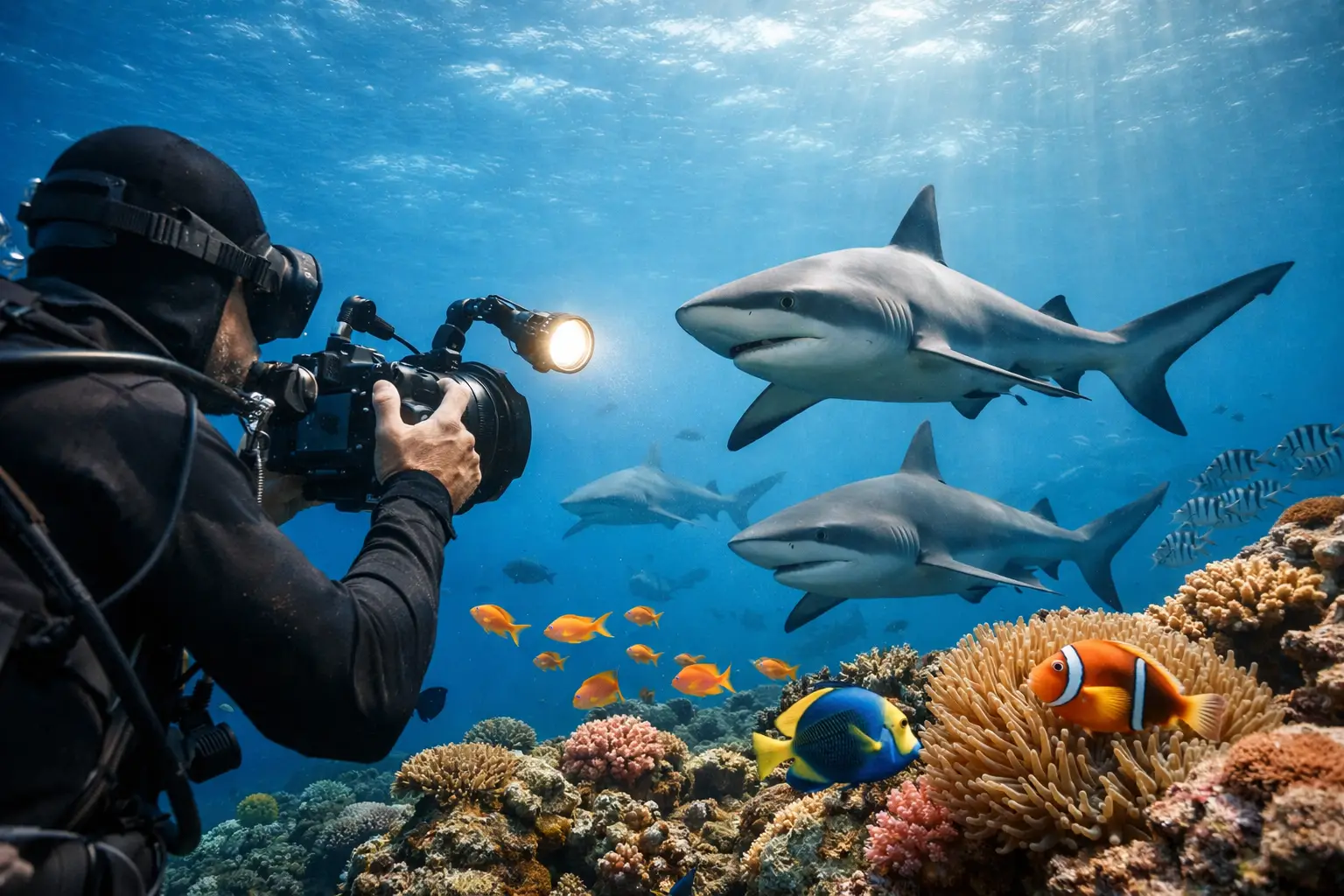
The first time you frame a shark against Fiji’s blue water, one thing becomes obvious fast – underwater photography diving Fiji is not about firing off hundreds of random shots and hoping for one keeper. It is about reading current, anticipating animal movement, controlling buoyancy, and understanding how light behaves once you descend. The photographers who come home with strong images are usually the divers who treat the camera as part of the dive plan, not a distraction from it.
Fiji rewards that approach better than most destinations. You can shoot dramatic shark encounters, coral-rich reef scenes, schooling fish, macro life tucked into hard coral structure, and wide-angle blue water compositions in a single trip. But the same variety that makes Fiji exciting also means your setup, lens choice, and shooting strategy matter. A reef pass, a calm bommie, and a shark site all ask different things from both diver and camera.
Why underwater photography diving Fiji stands out
Fiji has range. That matters for photographers because range creates options, and options create a stronger portfolio. On one dive day you might be focused on sweeping reefscape images with bright soft corals and clean tropical water. On another, the goal shifts to animal behavior, stronger contrast, and faster shooting around larger marine life.
For wide-angle shooters, Fiji offers the kind of scenes that hold visual depth – layered reef structure in the foreground, schooling fish in the midwater, and a clear blue background that keeps the frame open instead of cluttered. For shark photographers, the appeal is even more obvious. Strong encounters are not just about proximity. They are about positioning, safety control, and the ability to capture a subject that moves with speed and purpose.
That is where experienced dive operations make a difference. Good underwater images often start with good briefings. When divers know where to settle, how marine life is likely to approach, and what movement is acceptable at the site, photography becomes more deliberate and far more productive.
Choosing the right camera setup for Fiji diving photography
A lot depends on your goals. If this is your first dedicated underwater photography trip, a compact camera in a reliable housing can be enough for reef scenes, diver portraits, and some fish behavior. Compact systems are easier to travel with, easier to manage in current, and less likely to pull your attention away from buoyancy and dive awareness.
If your priority is shark photography or dramatic reefscapes, a mirrorless or DSLR setup with a wide-angle lens usually makes more sense. Fiji’s stronger photographic moments often happen when you can get close while still fitting the environment into the frame. That is the core rule underwater – get closer, then get closer again. Water strips contrast, color, and sharpness with every foot between you and the subject.
Strobes help restore color and shape, especially on reef structure and foreground subjects. But they are not always the answer for every shark image. In blue water, ambient light can create cleaner, more natural-looking results, especially when the subject is farther away or moving quickly. It depends on distance, visibility, and whether your composition is animal-first or environment-first.
If you are traveling with a larger rig, think carefully about streamlining it. Fiji dives can include current, surge, and active entries. A bulky system with poor trim does not just make photography harder. It can compromise stability and situational awareness.
Best lens choices for Fiji conditions
Wide-angle is the workhorse here. Fisheye and ultra-wide lenses are ideal for large animals, reef panoramas, and scenes where you want to exaggerate scale. They are especially useful when the water is clear and the subject allows a close approach.
A mid-range zoom can be a smart compromise for divers who want flexibility and do not want to swap ports constantly during a trip. Macro has its place too, particularly on calmer reef dives, but if you are building one setup around a Fiji itinerary with sharks and reef structure in mind, wide-angle usually earns the bag space first.
How to get better shark photos underwater
Shark images are won before the shutter is pressed. Position matters more than camera brand, and calm behavior matters more than any menu setting. If you are diving a structured shark site, follow the guide’s positioning instructions exactly. Those instructions are there for safety first, but they also help create cleaner shots by keeping divers stable and predictable.
The best shark photos usually come from a low, controlled perspective with enough negative space around the animal to show shape and movement. Shooting down on a shark tends to flatten the image. Shooting at eye level or slightly upward gives the subject authority and creates a more dynamic frame.
Patience is part of the process. Many divers start chasing the subject with the camera, which usually ends with backscatter, poor composition, and missed focus. It is often better to hold position, keep your profile compact, and let the scene come together. Sharks move with intention. If you stay calm and aware, you can often anticipate the line of approach.
Fast shutter speeds help preserve detail, especially around the head and eye. Continuous autofocus can be useful, but technique still matters. Pick up the subject early, track smoothly, and avoid jerky movements. If visibility drops or the water is busy with particulates, simplify the frame. A single strong subject in blue water often works better than a cluttered attempt at a bigger scene.
Safety and buoyancy come before the shot
This is where many otherwise capable photographers get exposed. A camera can narrow your field of attention, and underwater that has consequences. Strong image-making starts with strong diving skills – stable buoyancy, controlled breathing, good fin discipline, and the ability to manage task loading without drifting into the reef or crowding other divers.
If you are still building confidence underwater, there is no shame in keeping the camera setup simple. In fact, that is often the smarter move. A smaller rig lets you focus on composition without losing awareness of depth, gas, current, and your guide’s signals.
Photographers also need to respect the site and the animals. Chasing marine life, blocking movement, kneeling on coral, or pushing too close for a reaction shot is poor diving and poor conservation practice. The strongest operators in Fiji understand that memorable wildlife encounters and reef protection are not competing goals. They support each other.
Working with guides makes a real difference
An experienced local guide can improve your photography in ways gear cannot. They know how the site behaves, where the light tends to fall, when the current changes, and which subjects are likely to hold still versus disappear into structure. They also help manage the practical side of the dive so you can stay focused without losing safety discipline.
That is especially valuable on advanced sites and shark dives. At Coral Coast Divers, the emphasis on briefing quality, site procedure, and marine stewardship supports a better environment for underwater photographers because predictability underwater usually leads to better images.
The best conditions for underwater photography in Fiji
There is no single perfect month for every type of underwater image. If your priority is wide-angle reef photography, you are looking for strong visibility, steady light, and manageable current. If your goal is sharks, behavior and site conditions may matter more than textbook-flat water.
Morning dives often give photographers cleaner light and calmer surface conditions. Midday can work beautifully for reef scenes when ambient light penetrates well, but harsh overhead brightness can also flatten some compositions if you are not using your foreground carefully. On overcast days, colors may feel less punchy at first glance, yet the softer light can reduce contrast problems and make some subjects easier to expose.
It also depends on your tolerance for complexity. Advanced photographers may welcome current because it can attract action and create stronger wildlife encounters. Newer shooters may get more usable images on calmer reef dives where they can slow down and work on framing.
Practical mistakes to avoid on your trip
The biggest mistake is overpacking gear and underpreparing skills. Bring the system you can dive well with, not just the one that looks impressive on land. Test your housing before the trip, practice with your controls, and make sure your buoyancy does not change dramatically once the camera is in your hands.
Another common issue is trying to shoot every dive the same way. Fiji is too varied for that. Some dives call for dramatic wide scenes. Others reward restraint and simple compositions. Adapt to the site instead of forcing one visual style across the whole itinerary.
Finally, do not spend the entire trip behind the screen reviewing images. Check exposure and focus when needed, then get your attention back into the water. Some of the best moments happen between shots, when you are watching behavior rather than chasing it.
Underwater photography in Fiji is at its best when technique, safety, and respect for the environment all line up. Get those pieces right, and your photos will do more than prove you were there – they will carry the energy of the encounter long after the gear is rinsed and packed.