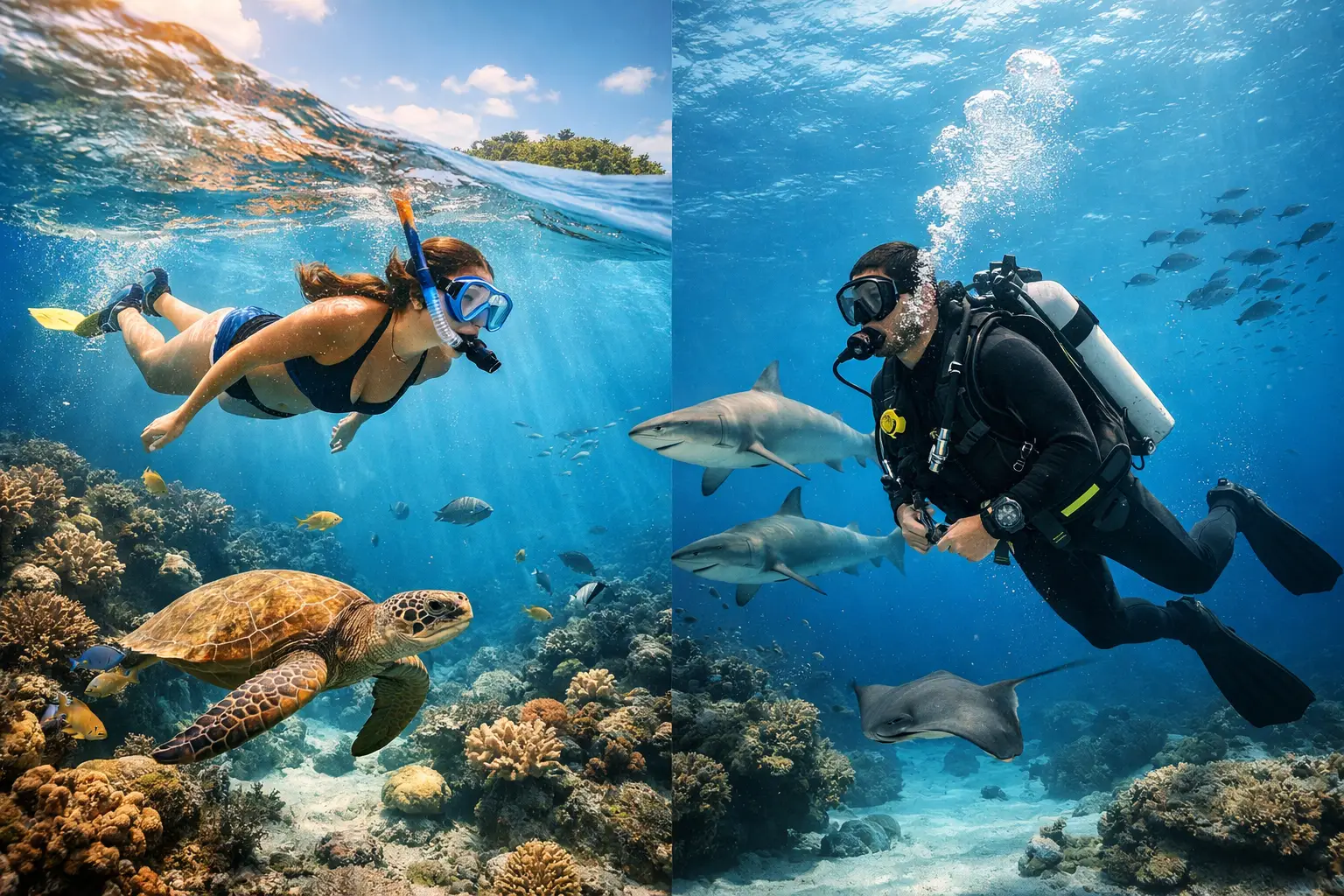
Some travelers know exactly what they want underwater. Others arrive with a simple question: snorkeling versus scuba diving – which one will actually give me the experience I came for?
That answer depends on more than confidence in the water. It comes down to how close you want to get, how much time you want below the surface, what kind of marine life you hope to see, and whether you want a light introduction or a fully immersive adventure. Both activities can be unforgettable. They simply deliver very different versions of the ocean.
Snorkeling versus scuba diving: the real difference
At the most basic level, snorkeling keeps you at the surface while scuba diving allows you to breathe underwater at depth using specialized equipment. That sounds simple, but the practical difference is enormous.
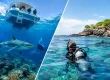
When you snorkel, your world is shaped by what you can see from above. You can float over coral gardens, watch schools of reef fish move beneath you, and enjoy clear, warm water with very little setup. It is accessible, low-commitment, and often ideal for travelers who want to experience marine life without formal training.
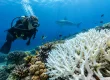
Scuba diving changes your relationship to the ocean completely. You are no longer observing from the surface. You are moving through the environment itself, adjusting buoyancy, noticing fish behavior at eye level, and staying down long enough to understand a reef rather than just glimpse it. For many people, that is the difference between seeing the ocean and entering it.
What snorkeling does best
Snorkeling shines when conditions are calm, visibility is good, and the reef sits close to the surface. It is often the best choice for families, mixed-ability groups, and travelers who want a marine experience without investing a full day in training or gear.
There is also a freedom to snorkeling that many people love. The learning curve is short. The equipment is minimal. You can spend an hour in the water, return to shore, and head straight into the rest of your day. If your trip includes beaches, boat excursions, or a packed itinerary, that flexibility matters.
For wildlife viewing, snorkeling can be excellent in shallow reefs, lagoons, and sheltered bays. Sea turtles, rays, colorful reef fish, and healthy coral can all be enjoyed from the surface when the habitat is shallow enough. In the right location, the experience can be beautiful and surprisingly rich.
But snorkeling has limits. Your breathing is tied to the surface. Your view depends on light, chop, and your comfort floating face-down for extended periods. If the reef drops deeper, current increases, or the most interesting action sits below you, snorkeling becomes more of a quick look than a full encounter.
What scuba diving does best
Scuba diving is built for immersion, time, and access. It gives you the ability to descend below surface glare, remain underwater longer, and reach environments snorkeling simply cannot.
That matters if you are interested in walls, pinnacles, wrecks, deeper coral structures, or large marine life that moves below the top few feet of water. It also matters if you care about detail. Divers notice textures, behavior, and scale in a different way because they are part of the setting rather than looking down into it.
This is especially true in destination diving. In Fiji, for example, some of the most memorable underwater experiences happen where reef systems open up, current brings in pelagic life, and expert guidance helps divers engage with the environment safely and responsibly. That is where scuba separates itself from surface activities.
It is also the better choice for travelers who want progression. A first dive can lead to certification. Certification can lead to advanced training, shark diving, night diving, wreck exploration, and specialty experiences built around skill and confidence. For many guests, scuba starts as a vacation activity and becomes a long-term passion.
Training, safety, and comfort in the water
One reason people hesitate over snorkeling versus scuba diving is the assumption that scuba is only for the naturally fearless. That is not how professional dive training works.
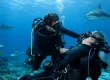
Good scuba instruction is structured, progressive, and built around safety. Beginners learn how equipment functions, how to equalize pressure, how to communicate underwater, and how to manage buoyancy before they are asked to do much at all. With experienced professionals, the process is calm and methodical.
Snorkeling usually requires less instruction, but that does not mean it is risk-free. Surface conditions, sun exposure, fatigue, fin use, and swimming ability all affect how comfortable a person feels. Someone who is not at ease in open water may actually find snorkeling more awkward than expected because there is no breathing support beyond the snorkel and no way to remain below surface chop.
Scuba introduces more equipment and more procedures, which is exactly why reputable operators put such a strong emphasis on briefings, supervision, and standards. In return, many people find scuba more controlled once they relax into it. Breathing steadily underwater can feel surprisingly natural after the initial adjustment.
Cost and commitment
If budget and simplicity are your top priorities, snorkeling usually wins. The gear is less expensive, the logistics are easier, and there is little barrier to entry. It works well for travelers who want a taste of the ocean without reorganizing their trip around it.
Scuba costs more because it involves tanks, regulators, buoyancy systems, professional supervision, training, and boat operations that are more technically demanding. But cost should be weighed against what you receive. You are not just renting equipment. You are accessing a deeper environment through professional systems designed for safety, skill development, and longer encounters.
The same is true for time. Snorkeling is easy to fit into a morning or afternoon. Scuba asks for more planning, especially if you are taking a course or doing multiple dives. For travelers chasing a bucket-list underwater experience, that extra time is often exactly what makes the trip worth it.
Which one is better for marine life encounters?
This is where expectations matter. If your goal is casual reef viewing in clear shallows, snorkeling may be all you need. You can see a great deal of life from the surface in the right conditions.
If your goal is close, sustained interaction with the underwater world, scuba is in a different category. Fish settle into natural behavior around calm, well-positioned divers. You can observe cleaning stations, movement along reef edges, predator-prey dynamics, and the shape of an ecosystem over time rather than in passing.
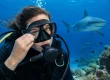
That distinction becomes even more obvious with large animals. Encounters with sharks, for example, are best experienced through professionally managed diving, where training, site knowledge, and clear protocols shape the experience. At that point, the discussion is not just about excitement. It is about safety, positioning, and respect for wildlife.
For conservation-minded travelers, scuba also tends to provide a stronger educational return. When you spend meaningful time underwater, you begin to understand reef health, coral damage, fish populations, and why marine protected areas matter. That kind of connection often changes how people value the ocean.
Who should choose snorkeling, and who should choose scuba?
Choose snorkeling if you want something easy, flexible, and low-pressure. It makes sense for strong surface swimmers, first-time ocean travelers, and anyone who wants a beautiful introduction to tropical marine life without formal training.
Choose scuba if you want depth, duration, and a more powerful sense of presence underwater. It is the better path if you are curious about certification, interested in serious marine encounters, or traveling specifically for the ocean rather than treating it as one item on a longer itinerary.
There is also a middle ground. Many travelers start with snorkeling and realize they want more. Others book a beginner scuba experience before committing to a full course. A professional dive operation should be able to guide that decision honestly, based on water comfort, goals, and conditions rather than pressure.
At Coral Coast Divers, that progression is part of what makes the underwater experience so compelling. Some guests begin with simple reef exploration and leave ready for formal training. Others arrive as certified divers and step into world-class shark encounters backed by serious operational standards and a clear conservation ethic.
The best choice depends on the trip you want
If you want an easy way to enjoy warm water and colorful reefs, snorkeling can be exactly right. If you want the ocean to feel larger, closer, and more alive around you, scuba is hard to match.
The better question is not which activity is objectively superior. It is which one matches your appetite for adventure, your comfort in the water, and the kind of memory you want to bring home. Choose the experience that meets you where you are now – and leaves room for where you may want to go next.