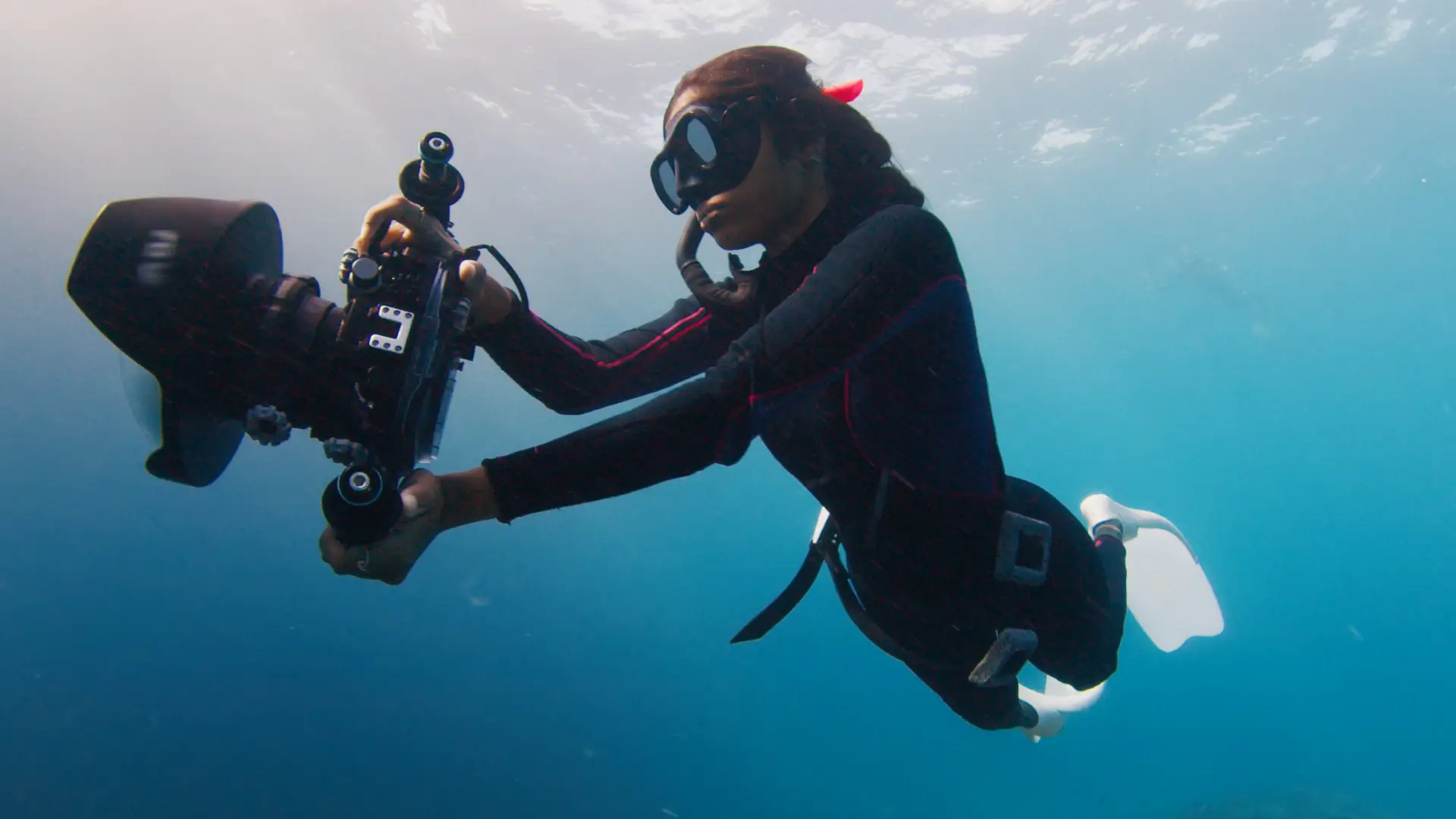
Capturing the perfect image of a Bull Shark or a Tiger Shark is the ultimate goal for many underwater photographers. In the clear, azure waters of Fiji’s Beqa Lagoon, the conditions are often prime, but the sheer speed and power of these apex predators—combined with the unique environment of “The Colosseum”—present specific challenges.
At Coral Coast Divers, we want you to leave with more than just memories; we want you to have the shots of a lifetime. Whether you are using a professional DSLR or a compact GoPro, here is your guide to mastering Fiji shark dive photography.
DSLR/Mirrorless Users: A fisheye zoom (like a 10-17mm) or a wide rectilinear lens (12-24mm) is ideal. Fisheye lenses allow you to capture the entire shark even when it’s nearly touching your dome port.
Compact/GoPro Users: Ensure you are using the widest setting available. If your housing supports “wet lenses,” a wide-angle or dome port attachment will significantly improve your results by reducing distortion and increasing the field of view.
Sharks are fast, and the light at 18–20 meters (60–65 feet) can be tricky. You need settings that freeze motion while capturing the vibrant “Fiji Blue” background.
Shutter Speed (The Most Critical): Set your shutter speed to at least 1/250s. Sharks move faster than they look, and anything slower often results in “motion blur” around the fins or snout. If you are shooting in bright sunlight, you can even push this to 1/500s.
Aperture (f-stop): Aim for a “sweet spot” between f/8 and f/11. This provides enough depth of field to ensure the shark’s entire body—from the nose to the tail—is in sharp focus.
ISO: Don’t be afraid to bump your ISO. To maintain a fast shutter speed at depth, an ISO between 400 and 800 is usually necessary. Modern cameras handle this range beautifully without much “noise” or grain.
Lighting a shark correctly is an art. Sharks have white underbellies that reflect light easily, which can lead to “blown-out” white patches in your photos.
Strobe Positioning: If using strobes, pull them back and point them slightly outward. This prevents “backscatter” (lighting up small particles in the water).
Manual Power: Set your strobes to half or quarter power. You want just enough light to bring out the color and detail on the shark’s skin without overexposing the white belly.
Natural Light: On very sunny days, you can get incredible results without strobes. Focus on shooting slightly upward toward the surface to capture the shark’s silhouette against the sun’s rays.
While a portrait of a shark’s face is great, some of the most powerful images tell a story of the environment.
Eye Contact: A shark looking directly at the lens creates a powerful emotional connection. Wait for the shark to turn toward you before pressing the shutter.
Include a Diver for Scale: Having one of our dive masters or a fellow diver in the frame provides a sense of scale, showing just how large these Bull Sharks really are.
Shoot Vertically: Don’t forget to rotate your camera! Vertical shots are perfect for magazine-style “hero” shots and work great for capturing the height of the water column.
At Coral Coast Divers, safety is our absolute priority. No shot is worth a risk to yourself or the animals.
Stay In Designated Viewing Area: Always stay in the designated viewing area. Our sharks are used to the routine, and crossing the line can disrupt the dive and create safety risks.
No “Chasing”: Let the sharks come to you. At The Colosseum, the action is brought directly to your seat. Relax, breathe, and wait for the perfect moment.
Check Your Gauges: It is easy to get “viewfinder vision” and forget to check your air or NDL (No-Decompression Limit). Always keep an eye on your computer between shots.
By following these tips and respecting the environment, you’ll return to the surface with a memory card full of breathtaking, crystal-clear images that capture the true majesty of Fiji’s sharks. Book your Fiji Shark Dive today and get some amazing photographs!
Learn how to identify reef currents from surface clues, reef contours, tides, and marine life,…
Learn how to manage air consumption on scuba dives with practical breathing, buoyancy, gear, and…
Find the best underwater camera settings for Fiji reefs and shark dives, with proven exposure,…
Use these wreck dive planning tips to assess conditions, match training to the site, protect…
See how open water referral course benefits give travelers more flexibility, stronger preparation, and more…
Find the best snorkeling spots Pacific Harbour offers, from calm coral gardens to Beqa Lagoon…
This website uses cookies.